
Exploring Sound Fighter Systems Applications in Modern Noise Control Solutions
Noise is one of the most persistent environmental challenges in modern life. It affects cities, workplaces, transportation hubs, schools, hospitals, and even homes in ways that people do not always notice immediately. Sometimes it appears as obvious disruption, like aircraft noise near an airport or constant traffic next to a busy road. At other times, it is more subtle: reduced concentration in an office, stress in a hospital environment, or fatigue caused by an industrial setting that never truly grows quiet. In both cases, the effect is real.
That is why interest in Sound Fighter Systems applications continues to grow. As communities, businesses, and planners become more aware of the long-term effects of noise, they are looking for solutions that go beyond basic insulation or temporary barriers. They want systems that are adaptable, scientifically grounded, and effective across a range of environments. Sound Fighter Systems represent that broader shift. They combine acoustic engineering, targeted materials, and increasingly intelligent control strategies to address noise in a more deliberate and measurable way.
What makes these systems especially relevant today is their versatility. They are not limited to a single industry or one type of setting. They can be used in urban spaces, transportation infrastructure, public venues, manufacturing operations, and many other environments where sound control has become part of larger goals related to safety, comfort, health, and performance.
This guide explores the science behind these systems, the environments where they are most useful, the benefits and challenges of implementation, and the future trends shaping how modern noise control is evolving.
Why Noise Control Matters More Than Ever
Noise used to be treated as a secondary concern, often addressed only when complaints became unavoidable. That is changing. Public health research, urban design priorities, workplace safety standards, and customer experience expectations have all pushed noise management higher on the list of serious operational concerns.
In residential environments, prolonged noise can affect sleep quality, stress levels, and overall comfort. In workplaces, it can reduce concentration and increase fatigue. In industrial environments, excessive sound may create safety risks or long-term hearing concerns. In transportation corridors, persistent noise affects not just comfort, but quality of life for surrounding communities.
This is where Sound Fighter Systems applications become especially important. These systems are designed to approach sound not as an unavoidable byproduct of modern life, but as something that can be measured, managed, and significantly reduced through well-designed intervention.
The goal is not always complete silence. In many cases, it is about creating balance. That may mean reducing harsh noise peaks, masking disruptive frequencies, controlling sound travel, or preserving useful sound while minimizing unwanted interference. Effective noise control is often more nuanced than simply blocking all sound.
The Acoustic Principles Behind Sound Fighter Systems
To understand how these systems work, it helps to start with the basics of acoustics. Sound travels as waves, and those waves behave in predictable ways depending on their frequency, intensity, direction, and the surfaces they encounter. When sound hits a barrier, it may be absorbed, reflected, diffused, or transmitted through the material.
Sound Fighter Systems are built around controlling those interactions.
Managing Reflection, Absorption, and Transmission
Some environments need strong absorption so sound does not bounce repeatedly and build into a louder overall field. Others need reflection control so noise can be redirected away from sensitive spaces. In still other cases, the main goal is to block transmission entirely, especially where noise is traveling from one zone into another.
This is why Sound Fighter Systems applications often vary by location. The best solution for a highway corridor will not necessarily be the best one for a manufacturing facility or a hospital wing. The system has to be engineered for the way sound behaves in that specific setting.
Using Data to Predict Sound Behavior
Modern acoustic design depends heavily on modeling. Engineers can now simulate how sound is likely to move through a space before the solution is installed. That includes how it may reflect off buildings, surfaces, ceilings, floors, barriers, and open air paths.
This predictive ability allows systems to be more precise. Instead of applying general soundproofing and hoping it helps, designers can target the problem more efficiently. That is one reason noise control has become more sophisticated in recent years.
How Sound Fighter Systems Address Noise Pollution
Noise pollution is not only about loudness. It is also about repetition, interruption, and context. A moderate but constant noise can be just as disruptive as a brief loud event if it interferes with daily life over a long period. Sound Fighter Systems address this by combining multiple strategies rather than relying on a single solution.
Passive Noise Control Strategies
Passive noise control includes physical barriers, sound-absorbing materials, enclosure systems, and structural design features that reduce the movement of sound. These are often the first layer of defense because they do not require ongoing energy input and can be highly effective when designed properly.
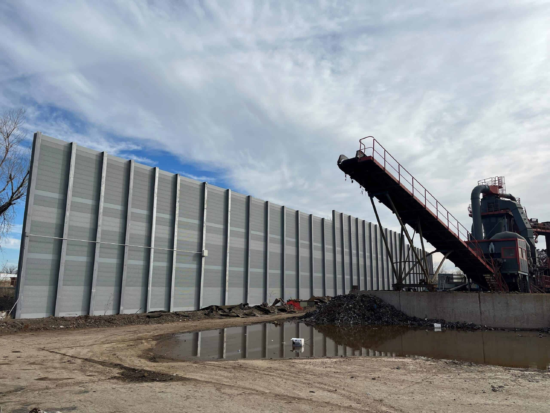
For example, roadway sound walls, acoustic panels, insulated facades, and specialized enclosures around industrial equipment all fall into this category. In many Sound Fighter Systems applications, passive measures form the foundation of the solution.
Active Noise Control Approaches
Active noise control adds another dimension. Instead of simply blocking sound, it introduces counteracting sound waves that reduce or cancel unwanted noise. This method works best in specific conditions where the noise profile can be measured and responded to in real time.
It is especially useful in settings where traditional barriers alone are not enough or where sound frequencies change dynamically. While active systems are more technically demanding, they offer strong potential in environments with persistent mechanical or transportation noise.
Sound Masking for Functional Comfort
In some environments, the best solution is not to eliminate sound entirely, but to introduce controlled background sound that makes disruptive noises less noticeable. This is known as sound masking. It is often used in offices, healthcare spaces, and privacy-sensitive environments where reducing distraction is more important than achieving silence.
Where Sound Fighter Systems Applications Make the Biggest Impact
One of the strongest qualities of these systems is their adaptability. They can be designed for highly different use cases without losing their effectiveness.
Urban Infrastructure and Public Spaces
Cities are among the most important environments for modern noise control. Traffic, construction, transit systems, emergency response vehicles, and crowded public activity all contribute to complex sound environments. In dense urban areas, the challenge is not just noise volume. It is the constant layering of different sound sources.
Here, Sound Fighter Systems applications often include roadway barriers, building-integrated acoustic treatments, landscaped sound attenuation features, and planning strategies that reduce sound spill into residential or pedestrian zones. These interventions can improve public comfort without removing the energy or functionality of the city itself.
Airports and Transportation Hubs
Airports, train stations, and transit corridors present another major use case. These environments deal with recurring high-impact sound sources and often serve large numbers of people who need comfort, clarity, and safety at the same time.
Noise control in these spaces may involve structural barriers, insulated waiting areas, acoustic ceiling systems, vibration control measures, and active noise solutions for certain mechanical systems. The objective is not only to reduce discomfort, but also to improve speech clarity and reduce stress in already demanding travel settings.
Concert Halls and Performance Venues
In venues designed for listening, sound control becomes a matter of precision rather than simple reduction. The challenge is not to make the space quiet, but to eliminate interference while preserving desired sound quality.
In these cases, Sound Fighter Systems may be used to block outside noise, manage internal reflections, and enhance the consistency of the listening environment. This allows the performance itself to remain the focus.
Manufacturing and Industrial Operations
Industrial settings are among the most demanding environments for sound control. Machinery, ventilation systems, production lines, and heavy equipment can generate significant noise over long periods. That affects both worker wellbeing and operational safety.
In these environments, Sound Fighter Systems applications may include acoustic enclosures around equipment, wall and ceiling treatments, sound barriers between work zones, and targeted measures designed to reduce employee exposure. In many cases, these improvements also support compliance with occupational safety regulations.
The Benefits Go Beyond Comfort
It is easy to think of noise control as a matter of comfort alone, but the benefits are broader than that.
Better Health and Lower Stress
Excessive or constant noise can increase stress and reduce recovery in healthcare settings, interfere with sleep in residential areas, and create mental fatigue in work environments. Better sound management can improve quality of life in ways that are measurable and meaningful.
Improved Productivity and Focus
In offices, schools, and research spaces, reducing distraction can improve attention and communication. A quieter environment is often a more productive one, especially when people need to concentrate or collaborate clearly.
Stronger Property and Facility Value
Buildings and developments that manage sound well often become more attractive to tenants, buyers, and users. In this way, Sound Fighter Systems applications can support not only comfort and compliance, but long-term asset value as well.
Sustainability Opportunities
Many modern sound control materials and systems are being developed with sustainability in mind. Recycled materials, longer-lasting components, and integrated building performance strategies help align noise control with broader environmental goals.
Common Challenges and Misunderstandings
Despite the benefits, some organizations still hesitate to invest in advanced sound control because of misconceptions.
One common belief is that these systems are too expensive to justify. In reality, the long-term value often becomes clearer when considering reduced complaints, lower health-related costs, better productivity, improved compliance, and stronger customer or employee satisfaction.
Another misconception is that noise control only matters in extreme situations. In practice, even moderate but persistent noise can justify intervention if it is affecting people regularly.
There is also the assumption that all sound control solutions are bulky or unattractive. Modern designs have changed this significantly. Many Sound Fighter Systems applications are now integrated into architecture, landscaping, or equipment design in ways that are functional without being visually intrusive.
The Role of Smart Technology in the Future of Noise Control
The future of sound management is likely to become more intelligent and responsive. As sensors, automation, and data analysis improve, noise control systems are becoming less static and more adaptive.
AI-supported monitoring can identify patterns in sound levels, recognize recurring disruptions, and adjust control systems accordingly. This opens the door to environments where the sound strategy changes throughout the day based on actual conditions rather than fixed assumptions.
That may be especially useful in cities, transit systems, and mixed-use buildings where sound conditions vary constantly. It also means Sound Fighter Systems applications may become even more efficient over time because they will be able to respond in real time to changing noise profiles.
Why Community Involvement Matters
Noise control decisions often affect large groups of people, especially in public or urban settings. That is why successful implementation frequently depends on more than engineering alone. Community engagement matters too.
When residents, workers, or facility users are included in the conversation, the resulting solutions are often better aligned with actual needs. Public input can reveal where the worst disruption occurs, what times are most sensitive, and what tradeoffs people are willing to accept.
This matters because sound control is not only a technical issue. It is also a human one. Systems are most effective when they are designed with real users in mind.
Final Thoughts
Noise is one of the defining environmental challenges of modern life, but it is also one of the most manageable when approached with the right tools and understanding. That is why Sound Fighter Systems applications are becoming increasingly important across industries and public spaces alike. They offer practical, flexible, and increasingly intelligent ways to reduce harmful or disruptive noise without sacrificing function.
From urban environments and transportation hubs to manufacturing plants and performance venues, these systems help create spaces that are healthier, more comfortable, and more effective for the people using them. They do not rely on one single method, but instead combine acoustic science, engineering precision, and evolving technology to solve real-world problems.
As awareness of noise-related health, productivity, and quality-of-life concerns continues to grow, sound management will likely become a more visible part of planning and design. In that future, Sound Fighter Systems will not simply be technical upgrades. They will be part of how better environments are built.