How to Layer Lighting in Any Room Without Making It Feel Busy
Most people treat lighting as an afterthought. They pick a ceiling fixture, maybe add a floor lamp, and call it done. The result is a room that feels flat during the day and cave-like at night.
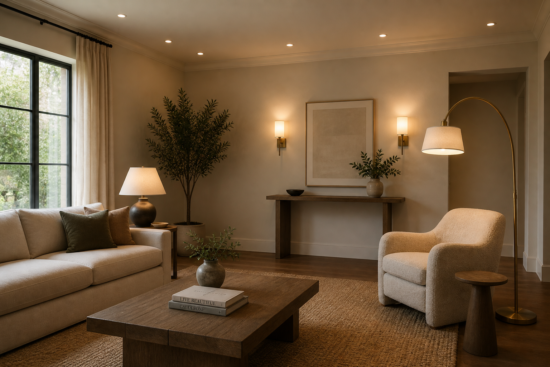
Layered lighting fixes that. It’s the practice of combining three distinct light sources ambient, task, and accent so a room feels alive at different times of day and for different uses. It’s the difference between a room that photographs well and one that actually feels good to live in.
The type of fixture you choose for each layer matters as much as where you place it. Pendants, for instance, do double duty they add ambient wash from above while acting as a design statement at eye level. Hanging lights work especially well in dining rooms and kitchen islands because they define a zone without closing it off with walls or furniture.
Start With the Ambient Layer But Don’t Rely on It Alone
Ambient light is your base. Recessed downlights, flush mounts, or a central pendant anything that distributes general illumination across the room.
The mistake most people make here is expecting ambient light to handle everything. It can’t. Overhead light casts downward shadows that flatten faces and make even beautiful furniture look dull. Think of it as the canvas, not the painting.
Dimmer switches are non-negotiable for ambient sources. A fixed-brightness overhead light limits your entire mood range to one setting.
Layer Two: Task Lighting Goes Where Eyes Go
Task lighting is practical. Under-cabinet strips in a kitchen. A reading lamp angled over an armchair. A pendant dropped low above a work surface.
The key distinction is specificity. Task light should illuminate a surface or activity, not the whole room. When it spills too far, it stops being task light and starts competing with your ambient layer.
Height matters more than most people realise. A pendant hung 10 inches too high over a dining table loses its intimacy entirely. The rule of thumb is 28 to 34 inches above the table surface for standard ceiling heights.
Accent Lighting Is Where Rooms Get Their Character
This is the layer most rooms are missing. Accent lighting highlights architecture, art, or objects picture lights, directional wall sconces, LED strips inside shelving, track heads aimed at a textured wall.
A room with only ambient and task lighting feels functional but not designed. Accent lighting is what makes guests stop and ask who did your interiors.
It doesn’t take much. Two or three well-placed accent sources can completely transform a room’s atmosphere after dark. Think of a restaurant you’ve been to that felt expensive accent lighting is almost certainly why.
How to Mix Fixture Styles Without It Looking Chaotic
Mixing fixtures works when you anchor the room with one dominant style and let the supporting fixtures complement rather than compete.
A good approach: choose your statement piece first. In a dining room, that’s usually the pendant above the table. Everything else sconces, floor lamps, downlights should share at least one design element with it. Same finish, similar material, or matching visual weight.
Geometric shapes pair well across different fixture types. A Ring Pendant Light above a dining table, for instance, pairs naturally with round wall sconces or a circular mirror nearby the shapes echo without copying.
Common Layering Mistakes Worth Avoiding
- All lights on the same circuit: If every source switches on together, you’ve lost all flexibility. Zone your circuits or use smart switches.
- Ignoring colour temperature: Mixing 2700K warm bulbs with 4000K cool ones in the same room looks disjointed. Pick a temperature and stay consistent across all layers.
- Over-lighting: More fixtures don’t equal better atmosphere. A room with nine light sources all running at full brightness is exhausting. Fewer sources, all dimmable, gives you far more control.
- Hanging pendants too high: Already covered, but worth repeating it’s the most common pendant mistake and it undermines the entire focal effect the fixture was meant to create.
A Practical Starting Point for Any Room
Walk into the space at night with nothing switched on. Ask yourself: where do your eyes want to go? Where do activities happen? What architectural detail deserves attention?
Answer those three questions and you have your lighting brief. Ambient fills the room, task follows the activity, accent chases the eye. Add dimmers everywhere, stay consistent on colour temperature, and choose one fixture to anchor the room’s style.
Good lighting isn’t about spending more. It’s about understanding what each source is supposed to do and giving it room to do that job without interference from everything else.