
What to Expect During a Professional HVAC Installation and Repair
Signs Your Heating and Cooling System Needs Service
Imagine a scorching summer day when your air conditioning suddenly quits, or a chilly winter morning when your furnace refuses to ignite. These are common homeowner frustrations that highlight the critical need for reliable HVAC installation and repair. Keeping your home comfortable year-round is essential, but understanding when to repair versus replace, and what to expect from professional services, can be overwhelming. We’ll guide you through the complexities of maintaining your home’s heating and cooling systems to ensure comfort and efficiency.
For a deeper dive into home comfort essentials, explore our comprehensive guide too. Ready to schedule your service?
We understand that making decisions about your home’s HVAC system can feel daunting. From identifying the subtle signs of trouble to selecting a trustworthy service provider, many questions can arise. This guide aims to demystify the process.
We will explore crucial topics such as recognizing when your system needs attention, understanding the benefits of routine maintenance, and what goes into a professional installation. We’ll also cover how to choose between repairing an existing unit and investing in a new, energy-efficient system. Our goal is to equip you with the knowledge needed to make informed choices for your home’s comfort and your peace of mind.
Recognizing the early warning signs that your HVAC system requires attention can save you from costly emergencies and prolonged discomfort. Ignoring these indicators often leads to more significant problems down the line. We encourage homeowners to be vigilant about their system’s performance.
One of the most common signs is uneven airflow or inconsistent temperatures throughout your home. If some rooms are significantly warmer or colder than others, it could point to issues with your ductwork, a struggling blower motor, or even an undersized system. Another clear indicator is unusual noises emanating from your unit. While some operational sounds are normal, grinding, squealing, banging, or persistent rattling noises often signal mechanical problems, such as worn-out bearings, a loose fan blade, or a failing compressor.
A noticeable increase in your utility bills without a corresponding change in usage patterns is a strong sign of inefficiency. An HVAC system that’s working harder to achieve the desired temperature is consuming more energy, which could be due to dirty coils, a clogged filter, or a refrigerant leak. Furthermore, if your system is frequently cycling on and off, known as “short cycling,” it’s often a symptom of an improperly sized unit, a thermostat malfunction, or other internal issues that prevent it from completing a full heating or cooling cycle.
Beyond these, other signs include:
- Weak airflow: Indicates a problem with the fan, ductwork, or a clogged filter.
- Strange odors: A burning smell could mean electrical issues, while a musty smell might suggest mold in the ducts or evaporator coil.
- Excessive humidity: Your AC system should dehumidify your home. If it feels muggy indoors, it’s not performing optimally.
- Water leaks: Puddles around your indoor unit could be from a clogged condensate drain line or a refrigerant leak.
If you observe any of these signs, it’s time to consider professional HVAC repair or replacement services. Addressing these issues promptly can help restore comfort, improve efficiency, and potentially extend your system’s lifespan.
Evaluating Repair vs. System Replacement
Deciding whether to repair an existing HVAC system or invest in a new one is a common dilemma for homeowners. This decision often hinges on several factors, including the age of your system, the nature and cost of the repair, and your long-term goals for energy efficiency.
The age of your system is a primary consideration. Most modern HVAC units are designed to last between 15 to 20 years, with heat pumps and central air conditioners typically falling within this range, and furnaces often lasting longer. If your system is approaching or has exceeded this age, a major repair might be a temporary fix for an expiring unit. For instance, if your system was installed around 2011 or earlier, by September 2026, it would be well past its prime, making replacement a more sensible long-term investment.
A widely used guideline is the “$5000 rule” (or sometimes the “50% rule”): if the cost of the repair is more than 50% of the cost of a new system, or if the repair cost multiplied by the system’s age exceeds $5,000, replacement is often the more economical choice. This rule helps homeowners quantify the value proposition of a repair versus a complete overhaul.
Another crucial factor is SEER2 efficiency. The Seasonal Energy Efficiency Ratio 2 (SEER2) is a new rating system introduced in 2023 that measures the energy efficiency of air conditioners and heat pumps. Older systems have lower SEER ratings, meaning they consume more energy to provide the same amount of cooling or heating. Upgrading to a new system with a higher SEER2 rating can significantly reduce your energy bills, often offsetting a portion of the installation cost over time. This is one of the key advantages of upgrading to energy-efficient HVAC systems.
Finally, consider the nature of the component failure. If a minor part needs replacing, repair is usually straightforward. However, if a major component like the compressor or heat exchanger fails, especially in an older unit, the cost of replacement can be substantial, making a new system a more prudent choice. For comprehensive insights into your options, including detailed considerations for your home’s unique needs, exploring resources on HVAC repair and replacement can provide valuable guidance.
Key Differences Between HVAC Installation and Repair Procedures
While both HVAC installation and repair involve working with heating and cooling equipment, the processes, scope, and expertise required differ significantly. Understanding these distinctions helps set proper expectations for homeowners.
HVAC repair typically begins with a thorough diagnostic evaluation. A professional technician will use specialized tools and their expertise to identify the root cause of a system malfunction. This involves checking electrical connections, refrigerant levels, airflow, thermostat settings, and individual components. Once the problem is identified, the repair procedure focuses on component replacement or adjustment. This could range from replacing a faulty capacitor, a frayed belt, or a clogged filter, to more complex tasks like sealing a refrigerant leak, repairing a furnace igniter, or recalibrating a thermostat. The goal of repair is to restore the existing system to its optimal working condition.
In contrast, HVAC installation is a much more extensive process. It involves setting up an entirely new system, often requiring significant modifications to your home’s existing infrastructure. The procedure typically includes:
- Old unit removal: Safely dismantling and disposing of the old furnace, air conditioner, or heat pump.
- Ductwork modification: Ensuring existing ductwork is properly sized, sealed, and configured for the new system, or installing new ductwork if necessary. This is crucial for optimal performance and energy efficiency.
- New unit placement: Carefully positioning the new indoor and outdoor units according to manufacturer specifications and local building codes.
- Refrigerant lines and electrical connections: Installing new lines, charging the system with the correct refrigerant, and making all necessary electrical connections.
- Condensate drainage: Setting up proper drainage for moisture removed from the air.
- Whole-system commissioning: This is a critical final step where technicians thoroughly test the newly installed system to ensure all components are working harmoniously, airflow is balanced, and the system is operating at peak efficiency. This includes calibrating the thermostat and explaining its functions to the homeowner.
Installation is a complex process that demands precise calculations, adherence to safety standards, and a deep understanding of system integration, whereas repair focuses on targeted problem-solving within an existing framework.
Comprehensive Scope of Modern HVAC Installation and Repair Services
Modern HVAC companies offer a broad spectrum of services designed to address every aspect of indoor comfort and air quality. Beyond basic heating and cooling, these services encompass specialized solutions, advanced technologies, and proactive measures to ensure your home remains a sanctuary year-round.
The core offerings typically include:
- Central AC installation and repair: From traditional split systems to packaged units, professionals handle everything from new installations to refrigerant recharges and compressor replacements.
- Gas furnaces: Installation, repair, and maintenance of natural gas or propane furnaces, including burner cleaning, ignition system checks, and heat exchanger inspections.
- Heat pumps: Services for these versatile systems that provide both heating and cooling, including troubleshooting defrost cycles, coil cleaning, and reversing valve repairs.
- Indoor air quality (IAQ) solutions: Recognizing that comfort isn’t just about temperature, many providers offer services like air purifier installation, humidifier/dehumidifier integration, and duct cleaning to enhance the healthiness of your indoor environment.
- Plumbing services: Some full-service providers, like Michael & Son, extend their expertise to plumbing, addressing issues from leaky pipes to water heater installation. This integrated approach can be incredibly convenient for homeowners.
- Electrical services: Similarly, electrical work, such as panel upgrades, wiring for new appliances, or troubleshooting circuit issues, is often offered by comprehensive home service companies.
- Restoration services: In cases of water damage or other home emergencies, some providers offer restoration services, providing a holistic solution for unexpected events.
This comprehensive approach means homeowners can often find a single, trusted partner for a wide range of home maintenance and emergency needs, simplifying coordination and ensuring consistent service quality.
Specialized Cooling, Heating, and Air Quality Solutions
Beyond conventional HVAC systems, advancements in technology have introduced specialized solutions that cater to unique home layouts, energy efficiency goals, and specific indoor air quality concerns. These options provide homeowners with greater flexibility and control over their comfort.
Ductless mini-splits have gained significant popularity, particularly for homes without existing ductwork, room additions, or for creating zoned temperature control. These systems consist of an outdoor compressor/condenser and one or more indoor air-handling units, connected by a conduit rather than extensive ductwork. They offer highly efficient heating and cooling for individual rooms or zones, allowing occupants to customize temperatures and save energy by only conditioning occupied spaces. This is a prime example of how homeowners can upgrade to energy-efficient HVAC systems, offering significant advantages over traditional setups in specific scenarios.
For improving indoor air quality, UV air purifiers are an increasingly common solution. Installed within the HVAC system’s ductwork or near the evaporator coil, these devices use ultraviolet light to neutralize airborne contaminants like mold, bacteria, and viruses as air passes through. This can be particularly beneficial for households with allergy sufferers or those concerned about pathogen transmission.
Humidity control systems, including whole-home humidifiers and dehumidifiers, also play a vital role in comfort and health. Maintaining optimal indoor humidity levels (typically between 30-50%) can prevent issues like dry skin, static electricity, mold growth, and dust mite proliferation, contributing to a healthier living environment.
When seeking an expert AC and heating provider, inquire about these specialized services. A company that offers a wide array of solutions demonstrates a commitment to meeting diverse customer needs and staying current with industry innovations. This ensures you receive tailored recommendations that truly enhance your home’s comfort and efficiency.
Sizing and Load Calculations for Optimal Performance
One of the most critical steps in any professional HVAC installation is ensuring the system is correctly sized for your home. An improperly sized unit, whether too small or too large, will lead to inefficiencies, discomfort, and premature system failure. Professional HVAC technicians employ rigorous methods to determine the ideal system size.
The industry standard for this process is performing a Manual J load calculation. This detailed assessment goes far beyond simply looking at square footage. It takes into account a multitude of factors specific to your home, including:
- Square footage: The total heated and cooled area of your home.
- Climate zone: The average temperatures and humidity levels in your region (e.g., the specific conditions in September 2026 for your area).
- Insulation levels: The R-value of insulation in your walls, attic, and floors.
- Window and door efficiency: The type, size, and orientation of windows and doors, and their U-values.
- Number of occupants: The heat generated by people living in the home.
- Appliance heat gain: Heat produced by lights, appliances, and electronics.
- Ductwork integrity: The condition and sealing of your existing duct system.
- Ceiling height and orientation: How your home is positioned relative to the sun.
Based on these inputs, the Manual J calculation determines the precise heating and cooling loads your home requires, expressed in BTUs (British Thermal Units). This calculation then informs the selection of the appropriate tonnage for your HVAC system (one ton of cooling equals 12,000 BTUs per hour).
An undersized system will struggle to maintain desired temperatures, constantly running and failing to provide adequate comfort, especially during peak seasons. Conversely, an oversized system will “short cycle” – turning on and off too frequently. While this might seem efficient, it leads to uneven temperatures, poor dehumidification (leaving your home feeling clammy), increased wear and tear on components, and higher energy consumption.
Professional technicians also consider duct static pressure during installation. This measures the resistance to airflow within your ductwork. Proper static pressure ensures air is distributed evenly and efficiently throughout your home, preventing issues like noisy vents or inadequate airflow in certain rooms. By meticulously performing these calculations and assessments, HVAC professionals ensure your new heating and cooling system delivers optimal performance, maximum comfort, and long-term energy efficiency.
The Step-by-Step Process of Professional HVAC Execution
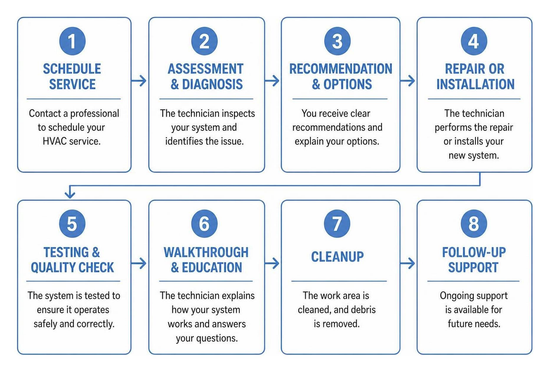
A professional HVAC installation or significant repair is a structured process designed to ensure safety, efficiency, and longevity of your system. While specific steps may vary slightly depending on the project, the core methodology remains consistent, reflecting the expertise and precision involved.
For an installation, the process typically begins with site preparation. This involves protecting your home’s interior, laying down drop cloths, and ensuring a clear path for technicians and equipment. If it’s a replacement, the old unit removal is the next step, where the existing furnace, air conditioner, or heat pump is carefully disconnected, dismantled, and safely disposed of in compliance with environmental regulations, particularly concerning refrigerants.
Next, the new system components are positioned. This includes installing the indoor air handler or furnace, and the outdoor condensing unit. Technicians then meticulously connect the refrigerant lines between the indoor and outdoor units, ensuring they are properly sized, insulated, and sealed to prevent leaks. The electrical connections are made, adhering to all local codes and safety standards, often requiring a dedicated circuit for the new system. This step also includes installing or upgrading the thermostat.
Once the physical components are in place, the system is charged with the appropriate refrigerant and undergoes rigorous testing. This includes checking for leaks, verifying proper airflow, balancing the system, and calibrating the thermostat. Technicians will also perform a system commissioning process, which involves a series of checks to ensure every component is working optimally and the entire system is operating at peak efficiency. Finally, a professional will walk you through the new system’s operation, explain maintenance requirements, and answer any questions you may have.
For repairs, the process is more focused. After the initial diagnostic, the technician will explain the issue and proposed solution. They will then proceed with the necessary component replacement or adjustment, followed by testing to confirm the repair has resolved the problem and the system is functioning correctly. Throughout both installation and repair, safety is paramount, with technicians adhering to strict protocols to protect themselves and your home.
Determining the True Costs of HVAC Installation and Repair
Understanding the financial aspects of HVAC services is crucial for homeowners. While specific pricing cannot be discussed, we can outline the factors that contribute to the overall cost and how professional companies ensure transparency.
For HVAC installation, the cost is influenced by several variables:
- Type of system: Central AC, heat pump, furnace, or ductless mini-split systems each have different price points.
- System size and efficiency: Larger systems and those with higher SEER2 ratings typically have higher upfront costs but offer greater energy savings over time.
- Complexity of installation: Factors like existing ductwork condition, electrical upgrades needed, and accessibility of the installation site can impact labor costs.
- Additional features: Smart thermostats, zoning systems, or indoor air quality accessories add to the overall expense.
- Local permits and inspections: Many jurisdictions require permits for new HVAC installations, which incur fees and ensure the work meets local building codes.
Reputable HVAC companies strive for transparent pricing. This means providing detailed, written estimates that break down the costs of equipment, labor, and any additional services. They will explain exactly what you are paying for, avoiding hidden fees. Many also offer various financing options to make new installations more accessible.
For HVAC repair, costs depend on:
- Nature of the problem: Minor repairs like a capacitor replacement are less costly than major component failures like a compressor or heat exchanger.
- Cost of parts: The price of replacement parts varies significantly.
- Labor time: The complexity and duration of the repair directly impact labor charges.
- Emergency service: Repairs needed outside of regular business hours often incur higher rates.
When selecting a provider, ask about their labor warranties and guarantees on parts. A strong warranty indicates confidence in their workmanship and the quality of the components they use. Companies committed to customer satisfaction often back their services with guarantees, ensuring that if an issue arises with their work, they will address it promptly and professionally. This commitment to transparency and guarantees is a hallmark of a trusted HVAC service provider.
24/7 Emergency Responses and Seasonal Preparedness
HVAC emergencies don’t adhere to a 9-to-5 schedule. A furnace breakdown in the dead of winter or an AC failure during a summer heatwave can be more than just an inconvenience; they can pose health risks, especially for vulnerable populations. This is why the availability of 24/7 emergency HVAC services is a critical offering from many professional providers.
When an emergency strikes, homeowners can typically expect a rapid response. Companies like McNally’s Heating & Cooling, for example, pride themselves on offering 24/7/365 emergency services, demonstrating a commitment to being available whenever their customers need them most. This means that whether it’s midnight on a holiday or a Sunday afternoon, a qualified technician can be dispatched to assess and address the issue. The speed of response can vary based on demand and location, but reputable companies prioritize emergency calls to restore comfort and safety as quickly as possible.
Beyond reactive emergency services, seasonal preparedness is crucial for preventing breakdowns and ensuring your system operates efficiently year-round.
- Winter heating preparation: Before the cold weather sets in (typically in the fall, around October or November), homeowners should schedule a professional furnace tune-up. This includes checking the heat exchanger for cracks, cleaning burners, inspecting the ignition system, testing safety controls, and verifying proper airflow. This proactive maintenance helps prevent unexpected breakdowns during peak winter usage and ensures your system is ready for the demands of the season.
- Summer cooling check: Similarly, in the spring (around March or April), an AC tune-up is essential. Technicians will clean evaporator and condenser coils, check refrigerant levels, inspect electrical components, lubricate moving parts, and clear condensate drains. This prepares your system for efficient operation during the summer months, preventing issues like reduced cooling capacity or excessive energy consumption.
Regular maintenance not only helps prevent emergencies but also extends the life of your equipment and maintains its efficiency. It’s an investment in your home’s comfort and your peace of mind, ensuring that your HVAC system is ready to tackle whatever the weather brings in September 2026 and beyond.
Maximizing Equipment Longevity Through Maintenance and Membership Plans
Investing in a high-quality HVAC system is a significant decision for any homeowner. To protect that investment and ensure it provides consistent comfort and efficiency for years to come, routine HVAC maintenance is indispensable. Just like a car, your heating and cooling system has moving parts and complex components that require regular attention to perform optimally.
The benefits of preventive maintenance are numerous:
- Extended lifespan: Regular tune-ups identify minor issues before they escalate into major problems, reducing wear and tear on components and significantly prolonging the life of your unit.
- Improved efficiency: Clean coils, proper refrigerant levels, and well-lubricated parts mean your system doesn’t have to work as hard, leading to lower energy bills. This is a direct answer to the question of what are the benefits of routine HVAC maintenance.
- Fewer breakdowns: Proactive checks catch potential failures, dramatically reducing the likelihood of unexpected and costly emergency repairs.
- Enhanced indoor air quality: Maintenance often includes checking and cleaning filters, which is crucial for circulating clean, healthy air throughout your home.
- Warranty protection: Many manufacturers require proof of annual professional maintenance to keep your warranty valid. Skipping tune-ups could void your coverage, leaving you responsible for expensive repairs.
To make maintenance easy and affordable, many HVAC companies offer membership plans or service agreements. These plans typically include:
- Bi-annual tune-ups: Professional inspections and maintenance visits, usually one for your heating system in the fall and one for your cooling system in the spring.
- Priority dispatch: Members often receive expedited service, especially during peak seasons or emergencies, ensuring quicker response times.
- Exclusive discounts: Savings on repairs, parts, and sometimes even new equipment.
- No overtime charges: For emergency services, members may not incur additional fees for after-hours calls.
- Detailed service records: A clear history of your system’s maintenance, which can be valuable if you ever sell your home.
For example, a company with over 40 years of experience and a fleet of more than 500 service vehicles, like Michael & Son, often highlights the benefits of their membership plans, including proactive scheduling, priority service, and exclusive savings. These plans are designed to provide peace of mind, knowing that your system is regularly cared for by certified professionals, ensuring consistent performance and maximizing its longevity.
Frequently Asked Questions about HVAC Services
We understand that homeowners often have specific questions when it comes to their HVAC systems. Here, we address some of the most common inquiries to provide clarity and guidance.
How often should residential HVAC systems receive maintenance?
For optimal performance, efficiency, and longevity, we recommend that residential HVAC systems receive professional maintenance at least bi-annually. This typically involves a spring AC check (around March or April) to prepare your cooling system for the summer heat, and a fall heating check (around September or October) to ensure your furnace or heat pump is ready for winter. Beyond professional tune-ups, homeowners should regularly check and replace their air filters every 1-3 months, depending on usage, household size, and pet ownership. This routine care significantly contributes to the system’s health and your indoor air quality.
What is the typical lifespan of modern heating and cooling equipment?
The typical lifespan of modern heating and cooling equipment generally ranges from 15 to 20 years.
- Central air conditioners usually last 15-20 years.
- Heat pumps also typically have a lifespan of 15-20 years, as they operate year-round for both heating and cooling.
- Gas furnaces often have a slightly longer lifespan, averaging 15-25 years. This lifespan, however, is heavily influenced by factors such as the quality of the initial installation, the frequency and quality of maintenance impact, and the intensity of use. Systems that receive regular professional tune-ups and prompt repairs tend to last longer than those that are neglected.
When is a ductless mini-split preferred over central HVAC?
A ductless mini-split system is often preferred over central HVAC in several specific situations:
- Room additions: When adding a new room to your home, extending existing ductwork can be costly and complex. A mini-split provides an independent heating and cooling solution for that specific area.
- Historic homes: Older homes often lack existing ductwork, and installing a full central system can be invasive and expensive. Ductless mini-splits offer a less intrusive way to add modern comfort.
- Zoned temperature control: Mini-splits excel at providing zoned temperature control. Each indoor unit can be set to a different temperature, allowing occupants to customize comfort in different areas of the home and save energy by only conditioning occupied spaces.
- Ductless efficiency: They are highly energy-efficient, as they avoid the energy losses associated with ductwork, which can account for up to 30% of energy consumption in central systems. This makes them an excellent choice for homeowners looking to upgrade to energy-efficient HVAC systems.
Conclusion
Navigating HVAC installation and repair can seem complex, but with the right knowledge, homeowners can make informed decisions that ensure lasting comfort and efficiency. We’ve explored the critical signs that indicate your system needs attention, the factors influencing the repair-versus-replace decision, and the comprehensive array of services offered by professional HVAC providers.
From understanding the meticulous process of professional installations, including crucial sizing and load calculations, to appreciating the value of 24/7 emergency responses and seasonal preparedness, it’s clear that proactive care is key. Embracing routine maintenance through membership plans not only prolongs your equipment’s lifespan and enhances efficiency but also provides significant long-term savings and peace of mind.
By choosing certified technicians who prioritize transparent pricing and customer satisfaction, you ensure your home’s heating and cooling systems are in capable hands. Investing in modern, energy-efficient solutions like ductless mini-splits or upgrading older equipment not only reduces your carbon footprint but also contributes to a healthier, more comfortable living environment. A well-maintained and properly functioning HVAC system is the cornerstone of indoor comfort, contributing significantly to your home’s overall well-being.