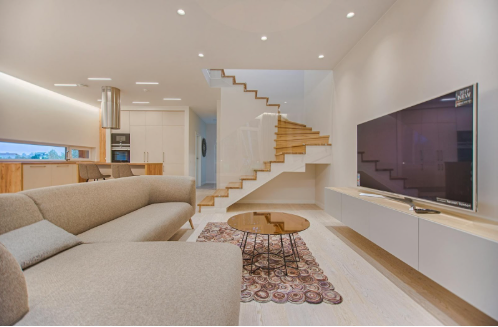
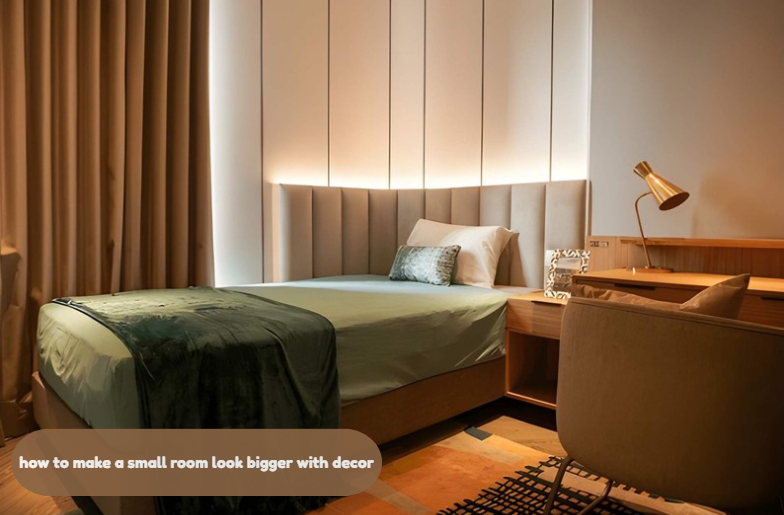
How to Make a Small Room Look Bigger With Decor Without Spending Much
If you are searching for how to make a small room look bigger with decor, you probably want practical ideas that actually work without draining your budget. The good news is that small rooms usually feel cramped because of layout, lighting, clutter, and visual balance—not because they are impossible to improve.
A few smart decor changes can completely shift how a room feels. A complete renovation is not necessary. Expensive furniture is not necessary. All you need is lighter styling, more visual flow, and fewer distracting elements.
A lot of home upgrade discussions today focus more on affordable improvements instead of expensive remodels, since even small changes can make a surprisingly big visual difference.
What Makes a Small Room Look Bigger?
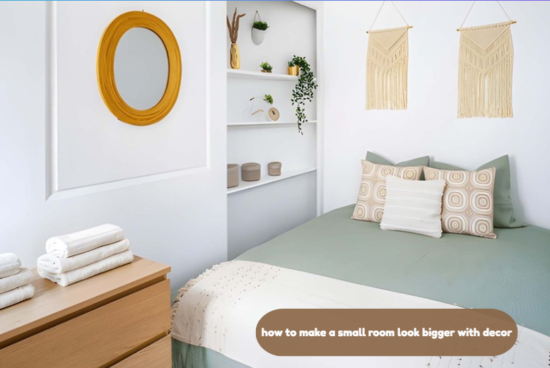
A small room looks bigger when it has the following:
- Better light flow
- Less visual clutter
- Furniture scaled correctly
- More open floor visibility
- Consistent colors and textures
- Decor that guides the eye upward or outward
Reducing visual distractions is the simplest approach to enlarging a space. Light colors, mirrors, smart storage, and cleaner layouts help the eye move naturally through the room instead of stopping at clutter or heavy furniture.
Start by Removing Visual Clutter
The biggest mistake people make when learning how to decorate a small living room without clutter is trying to organize too much stuff instead of reducing it.
A room can technically be “organized” and still feel crowded.
One interesting discussion on Reddit’s decluttering communities pointed out that oversized furniture often takes up more visual space than the actual belongings stored inside it. Many people discovered their homes felt larger simply by removing bulky pieces they barely used.
Quick decluttering wins:
- Remove furniture that serves only one small purpose
- Clear surfaces like coffee tables and nightstands
- Keep only one or two decorative accents per area
- Hide cables and chargers
- Store seasonal items elsewhere
Pro Tip:
If an item constantly sits “temporarily” on a chair or table, the room probably lacks functional storage. Add baskets, vertical shelves, or under-bed storage instead of adding another cabinet.
This is one of the most overlooked upgrading tips experts often mention because people usually focus on buying decor before fixing the room flow itself.
Use Mirrors the Right Way
Mirrors work because they reflect both light and depth, making walls appear farther away.
Design experts in 2025 continue recommending oversized mirrors for small interiors because they visually double the room size and brighten dark corners.
Best mirror placements:
- Across from a window
- Behind a lamp
- Near natural light
- On narrow walls
- In small dining or living areas
Avoid this mistake:
Do not place mirrors where they reflect clutter. A mirror doubles whatever it faces.
A large mirror from a thrift store can often make a bigger difference than buying multiple decorative pieces.
Choose Light Colors — But Do Not Make the Room Boring
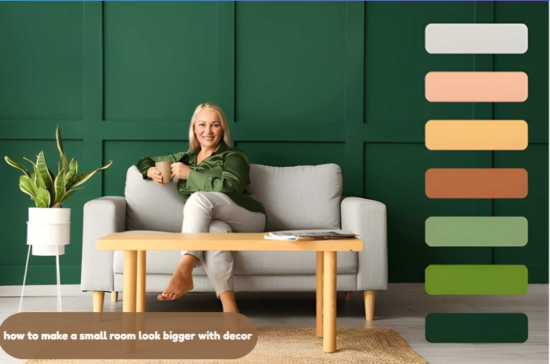
White walls help, but an all-white room can sometimes feel flat and cold.
Current small-space trends in 2024–2026 show that softer neutrals, warm creams, muted greens, pale grays, and layered textures create more openness without making the room feel empty.
Colors that help small rooms feel larger:
- Warm white
- Light beige
- Pale gray
- Soft sage
- Dusty blue
Easy budget trick:
Use similar tones for:
- Walls
- Curtains
- Rugs
- Large furniture
When colors blend smoothly, the eye moves across the room without interruption.
That visual continuity matters more than expensive decor. Many homeowners often turn to decoratoradvice com for simple, practical ideas that help improve their space without spending too much money.
Let More Light In
Lighting changes everything in a small room.
Interior design experts increasingly recommend layered lighting instead of relying on one harsh ceiling light.
Use three types of lighting:
- Ambient lighting → ceiling or main light
- Task lighting → reading lamps or desk lamps
- Accent lighting → wall lights or LED strips
Cheap upgrades that work:
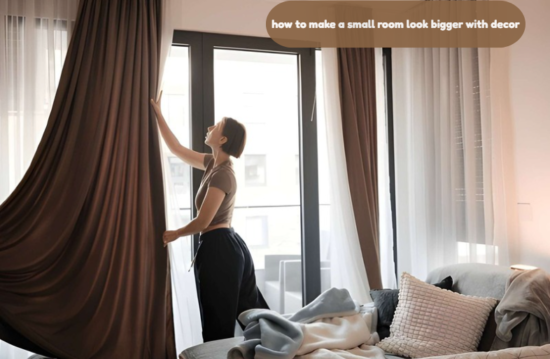
- Replace heavy curtains with sheer curtains
- Use daylight LED bulbs
- Add one floor lamp in a dark corner
- Keep window areas clear
Natural light instantly pushes walls visually outward.
This is one reason many home styling guides focus heavily on window treatments before furniture upgrades.
Pick Furniture With Visible Legs
Furniture that sits directly on the floor can make rooms feel heavy.
Furniture with visible legs creates more visible floor area, which tricks the brain into seeing more space.
Better choices:
- Open-leg sofas
- Floating shelves
- Glass coffee tables
- Slim side tables
- Raised TV stands
Avoid:
- Bulky recliners
- Thick dark wood furniture
- Oversized sectionals in tiny rooms
One surprising trend noted by designers in 2025 is that a few slightly larger statement pieces often work better than many tiny pieces competing for space.
Too many small items create visual noise.
Hang Curtains Higher Than the Window
This simple trick makes ceilings look taller immediately.
Correct curtain placement:
- Mount curtain rods closer to the ceiling
- Let curtains extend slightly below the window
- Use longer panels whenever possible
Vertical lines naturally guide the eye upward.
Even inexpensive curtains look more expensive when hung properly.
Use Rugs to Define Space
A rug that is too small makes the room feel disconnected.
A larger rug actually helps unify furniture and creates a more open appearance.
Designers in recent small-space trends repeatedly recommend oversized rugs instead of tiny accent rugs.
Rug rule:
At least the front legs of major furniture pieces should sit on the rug.
This creates one connected visual zone instead of several cramped sections.
Decorate Vertically Instead of Horizontally
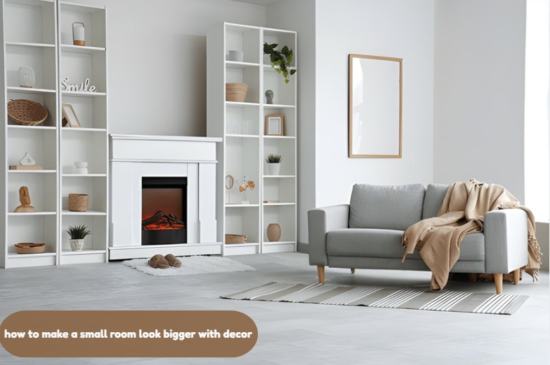
Small rooms usually lack floor space, not wall space.
Use height strategically.
Smart vertical decor ideas:
- Tall bookshelves
- Vertical art arrangements
- Floating shelves
- Hanging plants
- Wall-mounted lighting
The eye naturally follows vertical movement, making ceilings feel higher.
This technique is often discussed in home upgrade decoradtech communities because it adds function without taking up square footage.
Keep Decorations Intentional
One reason professionally styled rooms feel bigger is because every object feels chosen carefully.
Random decor creates tension.
Keep these:
- One big piece of art rather than several small frames
- One statement plan
- One textured throw blanket
- One or two pieces of significant décor
Avoid:
- Overfilled shelves
- Too many colors
- Excess decorative pillows
- Tiny scattered accessories
According to interior design trend reporting based on over 250,000 room designs, cohesive styling and intentional layouts strongly influence how aesthetically pleasing people find interiors.
How to Decorate a Small Room Without Clutter
If your living room feels cramped, focus on flow first.
Simple layout formula:
- Largest furniture against the longest wall
- Clear walking paths
- Minimal table decor
- Hidden storage whenever possible
- One visual focal point
Budget-friendly ideas:
- Storage ottomans
- Floating TV units
- Nesting tables
- Wall hooks
- Foldable furniture
People searching for how to decorate a small room without clutter often try adding more storage bins first. But reducing unnecessary items usually creates faster results.
A room feels bigger when it can breathe.
A Unique Trick Most Articles Ignore
Most advice focuses only on decor.
But sound also affects how roomy a space feels.
Soft materials like rugs, curtains, and fabric cushions reduce echo and make small rooms feel calmer and less chaotic. A noisy room often feels mentally “crowded,” even when it is clean.
This is something many upgrading tips decoradhouse discussions overlook completely.
The goal is not just visual space. It is an emotional space too.
Budget-Friendly Small Room Upgrade Checklist
Here are low-cost upgrades that create the biggest impact:
| Upgrade | Estimated Cost | Impact |
| Large mirror | Low–Medium | High |
| Sheer curtains | Low | High |
| Decluttering | Free | Very High |
| LED lighting | Low | Medium |
| Neutral paint | Medium | High |
| Floating shelves | Low | Medium |
| Multi-use furniture | Medium | High |
| Large rug | Medium | High |
Final Thoughts
Discovering how to make a small room look bigger with decor is less about buying expensive furniture and more about improving visual balance.
Small rooms feel larger when
- Light moves freely
- Clutter disappears
- Furniture fits properly
- Colors feel connected
- Decor stays intentional
Start with the easiest fixes first:
declutter, improve lighting, reposition furniture, and add one large mirror.
You don’t have to change everything in a single weekend. Your room’s atmosphere can be drastically altered with just one or two clever adjustments.
If you are updating your home soon, start with the area you use most every day. Small improvements there usually create the biggest difference in comfort and appearance.