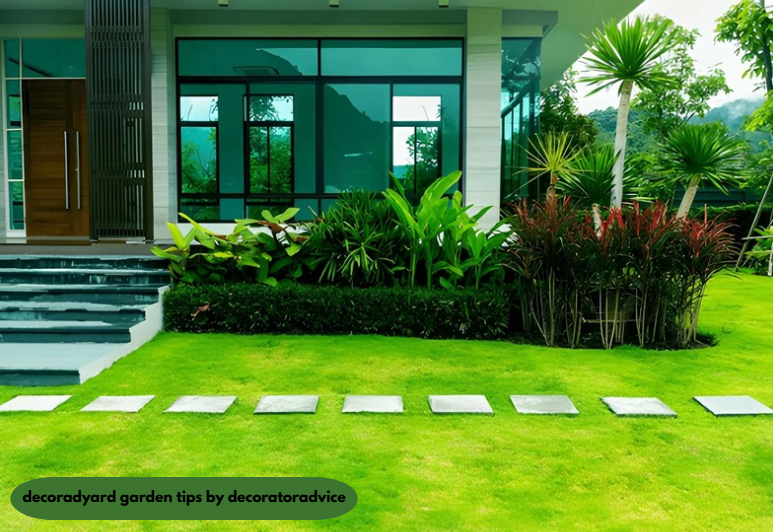
Decoradyard Garden Tips by DecoratorAdvice: How to Design a Garden That Fits Your Home Easily
Decoradyard garden tips by DecoratorAdvice start with one rule: design the garden from the house outward, matching its style, sunlight, climate zone, and how you use each door and window. Plan zones on paper, pick plants rated for your USDA zone and light, then add hardscape and decor last.
Key Takeaways
- Full sun means at least six hours of direct sunlight a day, so map the light in each zone before buying plants.
- The 2023 USDA Plant Hardiness Zone Map moved about half of the country into a warmer half zone, so plant lists made before 2023 can be out of date.
- EPA WaterSense estimates that switching to a water-efficient landscape cuts outdoor water use by 20 to 50 percent.
- In NAR’s 2023 outdoor features report, standard lawn care had the highest estimated cost recovery at 217 percent, while an in-ground pool had 56 percent.
- In 2025, 37 percent of renovating homeowners went over budget, according to the 2026 U.S. Houzz & Home Study.
What Is a Garden That Fits Your Home?
A garden that fits your home is an outdoor layout whose paths, materials, plants, and scale follow the house’s architecture, sun exposure, climate zone, and daily routines. It looks planned from every window, not just from the street.
How Do You Design a Garden That Matches Your House?
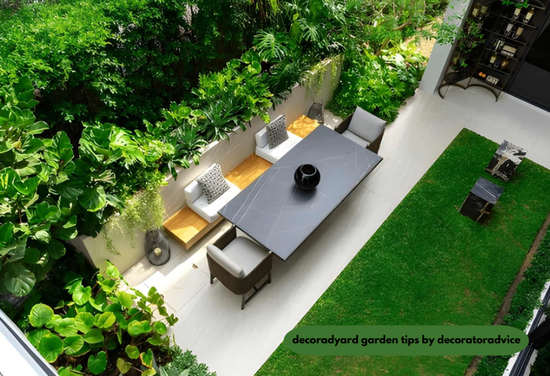
Start from the house, not the yard. Trace where people walk when they leave each door and what they see from each main window, then build garden zones along those lines.
This approach separates a garden that feels built-in from one that feels bolted on. The same garden tips work on a quarter-acre lot or a small townhouse yard because they follow the house, not a trend photo.
Start With Doors, Windows, and Walkways
Place the most-used zones closest to the doors people actually use. A dining patio belongs next to the kitchen door, and a quiet seating nook works best where a living room window frames it.
Paths should follow the routes people already walk. If a worn line runs across the lawn to the driveway, pave that line instead of fighting it.
Borrow the House’s Materials and Colors
Repeat one or two exterior materials from the house in the garden. A brick house pairs with brick edging or brick pavers, and a modern stucco home pairs with smooth concrete and steel planters.
Pull flower and pot colors from the trim, front door, or roof. This is one of the simplest forms of home upgrading, because it makes the house and garden read as one project.
Use this seven-step process before buying anything:
- Sketch the lot on graph paper, marking the house footprint, doors, main windows, downspouts, and utility lines.
- Record sun and shade in each area at morning, midday, and late afternoon.
- Check drainage after a heavy rain and mark spots where water pools.
- Use your ZIP code to find your zone on the USDA Plant Hardiness Zone Map.
- Assign zones for entry, dining, relaxing, play, planting, and storage.
- Choose hardscape materials that repeat the house’s exterior.
- Plant in layers of trees, shrubs, and ground cover, and buy decor last.
Which Plants Fit Your Yard’s Sun and Climate?
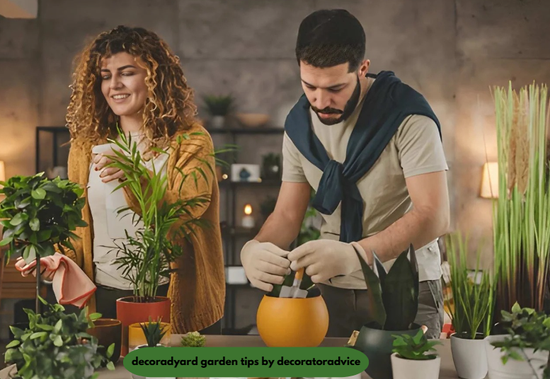
The right plants are the ones rated for both your light level and your hardiness zone. Check both numbers on every plant tag before buying.
Penn State Extension defines sun levels this way:
- Full sun: six or more hours of direct sunlight a day, not necessarily continuous.
- Partial sun: four to six hours.
- Partial shade: two to four hours.
- Shade: fewer than two hours.
Sources differ slightly. UGA Extension, for example, classifies full shade as under four hours of sun, so trust your own light log when a tag is vague. Recheck in summer, because trees leafing out can turn a spot with full winter sun into partial shade.
The 2023 USDA map, built with Oregon State University’s PRISM Climate Group from 1991 to 2020 weather data, moved about half of the country into the next warmer half zone. It tracks winter lows only, so pair it with local extension plant lists for heat, humidity, and soil.
Decoradyard Garden Tips by DecoratorAdvice for Cutting Water Use
Group plants by water need, shrink thirsty lawn areas, and fix your irrigation. These three steps cut the largest source of garden waste.
EPA WaterSense data shows why outdoor water matters:
- Outdoor use makes up about 30 percent of household water, nearly 9 billion of the 29 billion gallons U.S. households use daily.
- That share reaches 70 percent in hot summers or dry climates.
- Up to half of residential outdoor water is lost to evaporation, wind, runoff, and overwatering.
Two quick fixes help right away:
- Step test: This home hack comes from the EPA. If the grass comes back after you step on it, don’t water it.
- Smart controller: For readers who follow decoradtech topics, a WaterSense-labeled irrigation controller adjusts watering to local weather, much like a thermostat.
Worked Example: Water Savings on a Typical Irrigated Yard
A water-efficient redesign saves the EPA’s benchmark household 10,100 to 25,250 gallons a year. EPA’s benchmark household uses 50,500 gallons outdoors annually, and EPA estimates a water-efficient landscape cuts outdoor use by 20 to 50 percent.
- At 20 percent savings: 50,500 × 0.20 = 10,100 gallons per year.
- At 50 percent savings: 50,500 × 0.50 = 25,250 gallons per year.
- Dollar value: EPA credits $60 in water and sewer savings for every 5,600 gallons saved, about $10.70 per 1,000 gallons. At that rate, the redesign saves roughly $108 to $270 a year.
Real savings depend on your utility’s rates, your climate, and how much lawn you replace.
Which Garden Upgrades Add the Most Value to a Home?
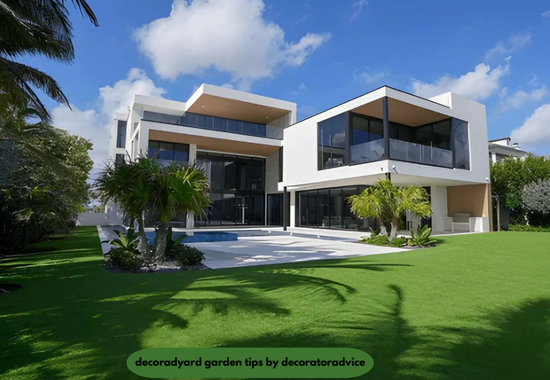
Routine care beats big-ticket features on estimated resale return. In NAR’s data, lawn care and landscape maintenance outperformed pools, fire features, and lighting.
The National Association of Realtors’ 2023 Remodeling Impact Report: Outdoor features are included in the table. Its two columns measure different things:
- Costs are averaged estimates from National Association of Landscape Professionals members.
- Cost recovery is what Realtors estimate a seller gets back, not measured sale prices.
- Both assume a 2,500-square-foot house on a 14,000-square-foot lot.
| Outdoor project | Landscape pros’ estimated cost | Realtors’ estimated cost recovery |
| Standard lawn care service | $415 | 217% |
| Landscape maintenance | $4,800 | 104% |
| Overall landscape upgrade | $9,000 | 100% |
| Outdoor kitchen | $15,000 | 100% |
| New patio | $10,500 | 95% |
| Tree care | $2,875 | 87% |
| Landscape lighting | $6,800 | 59% |
| Fire feature | $9,000 | 56% |
| In-ground pool | $90,000 | 56% |
The pool received the highest homeowner Joy Score in NAR, but it also had the lowest recovery, so don’t anticipate all of its features to be profitable. Homeowners are already leaning toward planting: the 2025 U.S. The Houzz & Home Study reported that beds and borders were the most common outdoor landscaping project in 2024, accounting for 29% of projects.
What Is the Most Common Garden Design Mistake?
The most common mistake is buying furniture, lights, and decor before the layout is set. The fix is to measure and zone first, then shop.
This happens because decor is fast and easy to buy. Houzz found lighting led outdoor decor purchases in 2024 at 27 percent, followed by large furniture at 23 percent, and a patio built after the sofa arrives ends up sized around the furniture instead of the house.
Fix it in this order:
- Measure each zone and mark furniture footprints with stakes and string.
- Walk through the layout for a week before ordering anything.
- Add lighting and outdoor rugs as the final layer, using these details to shape your home style and finish the space.
- Apply the same decoration tips you use for planting: two or three colors drawn from the house, repeated across pots, cushions, and blooms.
A written plan also protects your budget. The 2026 U.S. Houzz & Home Study found 37 percent of homeowners exceeded their budget in 2025, and the median planned spend fell to $15,000 for 2026 from $20,000 for 2025. Those figures cover all renovations, not gardens alone.
When Should You Skip a Full Garden Redesign?
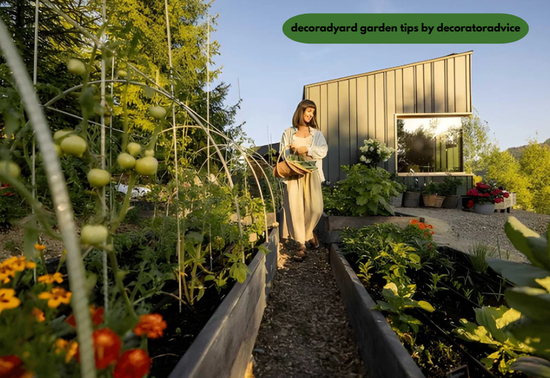
If you rent, or you plan to sell within a year or two, a full redesign is usually the wrong move. DecoratorAdvice recommends focusing on changes you can reverse or maintain easily. Renters rarely have permission to remove lawn or add hardscape, so containers, movable planters, and freestanding lights create the same zones without changing the property. Sellers get more from basic care, since NAR’s 2023 report ranked lawn care and landscape maintenance above a full landscape upgrade for estimated cost recovery. HOA rules also override design choices, so check restrictions on lawn removal, fencing, and plants before drawing a plan.
Frequently Asked Questions
What are the best garden tips for beginners?
Map your sun and shade, find your USDA zone, and plan zones on paper before planting. DecoratorAdvice’s core principle is designing outward from the house, so beginners should start with the areas closest to the most-used doors. Buy decor only after the layout works.
How do I make my garden match my house style?
Repeat one or two exterior materials and two or three colors from the house in your paths, planters, and plants. Brick homes suit brick edging, while modern homes suit concrete and metal. Align paths and seating with doors and main windows.
What plants are easiest to maintain?
Native plants suited to your zone and light level are usually the easiest to maintain. Established native plants use very little water beyond typical rainfall, according to EPA WaterSense. Group plants with similar water needs so you never overwater one to save another.
How much does it cost to landscape a yard?
Landscape professionals estimated an overall landscape upgrade at about $9,000 in NAR’s 2023 outdoor features report. That estimate is based on a 2,500-square-foot home on a 14,000-square-foot lot. Costs can increase depending on the lot size, materials used, and local labor rates.
Does landscaping increase home value?
Yes, Realtors estimate that well-kept landscaping recovers most or all of its cost at sale. NAR’s 2023 report put estimated recovery at 217 percent for lawn care and 100 percent for an overall landscape upgrade. Pools and fire features recovered far less.
How often should I water my garden?
Water only when plants need it, not on a fixed daily schedule. For lawns, EPA recommends stepping on the grass: if it springs back, it does not need water. Weather-based irrigation controllers automate this decision.
Conclusion
Decoradyard garden tips by DecoratorAdvice come down to one idea: a garden fits your home when it follows the house’s doors, materials, light, and climate. Plan zones first, choose plants for your zone and sun, and save decor for last. Spend on care and water efficiency before luxury features, because those deliver the steadiest returns.