The Bathroom Vanity Mistakes That Make Your Space Feel Cheap (And How to Avoid Them)
Bathrooms are one of the most impactful spaces in a home—but they’re also one of the easiest to get wrong. A renovation might look impressive at first glance, yet still feel underwhelming once it’s in everyday use.
More often than not, the issue comes down to one key element: the vanity.
As the focal point of the room, the vanity plays a major role in both the bathroom’s appearance and its functionality. When the size, style, or quality isn’t right, the entire space can feel unbalanced or cheaply finished—no matter how much was spent elsewhere.
The good news is that most of these issues are easy to avoid. By understanding the common mistakes people make when choosing a vanity, it’s possible to create a bathroom that feels cohesive, practical, and far more refined.
1. Choosing the Wrong Size Vanity
Getting the size of your vanity wrong is one of the quickest ways to make a bathroom feel off. It’s a common mistake, especially when people focus on style before considering how the piece fits within the space.
An oversized vanity can overwhelm a small bathroom, making it feel cramped and difficult to move around in. On the other hand, a vanity that’s too small can look out of place in a larger room, leaving the space feeling empty and under-designed.
Both scenarios throw off the proportions of the room and make the overall layout feel awkward rather than intentional.
The key is to match the vanity to the scale of the space. Allow enough clearance for comfortable movement, especially in front of drawers and doors. In smaller bathrooms, wall-hung vanities are often a smart choice, as they create a sense of openness while still providing the functionality you need.
2. Ignoring Storage Needs
It’s easy to get caught up in how a vanity looks, but ignoring storage is where many bathroom designs fall short. A sleek design might look great initially, but without enough practical storage, the space quickly becomes cluttered and frustrating to use.
This often happens when vanities prioritise appearance over function—offering limited drawers, shallow compartments, or awkward layouts that don’t suit everyday items. The result is benchtops filled with toiletries, cleaning products with nowhere to go, and a bathroom that never quite feels organised.
A better approach is to focus on how the vanity will be used day-to-day. Look for designs with well-planned drawer configurations that make it easy to store and access essentials. Deep drawers, internal organisers, and thoughtful layouts can make a significant difference.
When storage is built into the design from the start, the entire bathroom feels cleaner, more functional, and far more enjoyable to use.
3. Going Too Trendy with Finishes
It’s tempting to follow the latest design trends, especially with so many bold colours and statement finishes dominating social media and design blogs. While these choices can look striking at first, they often date quickly and can make a bathroom feel outdated sooner than expected.
Trendy finishes can also limit flexibility. Once a strong colour or style is locked in, it becomes harder to update other elements, such as tiles, mirrors, or tapware, without creating clashes.
A more reliable approach is to keep the bathroom’s core elements timeless. Neutral finishes—such as white and soft tones—provide a clean, adaptable base that works across different styles and evolves easily over time.
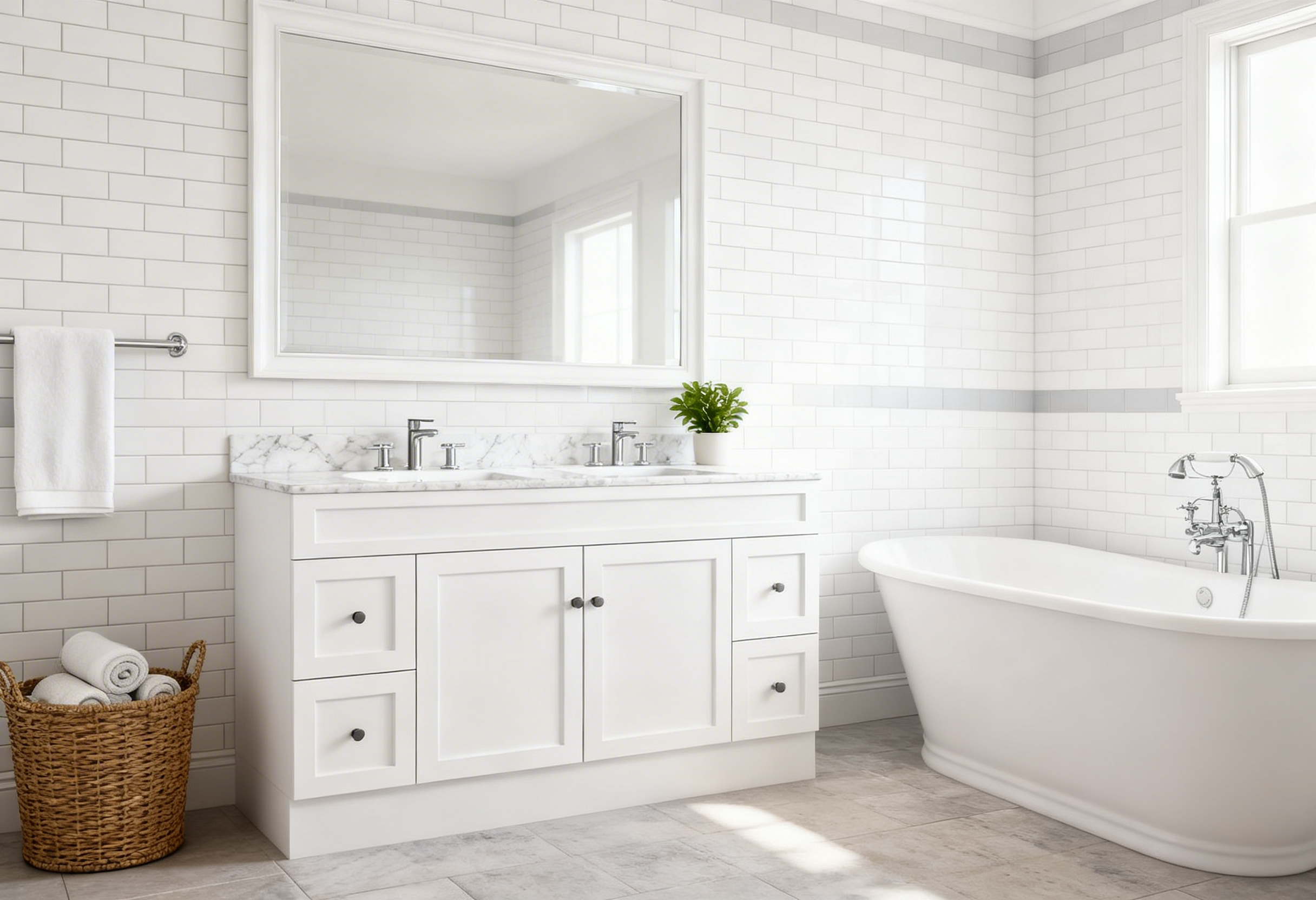
Gloss white vanities are a good example of this. They offer a fresh, modern look while remaining versatile enough to pair with changing trends in accessories, fixtures, and finishes, making them a practical long-term choice.
4. Poor Quality Vanity Construction
One of the biggest factors that separates a bathroom that feels high-end from one that feels cheap is the quality of the vanity itself. While it may be tempting to save money up front, low-quality construction often shows very quickly once the bathroom is in daily use.
Cheap vanities are typically made with thin panels, weak hinges, and inconsistent finishes. Over time, this leads to doors that sag, drawers that don’t close properly, and surfaces that start to wear far sooner than expected. Even in a well-designed bathroom, these issues can make the entire space feel tired and poorly built.
Choosing better construction from the start makes a noticeable difference. Well-built vanities use stronger materials, reliable hardware, and precise manufacturing to ensure everything stays aligned and functions properly over time. Suppliers like Ross’s Discount Home Centre, for example, focus on precision-made cabinetry that holds up to everyday use. In fact, choosing high-quality bathroom vanities designed for durability makes a noticeable difference not just in how the bathroom looks, but in how it performs day to day.
When the vanity feels solid and well-finished, the entire bathroom takes on a more refined and long-lasting appeal.
5. Forgetting the Mirror Connection
The vanity might be the focal point of the bathroom, but the mirror plays an equally important supporting role. When the two don’t work together, the entire space can feel slightly off—even if each element looks good on its own.
A common mistake is choosing a mirror that doesn’t match the proportions of the vanity. Mirrors that are too small can look disconnected, while oversized ones can overwhelm the space. Mismatched shapes or finishes can also create a disjointed look that feels more accidental than designed.
To create a more cohesive result, the mirror should complement the vanity in both size and style. Aligning the mirror width with the vanity is a good starting point, while matching shapes—such as round mirrors with softer design elements or rectangular mirrors with clean-lined cabinetry—helps tie everything together.
Mirrors also play a key role in enhancing light and creating a sense of space. When chosen thoughtfully, they don’t just complete the look—they elevate the entire bathroom.
6. Poor Lighting Around the Vanity
Lighting around the vanity is often treated as an afterthought, but it has a major impact on both the look and usability of a bathroom. Relying on a single overhead light is one of the most common mistakes, and it usually results in shadows across the face and basin.
This type of lighting can feel harsh and unflattering, making everyday tasks like shaving, applying makeup, or even washing up less comfortable. It also flattens the overall look of the space, reducing the impact of other design elements.
A more effective approach is to layer lighting around the vanity. Wall lights or side-mounted fixtures placed at eye level help eliminate shadows and provide more even illumination. Combining this with ambient ceiling lighting creates a balanced and functional setup.
Mirrors can also be used strategically to reflect light and brighten the space. When lighting is planned properly, it enhances both the practicality of the bathroom and the overall sense of quality.
7. Ignoring the Overall Bathroom Flow
A bathroom might have high-quality individual elements, but if they don’t work together, the overall space can still feel disjointed. One of the most common issues is choosing a vanity that doesn’t align with the rest of the bathroom design.
When the vanity clashes with the shower, tiles, or layout, the result often feels pieced together rather than cohesive. Differences in style, colour, or proportions can make the space look unbalanced, even if each component looks good on its own.
A better approach is to treat the vanity as part of a complete system rather than a standalone feature. Coordinating it with surrounding elements—such as shower screens, tapware, and tiles—helps create a more unified and intentional design.
When everything works together, the bathroom feels more considered, more polished, and far closer to the kind of finish typically associated with high-end spaces.
Conclusion
Creating a bathroom that feels high-end doesn’t always come down to budget—it comes down to making the right decisions. Avoiding common vanity mistakes alone can have a significant impact on how the space looks and functions day-to-day.
By focusing on the fundamentals—choosing the right size, prioritising storage, selecting durable materials, and ensuring everything works together—you can achieve a bathroom that feels cohesive, practical, and well-designed.
For those planning an upgrade, choosing a well-built vanity from a trusted supplier like Ross’s Discount Home Centre can help create a space that looks polished, functional, and built to last.