Space Saving Decor Ideas for Studio Apartments That Feel Bigger
Most studio apartment advice gets one thing wrong: pushing furniture against the walls doesn’t open up space—it actually makes the room feel flatter. Here’s what works instead.
in fast-growing cities where space is expensive. The challenge is always the same: how do you make one open room feel like a functional, comfortable home without it turning into a cluttered box?
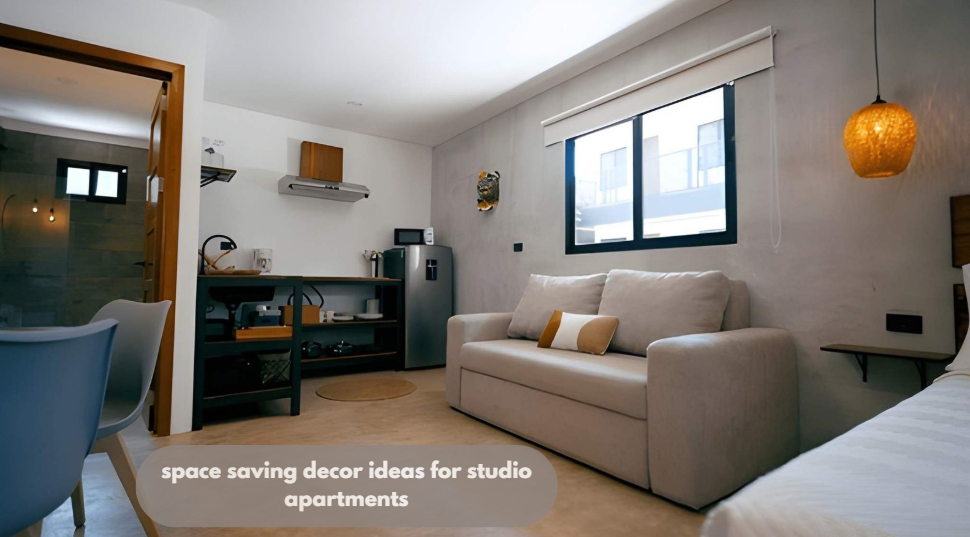
This guide on space saving decor ideas for studio apartments breaks down exactly how to do that in a realistic, modern way. You’ll learn how to visually expand your space, choose furniture that actually earns its place, and avoid the common mistakes that make small apartments feel even tighter. Instead of vague inspiration, you’ll get practical strategies you can apply immediately—even in a rental where you can’t make structural changes.
The goal here isn’t to “decorate nicely.” It’s to rethink space so your studio works harder for you.
What Space Saving Decor Ideas for Studio Apartments Really Means
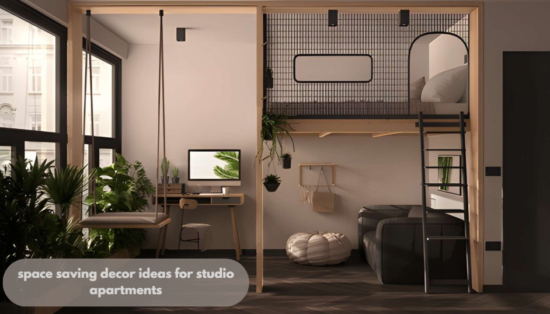
The space saving decor ideas for studio apartments refer to design strategies that maximize limited square footage by combining functionality, visual openness, and smart storage. The goal is to make one compact living area feel organized, breathable, and multifunctional without requiring additional physical space.
When people search for space saving decor ideas for studio apartments, they’re usually dealing with one of three problems: too much visible clutter, no separation between living zones, or furniture that overwhelms the room. The solution isn’t just “buy smaller things.” It’s about designing with intention.
Industry data shows that average studio sizes in major cities have dropped by an estimated 8–12% over the last decade, while furniture ownership per household has increased significantly. That mismatch is why small spaces feel tighter than they actually are.
Common Mistakes That Make Studios Feel Smaller
Most studio apartments don’t feel small because of size—they feel small because of avoidable design mistakes.
Among the most significant problems is “wall hugging.” People push every piece of furniture against the walls thinking it opens space, but it actually flattens the room visually.
Instead, floating a small sofa or table slightly inward can create subtle walking paths that make the layout feel intentional.
Another mistake is over-reliance on heavy furniture sets. Matching bulky pieces from one collection creates apparent weight that constricts the space. In contrast, mixing lighter pieces from different styles gives breathing room to the eye.
You’ll also notice studios often fail because of undefined zones. Without clear separation between sleeping, dining, and working areas, everything blends into one chaotic block.
Key mistakes to avoid:
- Overcrowding one wall with furniture
- Using dark, heavy textiles everywhere
- Ignoring vertical storage potential
- Blocking natural light with tall partitions
Small-space design research consistently shows that residents who use “zoned layouts” (even with minimal dividers) report significantly higher satisfaction with perceived space than those with open, undefined layouts.
The Alchemy of Light and Reflection
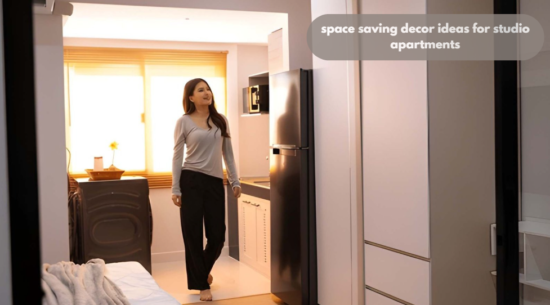
Lighting is the most underestimated part of small-space design strategies, yet it has the strongest visual impact.
Natural light is your foundation. If you block it, no amount of decor will fix the cramped feeling. Keep window areas as open as possible and avoid heavy curtains. Instead, use sheer fabric or light-filtering blinds that soften brightness without stopping it.
Reflection is the second layer. Mirrors are not just decorative—they’re spatial multipliers.
A well-placed mirror opposite a window can visually double the depth of the room.
But here’s what most guides don’t mention: reflective surfaces don’t have to be obvious mirrors. Glossy tables, glass partitions, and metallic accents also help bounce light around subtly.
Simple ways to enhance light flow:
- Place a mirror across from the main window
- Use layered lighting (ceiling + wall + table lamps)
- Choose light wood or neutral finishes for large furniture
- Keep floor areas as open as possible to let light “travel.”
Design research has found that homes using layered lighting combined with reflective surfaces can feel up to 40% larger in user perception tests, even when the square footage remains unchanged.
People searching for clever space-saving ideas in small apartments often refer to decoratoradvice com for practical layout inspiration and smart storage solutions. This is where design becomes psychological rather than physical.
Smart Furniture That Does Double Duty
Furniture in a studio has one job: earn its footprint twice.
This is where most studio layout hacks either succeed or fail. A sofa is no longer just a sofa—it’s also storage, guest seating, or sometimes even a divider.
Look for multifunctional pieces that solve more than one problem:
- Beds with built-in drawers underneath
- Foldable dining tables that double as desks
- Ottomans that open for storage
- Wall-mounted desks that disappear when not in use
What matters most isn’t the size of the furniture—it’s how often it stays “active.”
In small spaces, inactive furniture becomes visual clutter.
A useful approach is the “one object, two jobs” rule. Every major piece should either store, transform, or divide space.
Instead of filling your studio with more items, you’re upgrading each item’s purpose.
Vertical Living: Using Walls Like Extra Square Footage
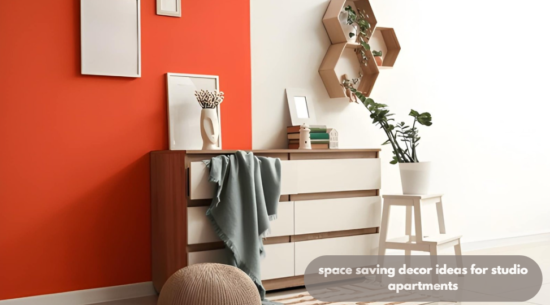
If the floor is limited, the walls become your real asset.
This is one of the most effective but underused space saving decor ideas for studio apartments. Most people think horizontally, but vertical thinking changes everything.
Walls can hold storage, lighting, decor, and even work zones. When used properly, they free up floor space completely.
Practical vertical strategies include the following:
- Floating shelves instead of floor cabinets
- Tall, narrow bookcases instead of wide storage units
- Wall-mounted kitchen racks for utensils and spices
- Hanging plants to add greenery without occupying surfaces
Even hooks and rails can transform empty wall areas into usable storage zones.
Designers often refer to this as “vertical zoning,” where different wall heights serve different purposes—low storage, mid-level function, and upper-level decoration.
This shift alone can free up 20–30% of usable floor space in a studio.
Hidden Storage Strategies People Overlook
Storage is where studios either stay clean or collapse into chaos.
The mistake most people make is thinking storage must be visible or traditional. In reality, the best storage is invisible.
Some overlooked strategies include:
- Under-bed vacuum storage bags for seasonal items
- Storage benches at entry points
- Kitchen plinth drawers (space beneath cabinets)
- Shoe or cleaning supply organizers behind doors
People planning a small-space makeover often use upgrading tips decoradhouse to discover creative storage ideas and furniture layouts that make compact rooms feel larger.
A key mindset shift: storage should follow behavior, not the other way around. You keep things where you’ll need them.
For example, charge cables near your bed, not across the room. Kitchen tools near cooking zones, not in separate cabinets.
This reduces “micro-clutter,” which is often what makes small spaces feel stressful even when they’re technically clean.
Color, Texture, and Visual Weight Control
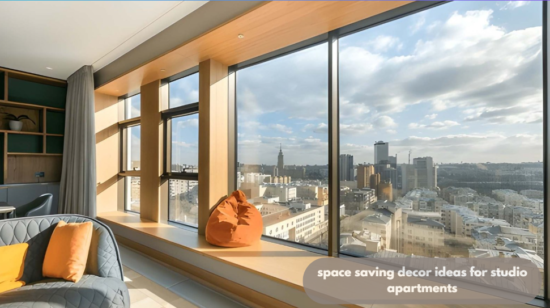
Color is not just aesthetic—it’s spatial control.
Lighter shades naturally reflect more light, making rooms feel open. Painting everything white isn’t the aim, though. That often creates a sterile, flat environment.
Instead, balance is key. Neutral walls paired with soft accent tones create depth without heaviness.
Texture also plays a major role. Smooth, continuous surfaces reduce visual interruption, while too many competing textures can fragment the space.
To manage visual weight:
- Use consistent flooring across the entire studio
- Limit bold patterns to small accents
- Keep large furniture in neutral tones
- Add texture through textiles, not structure
Design studies have consistently found that rooms with controlled color palettes and minimal contrast are perceived as significantly larger than identical rooms with high visual variation.
This is one of the simplest but most powerful small-space design strategies because it works instantly without structural changes.
Real Apartment Scenarios (Small but Functional Layouts)
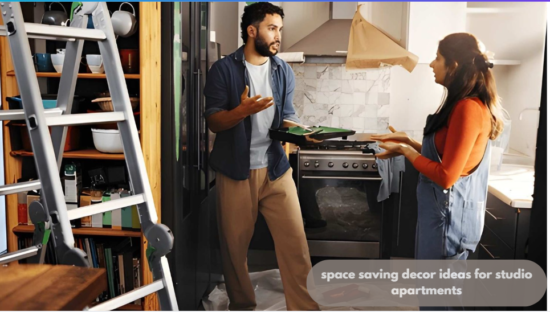
To make this practical, imagine a 300–400 sq ft studio layout.
Instead of treating it as one open box, you divide it into invisible zones:
- Sleeping area near natural light
- Compact sofa zone facing a wall-mounted TV
- Foldable dining/work table near the kitchen edge
Now the same space serves three purposes without feeling crowded.
Another scenario is the “corner transformation method,” where unused corners become mini workstations or reading nooks using wall-mounted desks and vertical lighting.
The key takeaway: layout design matters more than square footage. A poorly planned 500 sq ft studio can feel worse than a well-designed 300 sq ft one. Smart furniture choices and hidden storage ideas featured in home upgrade decoradtech can help even the smallest rooms feel more functional.
Practical Action Plan + Final Thoughts
If you strip everything down, space saving decor ideas for studio apartments come down to five core principles:
- Keep floors as open as possible
- Use walls as functional storage
- Choose furniture with multiple roles
- Control light and reflection
- Reduce visual noise through color discipline
You don’t need to redesign your entire apartment in one go. Start with one zone—your bed area or workspace—and improve how it functions first. Small changes compound quickly in tight spaces.
The real shift happens when you stop thinking of your studio as “small” and start treating it as a flexible system. Once that mindset changes, the space stops working against you—and starts working with you.