How Roof Deck Condition Determines Whether Your Next Shingle Job Lasts or Fails Early
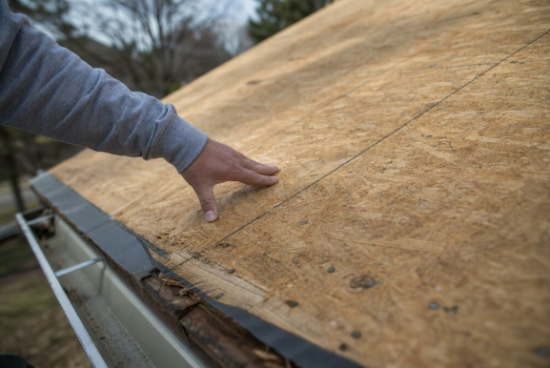
The condition of a roof deck determines whether a new shingle installation performs for decades or begins failing within a few years. Degraded OSB sheathing, soft spots from moisture intrusion, and compromised nail-base capacity are problems that new shingles cannot fix on their own. A thorough roof deck inspection in El Dorado Hills is the most important step before any tear-off begins. Roof Geeks, based in Shingle Springs and serving the El Dorado Hills area, evaluates deck condition before any installation begins, identifying structural deficiencies that would otherwise shorten the life of the entire roofing system.
The Roof Deck Is the Foundation of Every Shingle Installation
Every fastener in a shingle system terminates in the roof deck. When that substrate has degraded, the entire roofing system above it is compromised before the first shingle is set.
Residential construction in El Dorado Hills relies primarily on 7/16-inch OSB sheathing and 1/2-inch CDX plywood. At roughly 1,500 feet elevation, summer temperatures regularly exceed 100 degrees Fahrenheit before dropping sharply at night. That thermal cycling causes OSB panel edges to expand, contract, and eventually ridge, telegraphing through finished shingles within one to two seasons, a failure pattern lower-elevation Sacramento Valley properties rarely see at the same rate.
El Dorado Hills also sits at a wider thermal swing than Sacramento Valley properties, which accelerates resin binder breakdown in OSB panels. Seasonal rainfall from November through March creates extended periods of elevated humidity, and north-facing roof planes in zip codes 95762 and 95682 are particularly susceptible because reduced solar drying prolongs moisture uptake in panels with compromised edge sealing. A roof installation from Roof Geeks begins with evaluating the substrate for these conditions before any new material goes down.
What Deck Damage Actually Looks Like Before Tear-Off
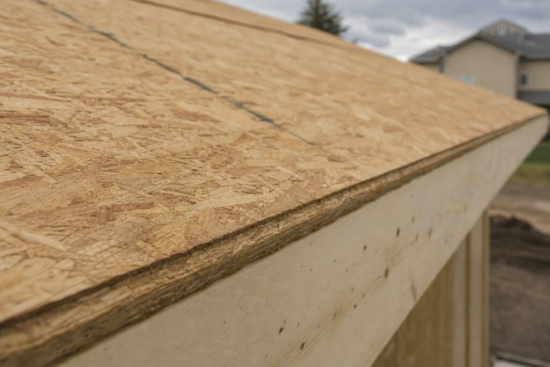
The 25 to 30 inches of seasonal rainfall between November and March creates extended moisture exposure for any roofing system with compromised flashing or underlayment, accumulating conditions that lead to substrate failure.
Surface Delamination on OSB Sheathing
OSB delamination begins when prolonged moisture exposure breaks down the resin binder holding the panel together. The face veneer separates from the core strand layer, producing a non-uniform nail base. Fasteners driven into delaminated veneer lose their grip under thermal cycling, backing out and producing lifted tabs and accelerated granule loss. Probing the deck is the only reliable method for identifying which panels require replacement before new shingles are applied.
Soft Spots and Localized Dry Rot
Soft spots indicate dry rot that has consumed the wood fiber matrix within a panel. During tear-off, technicians probe the deck with a roofing knife to map affected areas. On foothill residential roofs in the 95762 and 95682 zip codes, dry rot most commonly originates at valley intersections and around penetrations where aging flashing has allowed water infiltration. North-facing planes are disproportionately affected because morning shade slows panel drying after rain events.
Fastener Pull-Through and Nail Base Failure
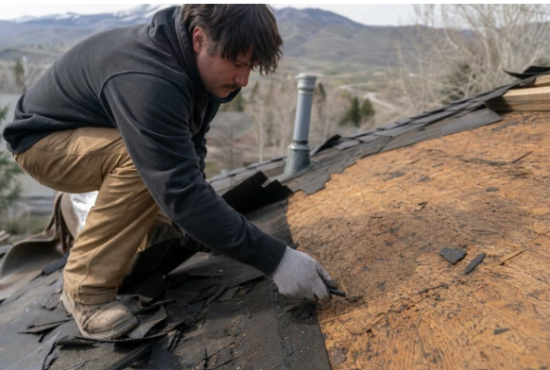
Fastener pull-through is invisible from the surface until high-wind conditions expose it. Both ring-shank and smooth-shank nails lose withdrawal resistance when the wood fiber matrix has been weakened by moisture cycling or rot. El Dorado County Diablo wind events in fall and early winter produce localized gusts that stress fastener connections in panels that have already lost nail-base capacity. Shingle blow-off failures are frequently traced to deck rot repair that was deferred or skipped entirely.
Roof Geeks performs withdrawal-resistance evaluation on every pre-installation deck assessment: a technician drives a sample fastener and uses a hand-held withdrawal gauge to confirm holding capacity. Any panel that cannot meet the manufacturer-specified threshold is flagged, photographed, and presented to the homeowner with a replacement recommendation before work proceeds.
Frequently Asked Questions
What are the signs that a roof deck needs replacement before new shingles are installed?
Visible indicators include shingle ridging along panel butt joints, soft spots underfoot during a roof walk, and panel edge swelling at the eaves. A moisture meter reading above 19 percent in any panel is grounds for replacement regardless of surface appearance. Getting up there safely matters as much as what you find, so proper ladders and fall protection should be in place before any roof walk.
Can shingles be installed over a damaged deck?
Installing shingles over a damaged deck is not code-compliant and voids manufacturer warranties on virtually every major shingle product line. A delaminated or rotted panel cannot achieve the fastener withdrawal resistance required by manufacturer specifications, meaning fasteners pull through under wind load. Shingle failures traced to inadequate nail bases are not covered under any standard manufacturer warranty.
What replacement materials are used for deck panels?
Replacement panels are typically 7/16-inch OSB sheathing or 1/2-inch CDX plywood, matched to the existing deck specification and load requirements. Both materials meet panel span ratings required for code-compliant installation in El Dorado County. Panels are installed with appropriate gap spacing at edges to allow for thermal expansion, the most common reason new sheathing fails prematurely when installed without adequate spacing.
How does partial deck replacement affect the overall cost of a roof replacement?
Partial OSB sheathing replacement adds a proportional material and labor cost to the overall project. A documented panel count and replacement estimate is provided before the property owner approves the final scope, ensuring there are no undisclosed additions at billing.
Why are El Dorado Hills properties more susceptible to roof deck degradation than properties in the Sacramento Valley?
El Dorado Hills sits at approximately 1,500 feet elevation, producing a wider thermal swing than Sacramento Valley properties. This accelerates resin binder breakdown in OSB panels. Seasonal rainfall concentrated between November and March creates extended periods of elevated humidity, and north-facing roof planes in zip codes 95762 and 95682 are particularly susceptible because reduced solar drying prolongs moisture uptake in panels with compromised edge sealing.
About Roof Geeks
Roof Geeks is a licensed and insured California roofing contractor serving residential and commercial properties throughout the Sacramento metropolitan area and the El Dorado County foothill corridor, including El Dorado Hills, Cameron Park, and Shingle Springs, where the company is headquartered. The crew performs roof replacement, repair, and installation of asphalt shingle, metal, tile, and flat roofing systems, with all work completed to El Dorado County and Sacramento County code requirements. Every residential replacement begins with a panel-by-panel deck assessment; findings are documented, explained in plain language, and kept transparent from the first walkthrough to the final inspection. Their office is located at 4261 Sunset Lane, Suite 201, Shingle Springs, CA 95682.
Business Name: Roof Geeks
Address: 4261 Sunset Lane, Suite 201, Shingle Springs, CA 95682
Phone Number: (916) 888-7663