Cypress Trees Decor: 9 Stunning Ideas to Elevate Your Home
Cypress trees elevate a home when you match the variety to the job: Italian cypress for formal entries and driveways, Leyland cypress for fast privacy, lemon cypress for indoor and holiday accents, and bald cypress for wet yards. Pick by mature size and hardiness zone first, then style.
Key Takeaways
- Italian cypress grows as a narrow column, which makes it the standard choice for framing doors, gates, and driveways.
- Leyland cypress offers the quickest way to grow a natural privacy hedge, though it requires annual trimming to remain contained.
- Lemon cypress is a compact potted conifer that works as a tabletop tree indoors and a holiday accent on porches.
- Bald cypress drops its needles each fall and tolerates wet soil, so it suits rain gardens and pond edges.
- The most common mistake with cypress trees is planting for the nursery size instead of the mature size.
What Are Cypress Trees?
Cypress trees are conifers in the cypress family. Their leaves are scaly or feathery, and gardeners like how tall and green they stay.
Most cypress trees are evergreen, but bald cypress is a notable exception that sheds its needles in autumn. Their strong vertical lines are what make them so useful in home design.
Which Cypress Trees Fit Your Space?
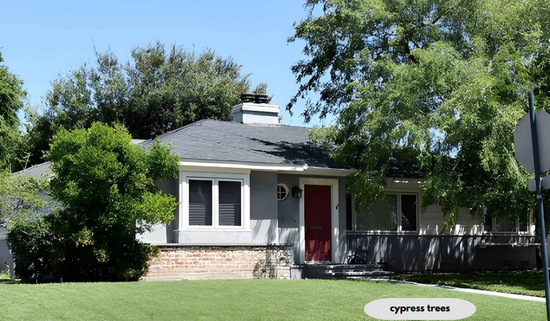
Choose cypress trees whose mature height and cold tolerance fit your yard, then match each one to a decor role. The table below compares the four types homeowners use most.
| Variety | Mature height | USDA zones | Best decor role | Source |
| Italian cypress | 40–60 ft | 7B–11 | Entries, driveways, formal gardens | UF/IFAS Extension, Cupressus sempervirens: Italian Cypress |
| Leyland cypress | 35–50 ft | 6A–10B | Privacy screens, windbreaks | UF/IFAS Extension, x Hesperotropsis leylandii: Leyland Cypress |
| Bald cypress | 60–80 ft | 5A–10B | Specimen tree, wet ground | UF/IFAS Extension, Taxodium distichum: Baldcypress |
| Lemon cypress (‘Goldcrest’) | Set by pot size and pruning | Indoors or containers | Tabletops, porches, holidays | — |
Treat those heights as a ceiling, not a promise. Heat, poor soil, and regular pruning all keep trees shorter, but you should still plan for the top of the range.
One piece of decoratoradvice applies to every variety: repeat the same tree at least three times so the design reads as intentional rather than random.
9 Cypress Trees Decor Ideas That Elevate Your Home
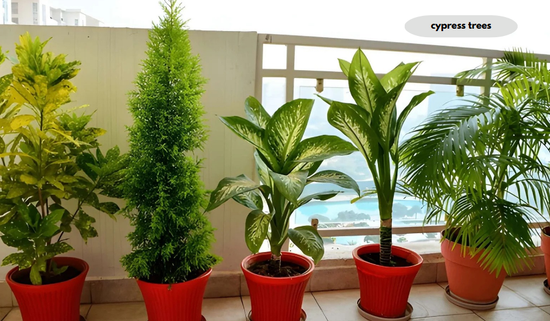
Cypress trees work best in decor when they add vertical structure: framing an entry, screening a view, or bringing a living accent indoors. These nine decoration ideas from decoratoradvice run from a one-afternoon porch refresh to a long-term yard project.
1. Frame the Front Door with Potted Italian Cypress
A matched pair of Italian cypress in tall planters makes any entry look formal in one afternoon. Choose planters that echo your door hardware, such as matte black for a modern farmhouse or glazed terracotta for a Spanish-style home.
2. Line a Driveway or Walkway
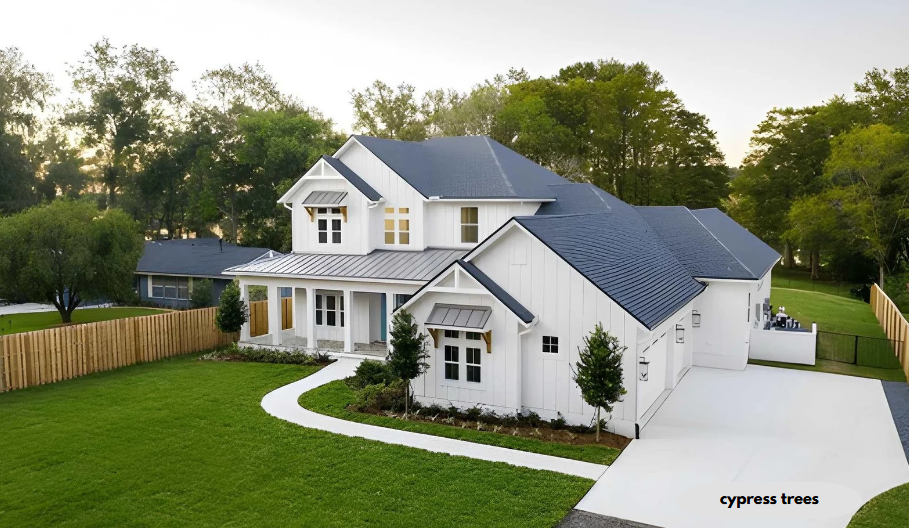
A row of Italian cypress along a drive creates a Tuscan-style allée that pulls the eye toward the house. Plant them 3 to 4 feet apart for a solid wall or 6 to 8 feet apart for a column-and-gap rhythm, and keep trunks at least 3 feet from the pavement.
3. Build a Living Privacy Wall
Leyland cypress trees turn a bare fence line into a soft green wall within a few seasons. The full spacing and growth plan appears in the next section.
4. Style Lemon Cypress as Tabletop Trees
Lemon cypress adds chartreuse color and a citrus scent to a dining table, kitchen island, or entry console. Group three plants of different heights on a tray, give them your brightest window, and rotate the pots weekly so all sides stay full.
5. Use a Cypress as Your Holiday Tree
Leyland and lemon cypress both work as living Christmas trees, whether cut or potted. In a 2025 Real Christmas Tree Board consumer survey, 85% of respondents said a real tree makes everyone who sees or smells it happier.
You can get the same look without visiting a tree lot by decorating a potted lemon cypress with tiny lights, then growing it indoors once January arrives.
6. Make Garlands and Wreaths from Clippings
Late-fall shearing of a Leyland hedge gives you free greenery for mantels, stair rails, and door wreaths. Wire 6- to 8-inch sprigs onto a grapevine frame, and keep outdoor pieces out of direct afternoon sun so they stay green longer.
7. Plant a Bald Cypress as a Focal Point
Bald cypress gives a large yard a dramatic centerpiece with feathery summer foliage and rust-orange fall color. Place it in a low spot, rain garden, or pond edge where soggy soil kills other trees, and keep it at least 25 feet from the house.
8. Create a Mediterranean Patio
Clusters of potted cypress trees set the tone for a Mediterranean courtyardSet them beside terracotta, pea gravel, lavender, and linen cushions, using each color and texture three times.
9. Uplight Cypress at Night
One spotlight at the base of an Italian cypress turns it into a glowing column after dark. Use warm white LED fixtures around 2700K, aimed upward from 12 to 18 inches in front of the trunk.
How Do You Plant a Cypress Privacy Screen?
To set up a privacy screen, space Leyland cypress about 8 feet apart in a single row, plant them shallow, and water deeply through the first year. Follow these steps:
- Measure the fence line and divide by 8 feet, then add one tree for the far end.
- Keep trunks at least 5 feet inside your property line so mature branches stay on your side.
- Dig each hole twice as wide as the root ball and no deeper than the ball itself.
- Water deeply once a week through the first growing season, more often in heat.
- Shear lightly once or twice a year starting in year two, and never cut back into bare brown wood, because cypress rarely regrows from it.
According to UF/IFAS Extension, young Leyland cypress can add 3 to 4 feet of height per year, even in poor soil.
Worked example: A 48-foot back fence divided by 8-foot spacing gives 6 gaps, so you need 7 trees. Starting at 3 feet tall, those trees should reach roughly 12 to 15 feet by the end of the third season after establishment, well above a standard 6-foot fence.
What Is the Most Common Cypress Mistake?
The most common mistake is planting cypress trees 2 to 3 feet apart for instant fullness. On that same 48-foot fence, 3-foot spacing requires 17 trees instead of 7, more than doubling your plant cost.
Crowded trees also block each other’s airflow and light, so inner branches brown out and fungal canker spreads faster. The fix is 8-foot spacing, or a staggered double row with trees offset in a zigzag when you need a thicker screen.
Do Cypress Trees Add Value to a Home?
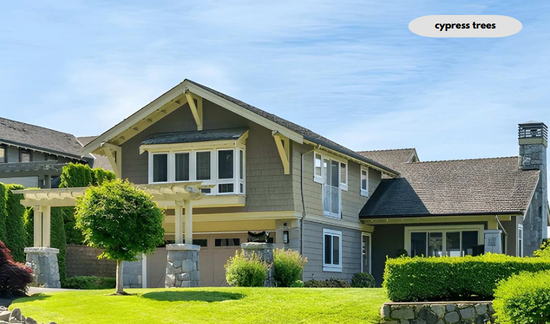
Cypress trees improve curb appeal, but most of their payoff is daily enjoyment rather than resale profit. The National Association of Realtors’ 2023 Remodeling Impact Report: Outdoor Features estimated a full landscape upgrade at $9,000 and judged that sellers would recover all of that cost, with nothing extra.
Because the return is break-even, put your money where buyers look first. An entry pair or a short driveway row lifts the home exterior in listing photos without tying up cash in a backyard project few buyers will notice.
When Does Cypress Advice Not Apply?
Cold climates are the main exception. In zones 5 and colder, Italian and Leyland cypress trees will not survive winter outdoors, so anyone planning how to decorate my house with that formal-column look has to rely on potted lemon cypress moved into a bright, cool room before the first hard frost. Bald cypress is the one landscape option that handles zone 5 cold, but it stands bare from late fall to spring, so it cannot serve as a winter screen.
FAQ
Can cypress trees be planted close to a house?
Italian cypress can be planted 4 to 5 feet from a wall, but Leyland and bald cypress need far more room. Their wide crowns and roots crowd foundations, gutters, and siding as they mature.
Do cypress trees stay green in winter?
Italian, Leyland, and lemon cypress stay green all winter, while bald cypress does not. Bald cypress turns copper in fall and drops its needles, then regrows them in spring.
Can you grow cypress trees in pots?
Yes, Italian and lemon cypress both grow well in large containers with drainage holes. Pots limit root space, which keeps the trees shorter and easier to control on patios and porches.
How do you keep a lemon cypress alive indoors?
Give lemon cypress your sunniest window, evenly moist soil, and a spot away from heating vents. Dry air and low light cause the browning tips most owners see in winter.
Can a cypress be used as a Christmas tree?
Yes, Leyland cypress is a common cut Christmas tree in the South, and lemon cypress works as a living tabletop tree. Keep cut trees in water and potted ones near light.
Conclusion
Cypress trees give a home vertical structure that few other plants match, from a formal front entry to a fragrant holiday centerpiece. Choose cypress trees by mature size and hardiness zone, not by how they look in the nursery pot. Space them for the trees they will become, and cypress trees will look better every year instead of outgrowing their spot.