
Tropical Floral Arrangements for Modern Homes
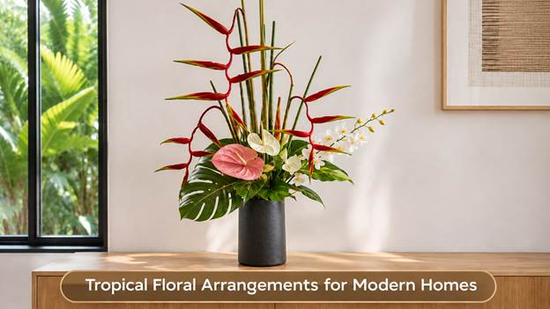
Tropical floral arrangements bring sculptural stems and glossy foliage into modern interiors without cluttering them. A good one uses 3 to 5 stem types, a container sized to the surface it sits on, and more leaves than flowers.
This guide covers which tropical flowers fit modern homes, how big an arrangement should be in each room, which stems match popular interior styles, and how to keep them fresh for 1 to 3 weeks, depending on the stem. The method is the same one good room planning uses. Measure first, buy fewer stems, and put each one where it counts.
Key Takeaways
- Anthurium, bird of paradise, heliconia, red ginger, and dendrobium orchids are 5 tropical flowers with bold shapes and a long vase life.
- Arrangement height works best at 1.5 to 2 times the vase height. The footprint should take up no more than one-third of the surface below it.
- A 3:2:1 ratio of foliage to focal flowers to accent stems, judged by visual volume, keeps a tropical design calm.
- Tropical stems suffer chilling injury below 50°F (10°C). Keep them out of the refrigerator.
Why Tropical Flowers Suit Modern Interiors
Tropical flowers suit modern interiors because their shapes are already architectural. A bird of paradise stem forms a sharp horizontal line. An anthurium spathe looks like a glossy, heart-shaped tile, and heliconia bracts stack like a geometric sculpture. Modern rooms are built on the same idea: strong lines and one clear focal point.
They also do more with less. Three anthuriums in a narrow cylinder vase hold as much visual weight as a full rose bouquet, and they look cleaner doing it.
Then there’s vase life. Anthuriums and dendrobium orchids commonly last 2 to 3 weeks in a vase. Many traditional cut flowers, such as tulips, gerberas, and garden roses, last 5 to 7 days. On a real budget, that difference shows up in the cost per day.
The Best Tropical Flowers and Foliage for Modern Arrangements
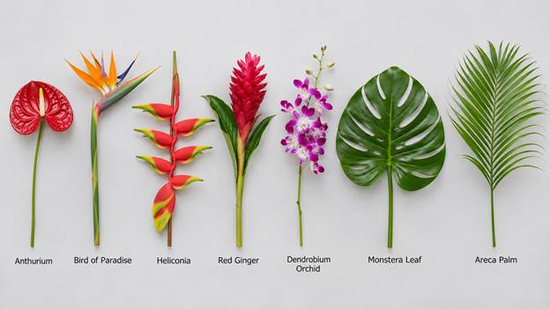
The best tropical stems for modern homes pair a strong silhouette with a long vase life. These 7 are the most dependable, and each one plays a different role in a composition.
| Stem | Visual Role | Typical Vase Life | Best Placement |
| Anthurium | Focal flower, glossy color block | 2 to 3 weeks | Console, desk, dining table |
| Bird of paradise (Strelitzia) | Line and height | 1 to 2 weeks | Entryway, floor vase |
| Heliconia | Drama and volume | 1 to 2 weeks | Large living rooms |
| Red ginger (Alpinia) | Vertical color | 1 to 2 weeks | Kitchen island, sideboard |
| Dendrobium orchid | Accent spray, soft movement | 2 to 3 weeks | Bedroom, bathroom |
| Monstera leaf | Foliage base, bold shape | 2 to 3 weeks | Any room |
| Areca or fan palm frond | Texture and airiness | 2 weeks or more | Living room, entryway |
Vase-life figures assume stems stay above 50°F (10°C) and get fresh water every 2 days. Monstera and palm foliage usually outlast the flowers. When the anthuriums fade, swap in new focal stems and keep the leaves.
How to Scale a Tropical Arrangement to Each Room
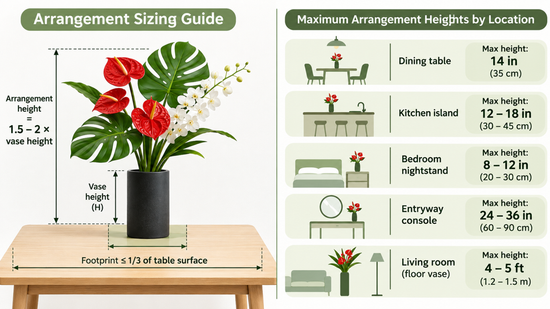
Maximum height depends on how people use each room:
| Room | Maximum Arrangement Height | Suggested Stems |
| Dining table | 14 in (35 cm) | Low anthuriums, orchid sprays, folded monstera |
| Kitchen island | 12 to 18 in (30 to 45 cm) | Red ginger, small anthuriums |
| Bedroom nightstand | 8 to 12 in (20 to 30 cm) | Single orchid spray or anthurium |
| Entryway console | 24 to 36 in (60 to 90 cm) | Bird of paradise, monstera |
| Living room floor vase | 4 to 5 ft (1.2 to 1.5 m) | Heliconia, palm fronds |
Inside the arrangement, aim for a 3:2:1 ratio of foliage to focal flowers to accent stems. Judge it by visual volume, not stem count. On a console table, that might mean 3 large monstera leaves as the base, 2 or 3 anthuriums as the focal layer, and 1 dendrobium spray for movement. Odd counts like 3, 5, or 7 look more natural in asymmetric designs.
Matching Tropical Arrangements to Modern Interior Styles
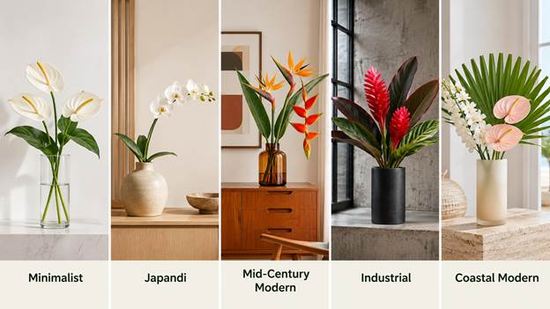
Tropical arrangements adapt to each modern interior style through color, stem count, and container material. Put the same anthurium in a white ceramic vase and then in a matte black concrete vessel, and it looks like two different flowers.
- Minimalist interiors: Use one species in one color, such as 3 white anthuriums in a clear glass cylinder. Let the empty space do the work.
- Japandi and Scandinavian interiors: Choose 1 or 2 stems in a handmade ceramic vase and set them off-center. A single bird of paradise leaf or a white orchid spray fits the calm, natural palette.
- Mid-century modern interiors: Go warm with orange, red, and yellow. Heliconia and bird of paradise look right next to teak furniture and amber glass.
- Industrial interiors: Pair dark foliage and red ginger with concrete, steel, or matte black containers. Deep green and crimson hold their own against raw materials.
- Coastal modern interiors: Keep it pale. White dendrobiums, blush anthuriums, and fan palms suit frosted or sand-toned vessels.
Pull one color from the room into the arrangement, like a cushion, a rug, or a print. It ties the flowers to the space.
Choosing Vases and Containers for Tropical Stems
Tropical stems need heavy, stable containers because many of them are top-heavy. Bird of paradise, heliconia, and red ginger carry most of their weight at the bloom, so a light vase tips easily. Pick one with a weighted base, or one that holds at least 4 inches (10 cm) of water.
The width of the opening decides how stems sit:
- Narrow-neck vases hold 1 to 3 stems upright on their own.
- Wide-mouth bowls need a kenzan (a pin flower frog) or a grid of clear floral tape.
- Tall cylinders suit long-stem heliconia, ginger, and palm fronds.
Kenzans and tape grids are reusable, which makes them a better choice than floral foam. In clear glass, trim any leaves below the waterline so the water stays clean.
Working With a Florist for Bespoke Tropical Designs
A bespoke tropical arrangement is worth it for statement pieces, dinner parties, and rooms where one arrangement is the main focal point. Large heliconia and palm designs need full-size stems and structural support, and florists in tropical climates work with both year-round. Miami florist Neroli Blume creates bespoke arrangements in its Wynwood studio without fixed templates, with a focus on form, texture, and balance. That design-led approach suits modern homes, where the flowers have to work with the architecture of the room, not fight it.
How to Make Tropical Arrangements Last Longer
Tropical arrangements last longest at 65°F to 75°F (18°C to 24°C), out of direct sun and away from heating vents and air-conditioning drafts. Cold is the bigger risk. Anthurium, bird of paradise, ginger, and some orchids suffer chilling injury below 50°F (10°C), which shows up as darkened petals and leaves, according to the USDA’s guide to commercial storage of florist stocks (Agriculture Handbook 66).
Follow these 5 care steps to extend vase life:
- Recut each stem by 1 inch (2.5 cm) at an angle before arranging.
- Fill the vase two-thirds full with room-temperature water and flower food.
- Change the water and recut the stems every 2 days.
- Mist anthuriums, orchids, and foliage daily to replace lost humidity.
- Submerge heliconia and ginger heads in room-temperature water for 10 to 15 minutes if the bracts start to dull.
Keep orchids away from the fruit bowl. Ripening bananas, apples, and avocados release ethylene gas, and ethylene makes orchid blooms drop early.
Conclusion
Tropical floral arrangements work in modern homes because their bold shapes match clean architecture and their long vase life suits a real budget. Pick 3 to 5 reliable stems, keep the design to 1.5 to 2 times the vase height, and balance it at 3:2:1 foliage to focal to accent. Measure the surface before you buy anything, and keep the stems warm. Three anthuriums in the right vase will do more for a room than a crowded bouquet.

