How to Measure Garden Water Usage and Improve Outdoor Watering Efficiency
Most gardeners water by feel. They stand with a hose until the soil looks wet, or run a sprinkler for a set time and hope it was enough. This approach works well enough, but it rarely tells you how much water actually reached your plants. Outdoor watering can account for a large share of household water use during dry months, and much of it is lost to runoff, evaporation, and uneven coverage.
Measuring your garden water usage replaces guesswork with facts. When you know how much water moves through your hose or irrigation lines, you can adjust your habits, protect your plants from both drought and overwatering, and cut waste. This article explains how to measure outdoor water flow, track irrigation consumption, and choose tools that make watering more efficient.
Why Measuring Garden Water Usage Matters
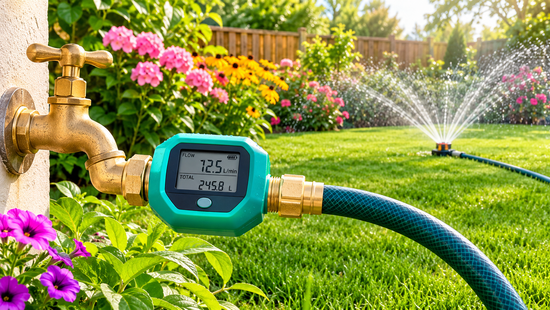
Knowing how much water your garden receives is the first step toward managing it well. A simple inline water flow meter attached between your spigot and hose can show how many gallons or liters pass through during each watering session. Unlike a utility meter, which records everything a household uses, this type of device focuses only on the outdoor line, so you can see exactly what your lawn, vegetable beds, and shrubs are consuming.
With that data, you can compare how much water different areas receive. A lawn that gets 30 gallons per session while a nearby flower bed gets only 5 may explain why one thrives and the other struggles. Measurement also helps you notice problems early, such as a leaking connector, a cracked hose, or a sprinkler head that is delivering far more than expected.
Understanding Water Flow in Hoses and Irrigation Lines
Water flow is the volume of water moving through a hose or pipe over a period of time, usually measured in gallons per minute or liters per minute. Garden hoses vary widely. Hose diameter, length, household water pressure, and attached nozzles all change how quickly water comes out.
You can estimate your flow rate with a simple bucket test. Turn the spigot on fully, fill a bucket of known size, and time how long it takes. If a 5 gallon bucket fills in 50 seconds, your flow is about 6 gallons per minute. Repeat the test with different attachments to see how they affect output.
Understanding flow rate lets you calculate how long to water. If you want to apply 1 inch of water to a 100 square foot garden bed, you need roughly 62 gallons. At 6 gallons per minute, that is a little over 10 minutes. Without this information, many people water for too short or too long a time.
Monitoring Irrigation Water Consumption Over a Season
A single measurement is useful, but tracking consumption over weeks and months reveals patterns. Keep a simple log with the date, the zone or area watered, the duration, and the volume used. Even a notebook kept by the hose reel works well.
Over a season, your records will show how weather affects demand. Hot, dry weeks may require double the water of mild, cloudy ones. You may also find that certain zones are consistently overwatered because they sit in partial shade or have soil that holds moisture longer.
For drip systems and sprinkler zones, consumption tracking is especially valuable. Drip lines often run for long periods at low flow, so small leaks or clogged emitters can go unnoticed. Comparing monthly totals helps you catch these issues before they waste hundreds of gallons or damage plants.
Choosing Hand Watering Tools That Support Efficiency
Not every garden needs a full irrigation system. Container plants, raised beds, hanging baskets, and young seedlings often do better with careful hand watering. For these tasks, the best watering wand is one that delivers a soft, wide spray, reaches the base of the plant, and includes a shutoff valve at the handle. These features let you apply water gently to the root zone without flattening stems, splashing soil onto leaves, or wasting water between plants.
When comparing wands, look at length, spray pattern options, and build quality. A longer wand makes it easier to reach hanging baskets or the back of deep beds without bending. A breaker style head reduces water force so seedlings are not disturbed. Pairing a good wand with your flow measurements helps you apply a consistent amount to each plant.
Practical Ways to Improve Outdoor Watering Efficiency
Once you can measure usage, several habits make a clear difference.
Water early in the day. Morning watering reduces evaporation and gives leaves time to dry, which lowers the risk of fungal disease.
Aim at the roots. Water applied to soil is more useful than water sprayed across foliage. Drip lines, soaker hoses, and wands help direct it where it counts.
Water deeply and less often. Deep watering encourages stronger root systems that tolerate dry spells. Shallow, frequent watering keeps roots near the surface.
Use mulch. A 2 to 3 inch layer of mulch around plants slows evaporation and keeps soil temperature steady, reducing how often you need to water.
Check soil moisture before watering. Pushing a finger or a moisture probe a few inches into the soil tells you more than the surface appearance does.
Inspect equipment regularly. Look for leaking fittings, worn washers, and clogged nozzles. A hose connection dripping once per second can waste thousands of gallons over a year.
Conclusion
Efficient watering begins with understanding how much water your garden actually uses. By measuring water flow, tracking irrigation consumption through the season, and choosing tools suited to each task, you can give plants what they need without excess. The effort is small, a simple bucket test, a basic log, and a few better habits, but the results include healthier plants, lower water bills, and a more responsible use of a valuable resource. Start with one zone, record what you learn, and expand from there.