The Hidden Cost of Skipping a Storage Structure: What Clutter Really Costs You
Most people think of clutter as an annoyance. A pile of holiday decorations in the corner of the garage. A lawn mower wedged behind the kids’ bikes. Boxes stacked so high in the spare room that you’ve stopped opening the door all the way. It’s a nuisance, sure, but it doesn’t feel like a real problem with a real price tag attached.
That’s the trap. Clutter does cost you. It just doesn’t show up on a receipt, so it’s easy to ignore until the damage is done. By the time most people realize they need a storage solution, they’ve already paid for it in ways they never counted.
If you’ve been putting off the decision, it’s worth understanding what that delay is actually costing you. For many buyers, the math becomes clear once they look at what they’re already spending on the problem. That’s why utility sheds often pay for themselves faster than people expect, not because they’re cheap, but because the alternative keeps draining money quietly in the background.
The Cost You Can See: Replacement and Repair
Let’s start with the obvious. When you don’t have a dedicated place to keep things, they get damaged.
Lawn equipment is the classic example. A riding mower left out under a tarp through a Midwest winter takes a beating. Moisture gets in. Belts crack. Batteries drain and die. By spring, you’re either paying a small engine repair shop or shopping for a replacement that runs four figures. A push mower or string trimmer fares even worse. Tarps tear. Snow piles on top. The cycle repeats every year.
The same logic applies to anything with an engine, a battery, or electronics. Pressure washers, generators, chainsaws, leaf blowers. These are not cheap items, and they are not built to live outdoors uncovered. When they fail early, you’re not just buying a replacement. You’re buying the same thing twice in half the time it should have lasted.
Then there are the softer losses. Patio cushions mildew in a damp basement. Camping gear gets crushed under other boxes. Holiday decorations break when the stack finally tips over. None of these are catastrophic on their own, but they add up over a few years.
A structure that keeps your belongings dry, shaded, and off the ground changes that math. A $1,200 pressure washer that lasts ten years instead of four is doing the same job for a fraction of the cost per year. Multiply that across everything you own, and the savings become hard to ignore.
The Cost You Feel: Time and Stress
Money is the easy part to measure. The harder cost is the one that shows up in your daily routine.
Think about the last time you needed something you knew was in the garage. How long did it take to find it? Did you have to move three things to get to the fourth? Did you give up and go buy a replacement because digging was easier than searching?
That lost time is a real cost. If you spend twenty minutes hunting for a tool every weekend during mowing season, you’re burning more than three hours a month on a problem that shouldn’t exist. Over a year, that’s a full workweek spent digging through your own belongings.
There’s also the mental cost, and it’s the one people underestimate the most. Clutter creates a low, constant background stress. You see it every time you pull into the driveway. You feel it every time you open the garage door. You avoid the basement because looking at the mess ruins your mood. It’s not dramatic, but it wears on you.
Psychologists have studied this. Cluttered spaces are linked to higher cortisol levels, poorer sleep, and difficulty focusing. The effect is especially strong in spaces people see every day, like a garage or a back porch. You don’t have to be a minimalist to feel the difference between a space that works and one that’s slowly winning a war against you.
The Cost You Transfer: Your Living Space
Here’s a question worth asking. How much did you pay per square foot for your home?
In most of the markets we’re talking about, Indiana, Illinois, Michigan, Ohio, North Carolina, that number is somewhere between $100 and $200 per square foot. In some suburbs it’s higher. When you use a spare bedroom as a storage closet, you’re storing boxes in a room that cost you $15,000 or more to own.
That sounds dramatic until you walk through your house and count the square footage currently occupied by things that don’t belong there. The corner of the living room with the exercise bike you never use. The guest room that no guest could actually sleep in. The dining room table that’s become a permanent staging area for Amazon returns. The garage that hasn’t held a car in three years.
When you add it up, a lot of people are using some of the most expensive square footage they own to store some of the least valuable things they have. That’s not a storage problem. That’s a planning problem.
A storage structure outside the house frees up the space inside the house for what it was meant for. Living. Sleeping. Cooking. Parking the car so you don’t have to scrape ice off the windshield in January.
The Cost You Don’t See Coming: Insurance and Liability
This one surprises people.
When a garage is packed floor to ceiling, it’s not just inconvenient. It’s a fire load. Insurance adjusters know this. A stuffed garage burns hotter and faster than an empty one, and the damage spreads to the house faster too. If you ever have a claim, the state of the garage can affect how the loss is evaluated.
There’s also water damage. Cardboard boxes on a concrete floor soak up moisture. Over a few seasons, that moisture ruins whatever is inside. A box of old photo albums, a wedding dress, childhood keepsakes. These aren’t things you can replace with an insurance check, and many policies have limits on exactly these categories.
Then there’s the safety angle. A cluttered garage is a tripping hazard. A stack of bins that falls on a child is a real risk. A blocked walkway is a liability if anyone else gets hurt on your property. None of these are likely on any given day, but over years, the odds catch up with people.
Moving the clutter out of the house and into a dedicated, organized structure doesn’t eliminate every risk, but it puts the risk in a place where it’s easier to manage. You can see what you have. You can walk around it. You can keep the things that matter away from the things that don’t.
The Cost of the Wrong Solution
One more thing worth mentioning. A lot of people recognize the problem and reach for a solution that doesn’t actually solve it.
They rent a self-storage unit. That’s a monthly bill that never ends. The national average is over $100 a month for a standard unit, and rates go up, not down. Over five years, that’s $6,000 or more, and at the end of it, you own nothing. You’ve just been paying someone else to hold your stuff.
They buy a cheap resin shed from a big box store. Those work for light use, but they don’t hold up to heavy equipment, snow loads, or years of Midwest weather. Within a few seasons, the doors sag, the roof leaks, and you’re back where you started, only lighter in the wallet.
They build a stick-built garage. That’s a real solution, but it’s an expensive one. Between permits, foundation work, and construction, a detached garage can run $30,000 or more in many markets. For a lot of buyers, that’s more structure than the problem actually requires.
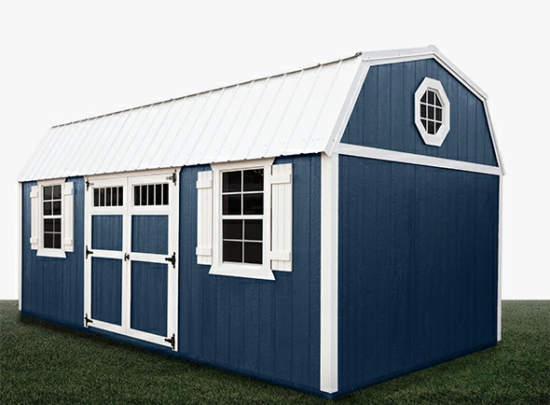
The sweet spot for most people is somewhere in the middle. A well-built outdoor structure that’s delivered and set up, sized to hold what they actually have, and built to last long enough that the cost per year is lower than any of the alternatives. When you divide the price of a solid structure across ten or fifteen years of use, the annual cost is often less than a single year of self-storage rent.
The Real Question
The question isn’t really whether you can afford a storage structure. The question is whether you can afford to keep paying for not having one.
Every season you wait, you’re replacing equipment that wore out too soon. You’re losing time you’ll never get back. You’re heating and cooling square footage you can’t use. You’re taking risks with the things that matter most to you. And you’re paying for it all in small amounts that never show up on a single bill, so it never feels like a decision.
It is a decision. It’s just one you’re making by default.
When you’re ready to make it on purpose, the math gets a lot easier to live with. A place for everything means everything lasts longer. Your garage holds a car again. Your spare room holds a guest again. Your weekends hold something better than a scavenger hunt through your own belongings.
That’s not a luxury. That’s just what happens when you stop paying the hidden cost and start paying the real one.