Simple Dining Table Centerpiece Ideas for Every Season and Style
The best dining table centerpiece ideas follow one formula: a low base, a living or seasonal element, and soft light, kept under 12 inches tall and about one-third of the table’s length. Swap only the seasonal layer four times a year, and the base stays put.
Key Takeaways
- A centerpiece works best under 12 inches tall, so seated guests can see each other across the table.
- The arrangement should cover about one-third of the tabletop’s length, leaving room for plates, serving dishes, and elbows.
- A permanent base such as a runner, tray, or dough bowl cuts each seasonal change to roughly 10 minutes.
- Lit candles need a clear ring of at least 12 inches from greenery, paper, and fabric.
- Grocery produce, yard clippings, and thrifted glass cost far less than florist arrangements.
What Is a Dining Table Centerpiece?
A dining table centerpiece is a decorative grouping set along the middle of a table that gives the eye one focal point without blocking conversation or the meal.
How Big Should a Dining Table Centerpiece Be?
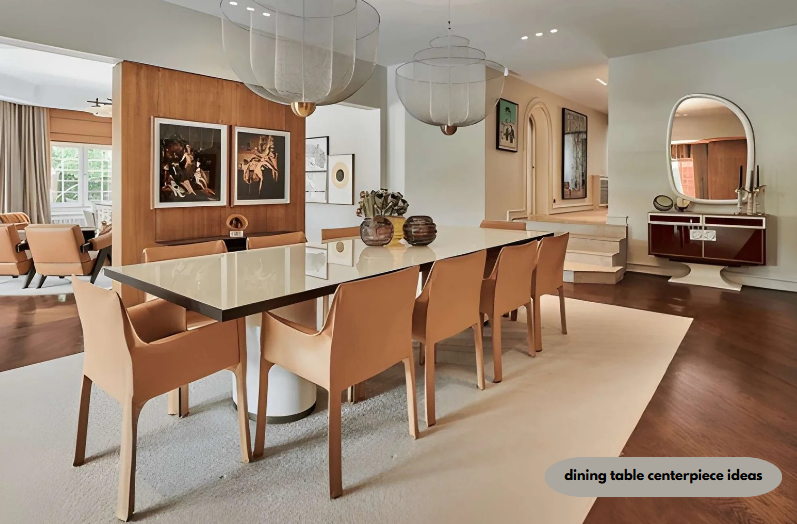
Aim for a footprint about one-third the length of the table and a height under 12 inches. Thin vertical pieces, such as taper candles or a single-stem bud vase, can rise higher because diners see right past them.
Good styling tips and tricks start with a tape measure, not a shopping list.
Run this four-step sizing check before buying a single stem:
- Measure the tabletop’s length and width, with the leaf inserted if you normally use one.
- Divide the length by three to find the centerpiece zone. A 72-inch table gets a 24-inch zone; a 96-inch farmhouse table gets 32 inches.
- Subtract 24 inches from the width to reserve about 12 inches per side for place settings. A 40-inch-wide table leaves a zone 16 inches deep, while a 36-inch table leaves only 12.
- Sit in a chair and look across. If the tallest element hides the face opposite you, trim it or replace it.
Round tables need just one number. Divide the diameter by three, so a 48-inch round table takes a 16-inch bowl, wreath, or low cake stand at its center.
Let a runner hang 6 to 8 inches past each end, or stop it 12 inches short for a modern line.
What Are Easy Dining Table Centerpiece Ideas for Each Season?
Keep one neutral base on the table all year and rotate only the top layer every three months. A linen runner, long wooden tray, or shallow dough bowl suits all four seasons.
| Season | Base (stays all year) | Swap-in layer | Light source | Approx. swap time |
| Spring | Linen runner or tray | Potted herbs, tulips in a low pitcher, speckled eggs in a bowl | Pillar candle in a hurricane glass | 10 minutes |
| Summer | Same base | Lemons or limes in clear glass, clipped hydrangeas, sea glass | Battery tea lights | 5 minutes |
| Fall | Same base | Mini pumpkins, gourds, pears, dried wheat | Amber glass votives | 10 minutes |
| Winter | Same base | Cedar or pine clippings, pinecones, clementines | LED tapers in brass holders | 15 minutes |
Spring and Summer
Use living material that keeps working after dinner.
- Potted thyme, rosemary, or basil fills a tray and moves to a sunny windowsill afterward.
- Recut flower stems at an angle and change the water every two days to stretch a grocery bouquet.
Fall
A cluster of small pumpkins fills a fall table better than one large pumpkin. U.S. growers harvested 1.44 billion pounds of pumpkins in 2024, according to the USDA Economic Research Service.
- Buy five small pie pumpkins at a farm stand anytime from late September through November instead of one big carver.
- Spread them across a 24-inch zone, then roast them after Thanksgiving.
Winter
Evergreen clippings dry fast in heated rooms, so plan a quick weekly check.
- Mist cedar or pine every few days.
- Replace clippings once needles drop at a touch.
Where to Spend and Where to Save
If you’re figuring out how to decorate a home on a low budget , put your money into the base layer and save everywhere else.
- Spend on one good runner or tray that lasts for years.
- Save on the seasonal layer by using produce, yard clippings, and pieces already in the cupboard.
Which Centerpiece Fits Your Decor Style?
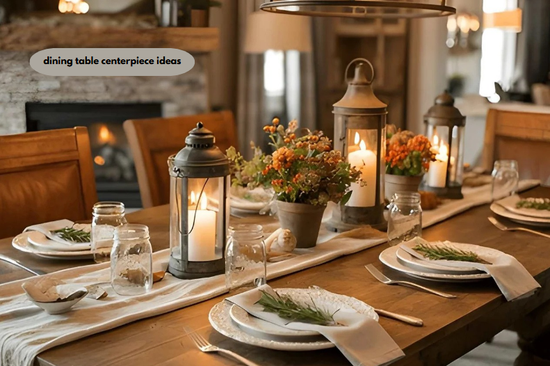
Match the container to the room’s dominant finish and let the seasonal layer supply the color. The vessel carries the style; whatever sits inside carries the season.
1. Farmhouse
Choose wood, ironstone, and galvanized metal. A dough bowl heaped with pears in fall or lemons in summer reads farmhouse without a single sign or slogan.
2. Modern and Minimalist
Use one sculptural vessel and one dramatic stem. Leave at least half the table bare, because empty space is the design here.
3. Boho
Layer texture with a rattan tray, terracotta pots, and dried pampas. Keep those dried grasses far from any flame.
4. Traditional
Work in pairs. Two brass or silver candlesticks flanking a footed compote bowl deliver the symmetry formal rooms expect.
5. Coastal
Pair clear glass with weathered wood. Sand-filled hurricane vases on a whitewashed board need only fresh citrus or greens each season.
Whatever your style, three decoration tips always apply: group objects in threes or fives, vary heights by at least 3 inches, and repeat one color twice.
How Do You Refresh a Centerpiece in 10 Minutes?
Leave the base in place, clear the old seasonal layer, and set down three new elements at different heights. The routine fits inside 10 minutes when every season’s pieces wait in one labeled bin.
A centerpiece swap belongs near the top of any list of quick home decor updates for busy people, since few changes look this different for 10 minutes of work.
The Bureau of Labor Statistics’ American Time Use Survey, released in June 2025, showed Americans averaging roughly two hours a day on household activities in 2024. A 10-minute seasonal swap equals about 8% of one day’s chore time, and four swaps a year total just 40 minutes.
Follow this timed sequence:
- Minutes 0 to 2: pack the old layer into its bin and wipe the runner or tray.
- Minutes 2 to 6: place the tallest piece slightly off-center, then add a medium and a low piece to form a loose triangle.
- Minutes 6 to 8: fill gaps with fruit, greens, or pinecones.
- Minutes 8 to 10: add candles, then check the sightline from a seated position.
What Are the Most Common Centerpiece Mistakes?
The three most common mistakes are blocking the sightline, crowding candles with decor, and using scented candles. The biggest is styling the table while standing, which hides the sightline problem guests notice the moment they sit. Fix it by pulling out a chair to judge the arrangement from seated height.
Mistake 1: Blocking the Sightline
Arrangements built at standing height end up too tall for seated guests. DecoratorAdvice treats the seated sightline as the first test of any centerpiece.
- Seated at a standard 30-inch table, your eyes sit roughly 15 to 18 inches above the tabletop, so anything over 12 inches starts cutting into the view across the table.
- A 14-inch vase that looked fine from the doorway blocks faces at dinner.
- Dinner partners across from each other should see eyes, not leaves.
Mistake 2: Crowding Candles With Decor
Candles tucked into greenery create a real fire hazard. National Fire Protection Association figures show that more than half of home candle fires start because something burnable, decorations included, sat near the flame.
- Keep a 12-inch clear ring around every lit wick.
- Switch to flameless LED candles when the arrangement holds dried wheat, pampas, pinecones, or evergreen.
Mistake 3: Using Scented Candles
Scented wax competes with the food, so dining tables call for unscented candles.
- Choose unscented pillars, tapers, or votives.
- Trim wicks to about a quarter inch before lighting to cut soot on the runner.
What If Your Table Is Small or You Have Pets?
Skip the one-third rule on tables narrower than 32 inches, or on tables that double as a desk or homework station. A fixed arrangement on those surfaces gets shoved aside daily, so use a 12-by-18-inch tray that lifts off in one motion, or move the full display to a sideboard and leave a single bud vase on the table. Homes with cats need one more adjustment, since true lilies are toxic to cats and belong nowhere on the table. Readers with small dining nooks can find more layouts for tight spaces on decoratoradvice.com.
Frequently Asked Questions
What can I put on my dining table instead of flowers?
A bowl of seasonal fruit, potted herbs, candles on a tray, or bare branches in a tall clear vase all replace flowers well. Fruit and herbs get eaten or replanted afterward.
How tall should a dining table centerpiece be?
Keep it under 12 inches so seated guests can see each other. Taper candles and single stems can go taller because their narrow profile leaves the sightline open.
How do I make a centerpiece look expensive on a budget?
Group items in odd numbers, repeat one color, and stick to one container material. Three identical objects look intentional, while three unrelated ones read as clutter.
How often should I change my dining table centerpiece?
Change the seasonal layer about every three months and refresh fresh elements weekly. Leaving the base in place year-round keeps each change to a few minutes.
What size centerpiece works on a round table?
Choose one piece about one-third the table’s diameter. A 60-inch round table suits a 20-inch arrangement set dead center.
Conclusion
The strongest dining table centerpiece ideas share three traits: they stay low, they fill about one-third of the table, and they let one seasonal element do the talking. Build a permanent base once, and every refresh after that takes about 10 minutes.