
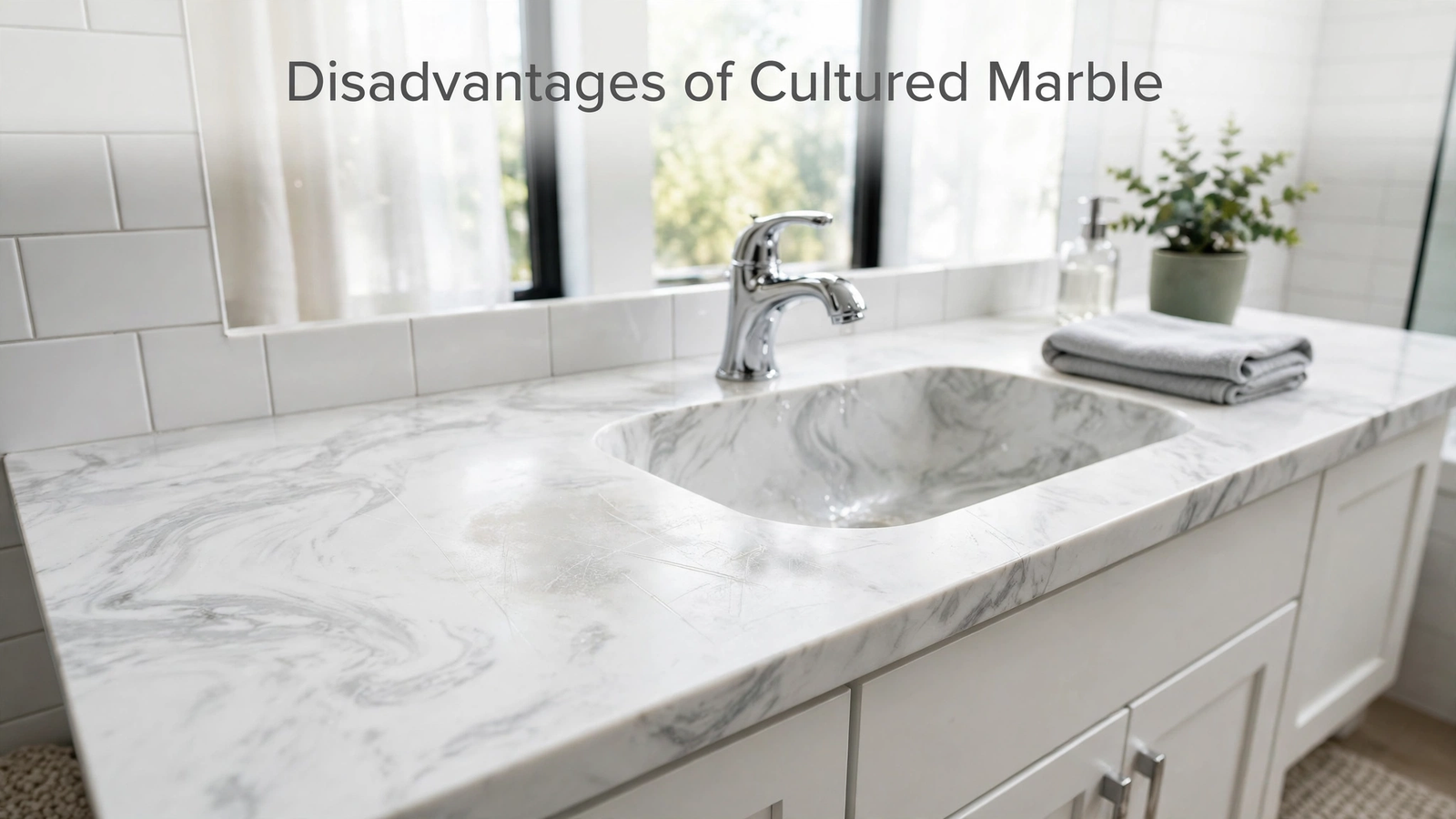
Disadvantages of Cultured Marble: 9 Things to Know Before Buying
The main disadvantages of cultured marble are a thin gel coat that scratches, dulls, and yellows, weak tolerance for heat and harsh cleaners, and repairs that rarely blend in. It still costs less than stone, so it suits budget bathrooms where owners accept a shorter cosmetic lifespan.
Key Takeaways
- Cultured marble’s durability depends almost entirely on its clear gel coat, a thin factory-applied skin over a resin and stone-dust core.
- Hot styling tools, near-boiling water, and sudden temperature swings can craze or crack the surface, most often around the drain.
- Abrasive powders, melamine sponges, and acidic cleaners such as vinegar dull the finish permanently.
- Refinishing fixes dullness, yellowing, and light scratches, but cracks that pass through a sink bowl mean replacement.
- Cultured marble remains one of the cheapest solid bathroom surfaces, so the real trade-off is upfront savings against faster cosmetic wear.
Cultured marble pros and cons at a glance
Pros: low cost, seamless integrated sink, non-porous surface that never needs sealing, easy daily cleaning.
Cons: thin gel coat, poor heat tolerance, yellowing over time, visible repairs, limited sizes, weak resale appeal.
What Is Cultured Marble?
Cultured marble is a man-made surface cast from crushed limestone or marble dust bound in polyester resin and sealed under a glossy, transparent gel coat.
Factories spray the gel coat into a polished mold first, then pour the stone-and-resin mix behind it. When the piece cures and comes out of the mold, that gel coat becomes the only finished face. This manufacturing order explains nearly every weakness below.
Generic renovation tips often group cultured marble with natural stone, yet the two need opposite care. Real marble is porous and needs periodic sealing, while cultured marble’s gel coat is non-porous, so sealer only leaves a sticky film.
How does it differ from solid surface and cultured granite?
Solid surface, such as Corian, carries its color all the way through, so scratches sand out without revealing a different layer. Cultured granite and cultured onyx use the same gel-coat construction as cultured marble with different fillers and pigments, so they share the same surface vulnerabilities.
What Are the Disadvantages of Cultured Marble?
Nearly every drawback traces back to one weak point: the gel coat. Once that skin wears through, scratches, or cracks, the core underneath looks chalky and starts holding stains.
1. The protective layer is extremely thin.
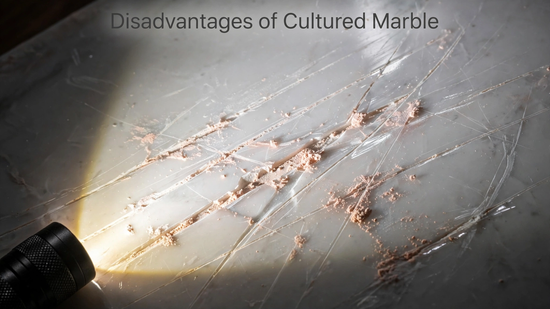
The gel coat is typically only about 15 to 20 mils thick (0.015 to 0.020 inch), roughly the thickness of four or five sheets of printer paper. Once a scratch cuts through it, the duller core shows as a pale line that traps makeup, hair dye, and soap residue.
2. Heat causes crazing and cracks.
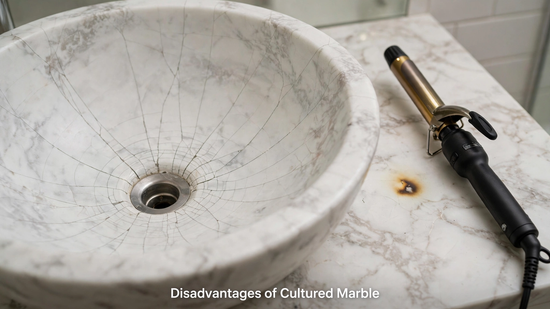
Direct heat and rapid temperature changes are the most common causes of failure. The gel coat and the core expand at different rates, so repeated hot-and-cold water cycles stress the bond between them. The result is crazing, a spiderweb of hairline cracks that usually starts where hot water hits the bowl first. A curling iron resting on the deck leaves a yellow scorch mark instead.
3. White tops yellow and dull with age
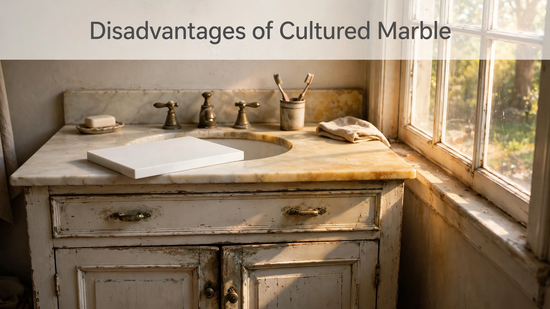
Older gel coats turn hazy or yellow as the resin oxidizes. Gel coats without UV inhibitors change faster, and bright white or bone-colored tops beside a sunny window show it first.
4. Repairs rarely disappear.
Light scratches buff out with fine polishing compound. Chips and cracks need filler plus fresh gel coat, and hand-matching a swirl pattern is hard enough that most fixes stay visible from a foot away.
5. Common cleaners ruin the finish.
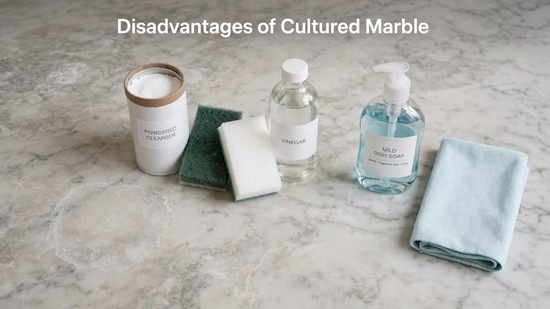
Many products sold for bathrooms damage this surface. Avoid powdered cleansers, green scouring pads, melamine “magic” sponges, vinegar, and drain cleaner splashed into the bowl, since each one etches or dulls the gloss.
6. The veining looks manufactured
Pattern comes from pigment swirled into the mix, not from geology. Many tops repeat the same look from unit to unit, which reads as builder-grade to plenty of buyers.
7. Molds limit size and shape.
Stock tops fit stock cabinets. Oversized double vanities in master suite floor plans often fall outside standard mold dimensions, pushing the order into a custom pour with longer lead times and a higher bill.
8. It has no place in the kitchen.
Hot pans, knife tips, and daily scrubbing overwhelm the gel coat quickly. If you want one surface running through every room, cultured marble won’t deliver it.
9. Resale appeal is limited.
A molded one-piece vanity tends to date a bathroom in listing photos. Sellers frequently refinish or replace these tops before going to market, which turns an old saving into a pre-sale expense.
Can Damaged Cultured Marble Be Repaired?
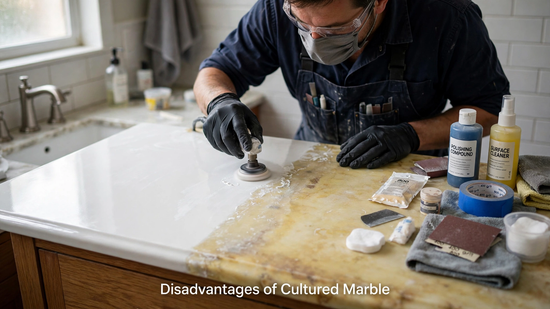
Yes, surface damage repairs well, but cracks that pass through the material usually mean replacement. HomeAdvisor’s stone restoration cost guide puts professional refinishing of cultured marble at about $6.50 per square foot.
Apply that rate to a 61-by-22-inch vanity top with a 4-inch backsplash, roughly 11 square feet, and the math lands near $72. Refinishers usually set a minimum job charge, so ask for that number before booking a small job.
Use this rule to choose between the two options:
- Refinish when the top looks dull or yellow, has light scratches, or has a few small chips away from the drain.
- Replace when cracks run through the sink bowl, water reaches the cabinet below, crazing covers most of the basin, or the top has separated from its base.
How to inspect a cultured marble top before you buy
For cabinet sizing, start with the vanity planning guides on decoratoradvice The checklist below covers the countertop itself.
- Hold a flashlight low and sweep it across the surface to expose waves, pinholes, and thin gel coat spots.
- Check the molded bowl around the drain and overflow for hairline crazing.
- Ask whether the gel coat contains UV inhibitors if the room gets direct sun.
- Confirm faucet hole spacing matches the fixture you plan to install.
- Read the warranty exclusions for heat damage and chemical cleaners before paying.
How Much Does Cultured Marble Cost Compared to Other Surfaces?
Cultured marble undercuts solid surface, cultured granite, quartz, and natural marble on price. Angi’s 2026 cultured marble cost data shows a professional installation typically running $1,280 to $2,180, averaging around $1,850.
Treat that average as a gut check. A quote well above it for a single vanity top deserves an itemized breakdown covering edge work, sink style, and removal of the old unit.
Those project totals include labor, while the first three rows below show material-only prices per square foot, so the table figures sit lower by design.
| Material | Price per sq ft (USD) | Price basis | Source |
| Cultured marble wall panels | $10–$35 | Material only | Angi, cultured marble shower wall cost guide |
| Cultured granite | $40–$65 | Material only | Angi, cultured marble shower wall cost guide |
| Corian solid surface | $42–$65 | Material only | Angi, cultured marble shower wall cost guide |
| Quartz countertops | $50–$200+ | Installed | Fixr, quartz countertop cost guide, 2026 |
| Natural marble countertops | $50–$200 | Installed | Fixr, marble countertop cost guide, 2026 |
When you compare quotes, match the installed price to the installed price and the material to the material. The countertop comparisons on decoratoradvice.com use the same approach if you’re weighing surfaces for the kitchen too.
Worked example: a 70-square-foot tub surround
A 5-by-7-foot back wall plus two 2.5-by-7-foot end walls adds up to 70 square feet. Multiply by each material range:
- Cultured marble: $700 to $2,450
- Cultured granite: $2,800 to $4,550
- Corian: $2,940 to $4,550
Now add one mid-life professional refinish at $6.50 per square foot, or $455. Even the priciest cultured marble panels total $2,905, roughly the cost of the floor for cultured granite materials alone. The savings survive, but only if you budget for that refinish from day one.
Cultured Marble vs Quartz vs Natural Marble
| Feature | Cultured marble | Quartz | Natural marble |
| Heat resistance | Low | Moderate | High |
| Scratch resistance | Low | High | Moderate |
| Needs sealing | No | No | Yes |
| Seamless sink option | Yes | No | No |
| Typical cost | Lowest | Mid to high | Mid to high |
Is Cultured Marble Worth It for Your Bathroom?
Cultured marble makes sense when budget and seamless cleaning outrank a finish that looks new for decades. Pick it for a kids’ bath, guest bath, or rental; skip it for a primary bath where someone runs a flat iron every morning.
Measure before you shop. A vanity order starts with exact cabinet width, depth, side-wall clearance, and faucet hole spacing. The same goes for the floor in front of it: if you’re also wondering how big of a rug do i need measure the clear floor area first.
A common mistake is treating cultured marble like real stone. Its name convinces owners to apply granite sealer or marble polish, which leaves a film that traps soap scum and looks cloudy within weeks.
The fix takes five minutes a week:
- Wipe with a mild liquid cleaner or diluted dish soap.
- Rinse with warm water and dry with a microfiber cloth to stop hard-water spots.
- Apply a non-yellowing paste wax twice a year so residue releases easily.
- Park hot styling tools on a silicone mat or in a wall-mounted holder.
In one situation the usual warnings barely matter. If you plan to sell within a few years or rent the unit, the gel coat won’t decline enough to show, and a seamless integral bowl cleans faster between tenants than any undermount sink seam, so cultured marble can be a smarter buy than pricier stone for short-term ownership.
Frequently Asked Questions
Does cultured marble scratch easily?
Yes, its gel coat scratches more easily than granite or quartz. Fine marks buff out with polishing compound, but deep gouges need professional gel coat repair.
Can you set a curling iron on cultured marble?
No, a hot styling tool can scorch, yellow, or crack the gel coat. A heat-resistant silicone mat or a wall-mounted holder prevents the damage.
How long does cultured marble last?
Cultured marble countertops typically last about 20 years, according to the National Association of Home Builders’ component life expectancy data. The gel coat usually shows wear before the core does, so gentle cleaning and twice-yearly waxing stretch the time before refinishing becomes necessary.
Is cultured marble cheaper than quartz?
Yes, cultured marble almost always costs less per square foot than quartz. The gap narrows once you add refinishing costs over the life of the top.
Does cultured marble hurt home value?
It rarely lowers value outright, but it seldom adds any either. Buyers tend to see molded vanity tops as functional rather than premium, so many sellers update them before listing.
Conclusion
The disadvantages of cultured marble come down to a thin gel coat that dislikes heat, grit, and time. Choose it for low-pressure bathrooms, budget for one refinish, and its price advantage over stone holds up for years.