How Many Coats of Primer on New Drywall? A Practical Guide for a Smooth Paint Finish
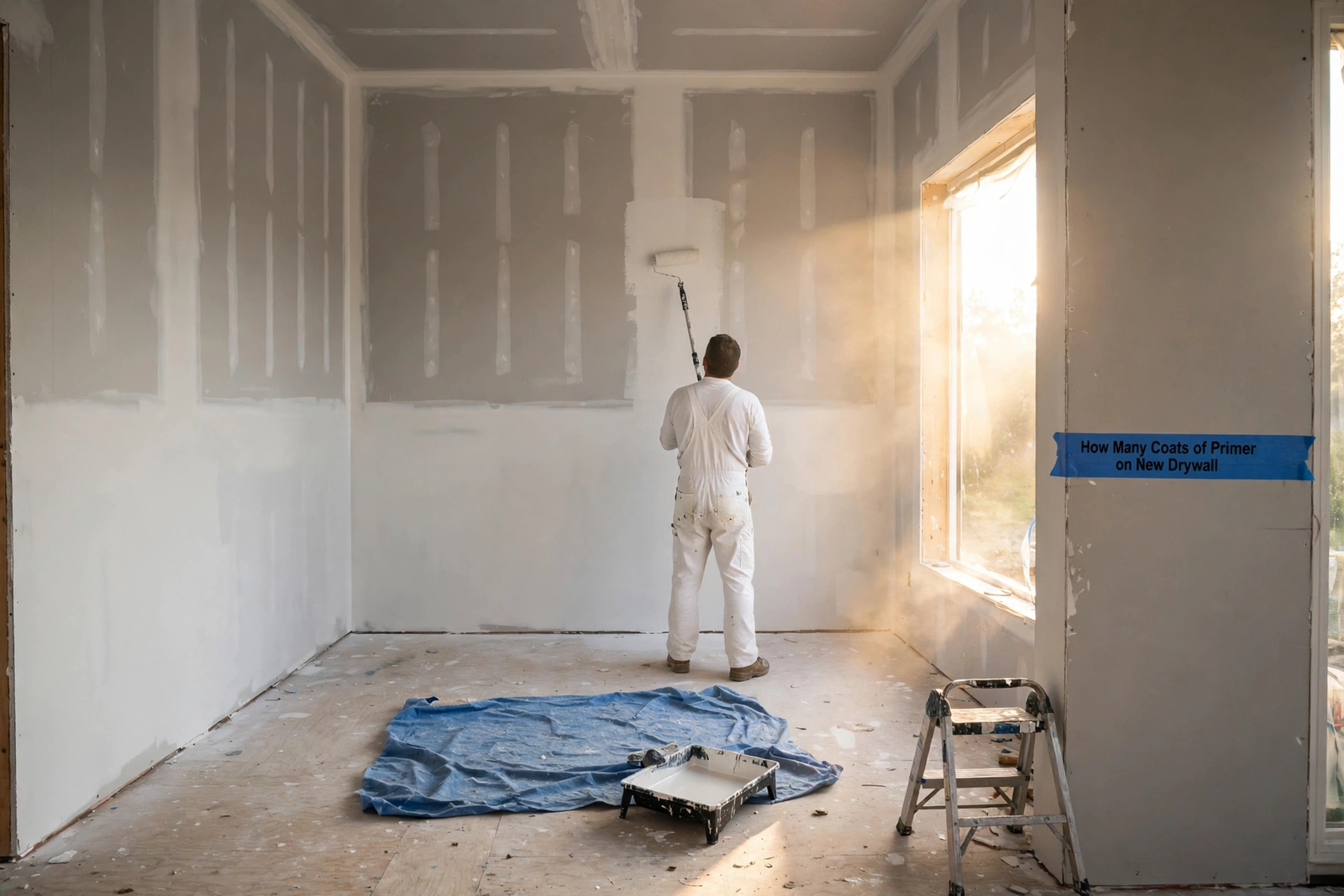
For most rooms, the answer to how many coats of primer on new drywall is one full, evenly rolled coat of drywall primer-sealer. Add a second coat under deep colors, satin or glossier sheens, strong side lighting, or walls where dull seams still show after the first coat dries.
Key Takeaways
- One primer coat seals new drywall well enough for flat paint in light and mid-tone colors.
- Joint compound absorbs far more liquid than the paper face, which causes dull “flashing” in the topcoat.
- Higher sheens, dark colors, and raking window light justify a second primer coat.
- Planning at 300 square feet per gallon, not the label maximum, prevents a starved final wall.
- A flashlight held flat against the dried primer reveals missed seams before any paint goes on.
What Is Drywall Primer?
Drywall primer is a thin, highly absorbent base coat that evens out the porosity of new gypsum board and joint compound so the finish paint dries to one consistent color and sheen.
How Many Coats of Primer on New Drywall Do You Actually Need?
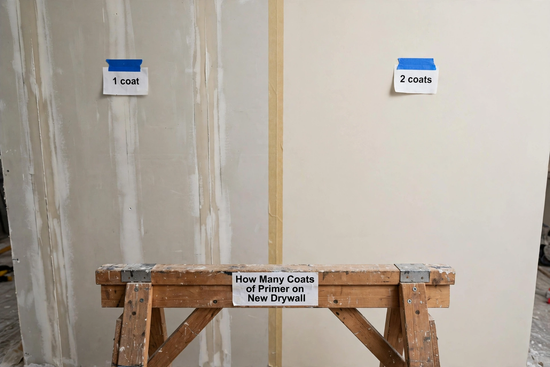
One coat covers most new walls. Primer on bare board has a single job: make paper and mud absorb paint at the same rate.
New drywall is really two surfaces. Paper drinks moderately, sanded joint compound acts like a dry sponge, and paint rolled over both dries with dull bands along every seam.
When One Coat Is Enough
A single coat works under flat or matte paint in light to medium colors over clean taping. Bedrooms, closets, and ceilings usually qualify.
When a Second Coat Earns Its Cost
Roll a second coat under eggshell or glossier sheens, under dark colors, in halls where a window rakes light along the wall, and over heavily patched areas.
Which Primer Works Best on Fresh Drywall?
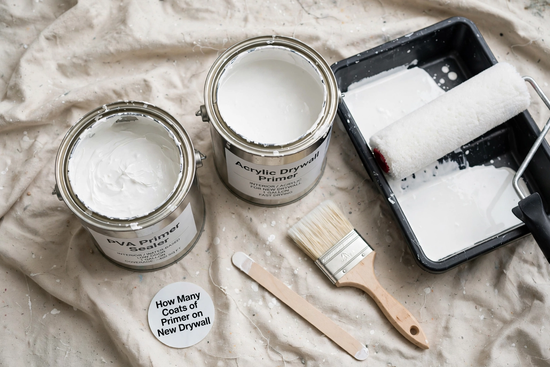
PVA primer sealer is the low-cost standard for dry rooms under flat paint. Acrylic drywall primer costs more but bonds better, resists moisture, and accepts tint, so it suits bathrooms, kitchens, and bold colors.
| Primer | Type | Coverage per gallon (as stated by maker) | Source |
| KILZ PVA Drywall Primer | PVA | 250–400 sq ft | KILZ data sheet |
| Zinsser PVA Drywall Primer & Sealer | PVA | About 400 sq ft | Rust-Oleum data sheet |
| Valspar Pro-Hide Interior PVA Primer | PVA | 400 sq ft | Valspar |
| Glidden PVA Drywall Primer + Sealer | PVA | 250–300 sq ft | Glidden data sheet |
| BEHR Drywall Plus Primer & Sealer | Acrylic | 250–400 sq ft | Behr |
| Dunn’s Interior PVA Primer & Sealer | PVA | 150–200 sq ft (practical) | Dunn-Edwards data sheet |
These figures aren’t directly comparable. Most makers print a best-case spread rate, while Dunn-Edwards lists practical coverage at the recommended film thickness, which is closer to what a roller actually puts on thirsty joint compound.
The DecoratorAdvice rule for new boards stays simple: PVA under flat paint in dry rooms, acrylic everywhere else.
Does the Drywall Finish Level Change How Many Coats You Need?
Yes. A fully skim-coated wall needs less help from primer than a standard taped-and-sanded wall.
The Gypsum Association’s GA-214-2021 standard, Levels of Finish for Gypsum Panel Products, ties Level 4 to flat paint and calls for a Level 5 skim coat under gloss, semi-gloss, or enamel paint and in severe lighting. Most new homes get Level 4, so satin walls in a sunny room need a second primer coat or a high-build primer-surfacer.
How Much Primer Does a Typical Room Need?
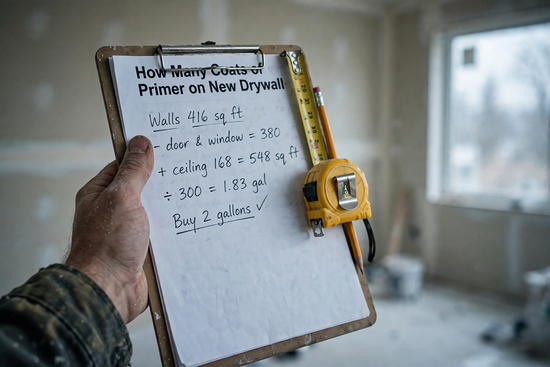
Budget about 300 square feet per gallon per coat. Here is the math for a 12-by-14-foot bedroom with 8-foot walls:
- Wall area: (12 + 14 + 12 + 14) × 8 = 416 sq ft.
- Subtract one door (21 sq ft) and one window (15 sq ft): 380 sq ft.
- Add the ceiling: 12 × 14 = 168 sq ft, for 548 sq ft total.
- One coat: 548 ÷ 300 = 1.83 gallons, so buy 2 gallons.
- Two coats: 1,096 ÷ 300 = 3.65 gallons, so a 5-gallon pail makes more sense.
Plan at 400 square feet per gallon, and you buy 1.37 gallons, leaving the final wall thin and flashing.
Finishing a basement, adding a room, or closing in a garage all mean new drywall, and priming it correctly once costs far less than repainting a blotchy room later.
Any home upgrade that adds new walls deserves a line in the budget for that extra gallon of primer.
How Do You Prime New Drywall Step by Step?
Cure, clean, check temperature, roll, and inspect.
- Let joint compound dry fully, usually 24 hours for premixed mud and longer in humid weather.
- Wipe sanded seams with a barely damp sponge, since dust stops primer from bonding.
- Confirm the room is warm enough. KILZ limits application of its PVA drywall primer to temperatures between 50°F and 90°F, so heat a cold garage or winter addition for a full day first.
- Cut in corners, then roll with a 3/8-inch nap, keeping a wet edge. If you spray, back-roll behind the gun.
- Let it dry, run the flashlight test, and spot-prime dull areas.
Bookmark this page on decoratoradvice.com so the five steps are on your phone when you’re at the job site.
Why Does Paint Look Blotchy Over Primed Drywall?
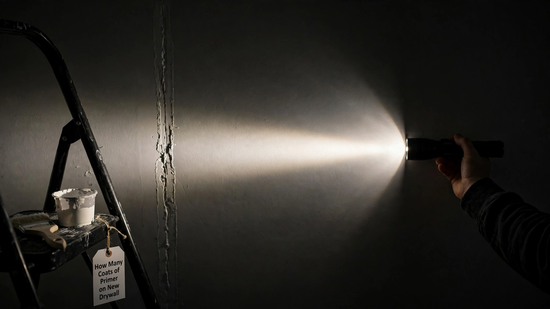
Blotchy paint over primed walls usually means the primer went on too thin over joint compound. White primer looks finished instantly, so a stretched coat hides its own weakness.
Three mistakes cause most callbacks:
- Starved coats: hold a flashlight flat against the dry wall and re-prime any seam duller than the paper.
- Fuzzy paper: oversanding raises fibers; sand lightly with 220-grit after priming, then spot-prime.
- Thinned primer: extra water cuts sealing power, so use it straight from the can.
Flashing seams also jump out under picture lights. If you’re planning simple wall decor ideas that look clean and modern, prime carefully first, because a gallery wall draws the eye straight to the surface behind it.
Does Your Paint Color Change How Many Primer Coats You Need?
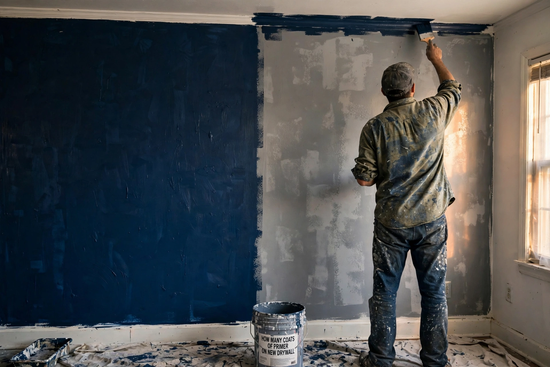
Yes. Pale neutrals need one white primer coat; deep colors need a second coat or gray-tinted primer.
A warm greige, such as BM Edgecomb Gray, sits comfortably over one coat of plain white primer. Benjamin Moore lists its light reflectance value at 63.09 out of 100, so two topcoats over white primer read uniform without a tinted base.
Navy or charcoal needs mid-gray tinted primer, two primer coats, and two finish coats.
When the Usual Advice Does Not Apply
Patch repairs on an already painted wall follow different rules. Spot-prime only the dried compound, feathering about 2 inches past the edge, then paint the entire wall corner to corner so the sheen matches; whole-wall priming only wastes material.
Frequently Asked Questions
Can I skip the primer on new drywall if I use paint-and-primer in one?
No, a dedicated drywall primer still works better on bare board. Paint-and-primer products target painted walls and seal raw mud less evenly at a higher price.
How long should drywall primer dry before painting?
Most latex drywall primers are ready for paint within a few hours at room temperature. Cool, humid rooms stretch that window, so check the label.
How many coats of paint go on after primer?
Plan on two finish coats over primed drywall. One coat rarely builds full color or even sheen.
Do I need to sand between coats of primer?
Sand only if you see raised fibers or roller grit. Use 220-grit with light pressure to avoid cutting through to paper.
Should I tint drywall primer?
Tint the primer when your topcoat is a deep or saturated color. A gray base cuts finish coats and stops white from showing at edges.
What primer should I use on bathroom drywall?
Use an acrylic drywall primer over moisture-resistant board in bathrooms. Finish with a bathroom-rated satin or semi-gloss paint.
How long should I wait between two coats of primer?
Wait until the first coat is dry to the touch and even in color, usually an hour or two at room temperature. Always follow the recoat time printed on the can, and allow it to be left longer in cool or humid rooms.
Conclusion
For most homes, the right answer to how many coats of primer on new drywall is one generous, even coat, confirmed with a flashlight check. Add a second coat for dark colors, glossy sheens, or raking light, and buy primer at 300 square feet per gallon so the last wall gets as much as the first.