
What to Consider Before Installing a Sauna in Your Home?
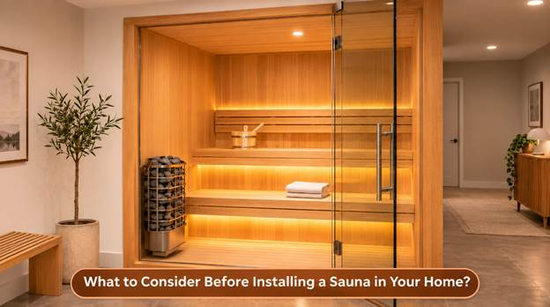
A home sauna is closer to a bathroom remodel than a furniture purchase. It needs wiring, ventilation, and a floor that can take heat for years. Before you buy, check seven things: the sauna type, the location, the available space, the electrical and ventilation needs, the materials, the total cost, and your own health. Skip one and it usually comes back later as a change order.
As a starting point, choose your sauna size based on the number of users and the available seating space. The North American Sauna Society recommends approximately 24 to 35 square feet (2.2 to 3.3 m²) for a typical two- or three-person sauna. Most traditional electric sauna heaters in the U.S. require a dedicated 240V electrical supply, although exact circuit requirements depend on the heater model. The sections below follow the order a contractor would typically work in.
Which Type Of Sauna Fits Your Home?
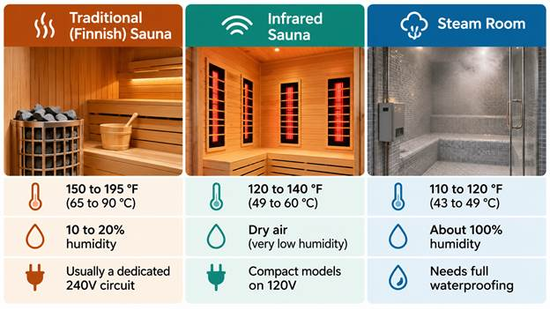
Start with the kind of heat you enjoy, then check whether your space and wiring can support it. Most homes choose between three options:
- Traditional (Finnish) sauna: An electric or wood-burning heater warms a bed of stones to heat the air to 150 to 195°F (65 to 90°C), with a relative humidity of 10 to 20%. Pouring water on the stones produces short bursts of steam.
- Infrared sauna: Carbon or ceramic panels heat the body directly while the air temperature stays between 120 and 140°F (49 to 60°C). Compact models can run on a 120V household circuit and fit into small spaces.
- Steam room: A steam generator maintains the room at nearly 100% humidity, with temperatures ranging from 110 to 120°F (43 to 49°C). It requires a sealed, waterproof enclosure.
Infrared is the gentler choice if very hot air leaves you short of breath. Steam suits people who deal with dry skin or blocked sinuses.
Still, the traditional sauna is what most people picture: hot stones and a ladle of water that sends up löyly, the Finnish word for that burst of steam. When you compare traditional saunas for your home, look past the photos and check seating capacity, wood type, and heater output in kilowatts. The heater rating matters most, because it decides what your electrician has to install.
Where Should You Place A Home Sauna?
The best spot has a level floor, a short wiring run to the panel, decent airflow, and a shower close by. Five places come up again and again:
- Basement: Offers stable temperatures, concrete floors, and short wiring runs to the panel.
- Garage: Provides space and a hard floor, but it often needs extra insulation in cold climates.
- Primary bathroom: Puts the sauna next to a shower and a drain, which suits steam rooms well.
- Spare bedroom or home gym: Works well for infrared models that need no special wiring.
- Backyard or patio: Suits outdoor-rated barrel or cabin saunas on a concrete pad, gravel base, or deck.
Indoors, set the sauna on tile, concrete, or sealed vinyl. Carpet and unsealed hardwood soak up sweat and water, and the smell shows up long before the rot does. Outdoors, you need a level, well-drained base and a roof rated for your weather.
How Much Space Does A Home Sauna Need?
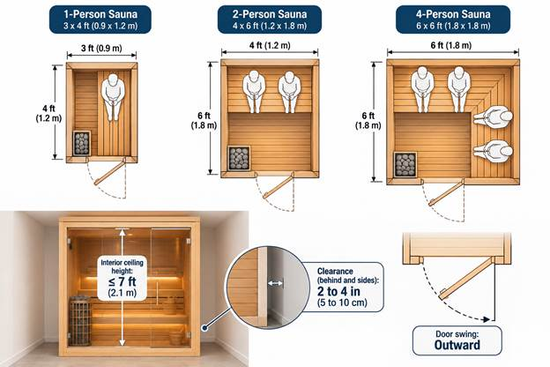
A home sauna’s space requirements depend on its seating capacity, heater, and layout. A home sauna needs about 3 × 4 feet (0.9 × 1.2 m) of floor space for a one-person unit and roughly 4 × 6 feet (1.2 × 1.8 m) for two people. A four-person sauna typically measures 6 × 6 feet (1.8 × 1.8 m) or larger.
Ceiling height matters as much as floor area, and taller is not necessarily better. An interior height of 7 feet (2.1 m) or less helps retain heat at bench level, allowing the room to warm up faster and reducing the heater’s workload.
Leave 2 to 4 inches (5 to 10 cm) of clearance behind and beside a prefab sauna cabin for airflow, along with enough space in front for the door to open fully. Measure the entire delivery route before installation. Prefab panels can be bulky, and a narrow basement stairwell may make it difficult to move them into place.
What Electrical and Ventilation Requirements Apply?
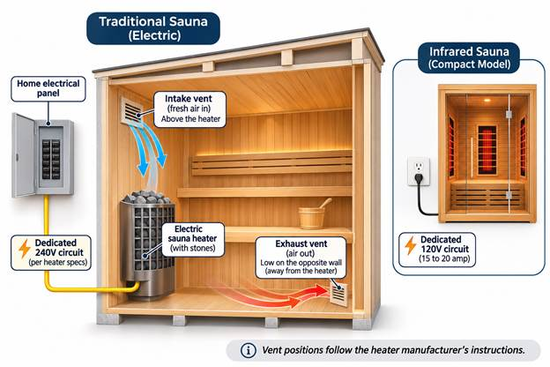
Home sauna electrical requirements depend on the heater type, power rating, and installation location. Compact infrared saunas commonly operate on dedicated 120V circuits rated at 15 to 20 amps. Traditional electric heaters rated at 4.5 to 9 kW generally require a dedicated 240V circuit, with the breaker size specified in the heater’s installation manual. Many residential steam generators also use 240V power.
Before ordering a sauna, hire a licensed electrician to check your electrical panel’s capacity, confirm the required circuit, and determine whether permits are needed. If your home’s electrical service needs upgrading, costs can range from approximately $1,200 to $4,000 or more, depending on the panel size and installation complexity. Not every sauna installation requires a panel upgrade.
Ventilation requirements also vary by sauna type. Traditional electric saunas need fresh-air intake and exhaust openings positioned according to the heater manufacturer’s instructions. Mechanical ventilation systems commonly supply air above the heater and exhaust it near the floor, away from the heater. Wood-burning saunas require a ventilation arrangement suited to their combustion and airflow needs.
Steam rooms require a sealed enclosure with continuous waterproofing and vapor protection across the walls, ceiling, and floor. A sloped ceiling can help direct condensation away from the seating area, although the required slope depends on the materials and installation specifications. Install an appropriately sized exhaust fan in the surrounding bathroom to remove excess moisture and reduce the risk of condensation and mold in adjacent areas.
What Materials And Design Choices Matter?
The wood matters most, followed by the glass and lighting. Four species show up in most home saunas:
- Western red cedar: Aromatic, rot-resistant, and naturally antimicrobial.
- Nordic spruce: Light in color, budget-friendly, and the traditional Finnish choice.
- Hemlock: Low in scent, which suits people with sensitivities to aromatic woods.
- Thermally modified wood: Heat-treated for extra stability and moisture resistance.
Whatever you pick, keep it untreated and kiln-dried inside the room. Stains, paints, and pressure treatments give off fumes at sauna temperatures. Benches should be smooth and knot-free, since knots get hot enough to notice on bare skin.
This is where a sauna starts to look like part of the house. A tempered glass door makes a small cabin feel bigger. Warm LED strips under the benches give soft light without glare. And wood tones that pick up your flooring or cabinetry make the sauna look like it was planned with the room.
How Much Does a Home Sauna Cost to Install and Run?
A home sauna typically costs $3,000 to $10,000 installed, although large custom builds can exceed $25,000. Prefab infrared saunas generally cost $1,500 to $7,000, while traditional prefab sauna kits can cost $4,000 to $12,000. Fully custom saunas may cost $8,000 to more than $34,000, depending on their size, materials, and features. Budget separately for electrical work, installation labor, and a level foundation if the sauna will be installed outdoors.
Operating costs depend on heater power, session duration, and local electricity rates. According to the U.S. Energy Information Administration, the national average residential electricity price was 18.16 cents per kWh in August 2026. At that rate, a 6 kW traditional sauna heater running at full power for one hour, including preheating, costs approximately $1.09 in electricity. A 1.5 kW infrared sauna costs approximately $0.27 under the same conditions.
At four sessions per week, annual electricity costs would be approximately $227 for the traditional sauna and $57 for the infrared sauna. Actual costs may be lower when the heater cycles off after reaching its set temperature. Proper insulation and a well-sealed door can also help reduce heat loss and energy consumption.
What Health And Safety Factors Should You Check?
Before installing a sauna, consider your heart health and blood pressure, think about who else will use it, and carefully evaluate the heater’s safety features. For healthy adults, regular sauna sessions are associated with better cardiovascular health, improved muscle recovery, and reduced stress. A 20-year Finnish study involving 2,315 men found that those who used a sauna 4 to 7 times per week had a 50% lower risk of fatal cardiovascular disease than those who used it once a week, according to research published in JAMA Internal Medicine.
Four precautions apply to every household:
- Session length: Keep sessions to 15 to 20 minutes, and start with 5 to 10 minutes if you are new to sauna bathing.
- Hydration: You can lose a substantial amount of fluid through sweating in a steam room, increasing the risk of dehydration. A 2025 review by the International Society of Sports Nutrition found measurable body mass loss during wet sauna sessions, although the amount varies depending on temperature, humidity, session duration, and individual factors. Drink water before and after each session.
- Alcohol and medication: Avoid alcohol before or during sauna use because it increases the risk of dehydration, low blood pressure, and fainting. Certain medications may also affect your body’s response to heat, so consult your healthcare provider if you take prescription medications.
- Cool-down: Rest and allow your body to cool down gradually afterward, as sudden temperature changes can cause rapid fluctuations in blood pressure.
Consult your doctor before using a sauna if you have heart disease, have recently experienced a heart attack, have unstable blood pressure, or are pregnant. Young children and older adults may need shorter sessions at lower temperatures, along with appropriate supervision.
For equipment safety, choose an electric sauna heater certified to UL 875, the safety standard for electric sauna heating equipment. Look for an automatic shut-off timer and a protective guard around the heater and stones. The sauna door should open outward and must not have a lock.
What Maintenance Does A Home Sauna Need?
Maintenance is straightforward. Wipe the benches after each use and leave the door open to allow the wood to dry. Once or twice a year, sand stained bench boards with fine-grit sandpaper and inspect the heater stones every 6 to 12 months.
Replace any stones that are cracked or crumbling. Flush and descale the steam generator according to the manufacturer’s recommended schedule, increasing the frequency in areas with hard water. Once a year, inspect the door seals, ventilation openings, and electrical connections, with electrical inspections performed by a qualified professional.