Minimalist Bedroom Ideas: How to Create a Calm, Functional Space
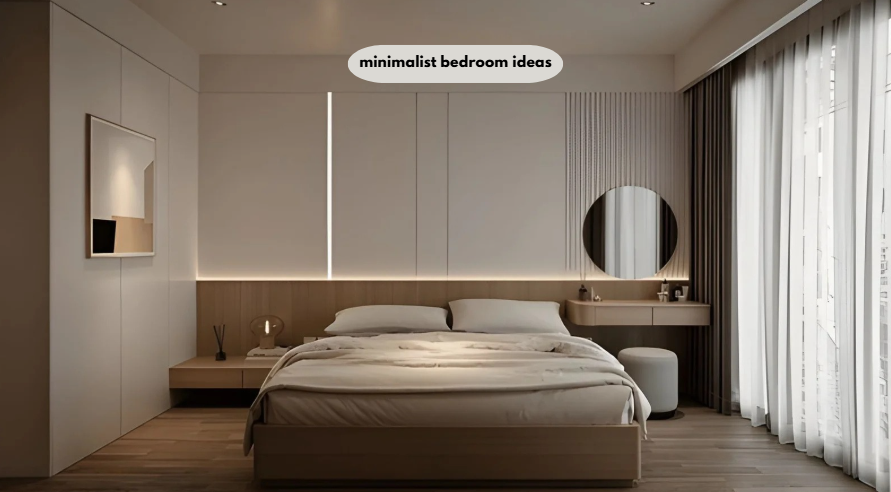
The minimalist bedroom ideas that work best are the ones that remove things before adding any: clear the floor and surfaces, keep only furniture you use daily, darken the room for sleep, cool it down, and limit decor to a few pieces you like. Done in that order, the room becomes calmer to look at and easier to keep tidy.
The answer changes most with one fact: whether your bedroom has a second job. The first step in the strategy is to determine which circumstance you are in because a room that doubles as an office, a nursery, or overflow storage cannot be cleared in the same manner.
The end result is a bedroom with clear surfaces, low nighttime light, and a short list of things you chose on purpose, and the first two stages cost nothing because they only take things out.
Match the Plan to Your Situation
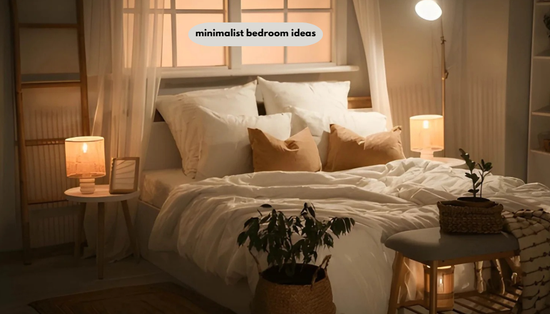
Start with the row that describes your room, because the right first move depends on what limits you.
| Your situation | Start here. | Leave for later. |
| Little spare time | The bedside table, the top of the dresser, and the floor next to the bed | Paint and furniture changes |
| Tight budget | Removing and rearranging what you already own | Anything that has to be bought |
| Small room | Taking out one piece of furniture and lifting items off the floor | Extra storage units that use floor area |
| Renting | Things that move with you: lamps, bulbs, curtains, bedding | Paint and fixed fittings, unless the landlord agrees |
| Room with a second job | One zone per job, with work gear hidden at night | Emptying the room completely |
Which row is fastest?
The top row suits anyone looking for quick home decor updates for busy people. It covers three surfaces, needs nothing bought, and the room reads as tidier the same night.
What if the bedroom is also an office?
A desk in a bedroom is not a failure of minimalism, but it needs a boundary. Any of these keeps work out of view from the bed:
- A laptop that can be closed and stored in a drawer
- A lidded box for papers and chargers
- A curtain or screen across the desk
Clear the Room in Four Passes
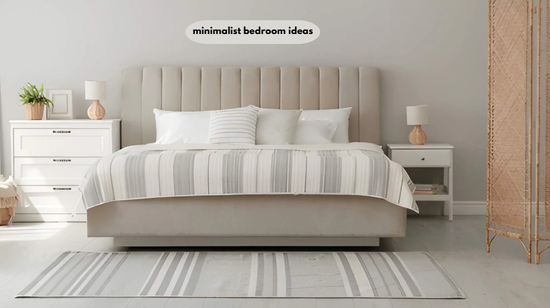
Removal does most of the work, so do it before buying or painting anything. Put each thing you take out into one of three piles: belongs in another room, give away, or throw out.
- Floor. Pick up everything that is not furniture. Bags, shoes, boxes, and laundry go to their piles.
- Surfaces. Leave each flat surface with only what you reach for every night, such as a lamp, a book, and a glass of water.
- Furniture. Say out loud what each piece does every day. A chair whose only job is holding worn clothes has no job, so move it out and add a hook.
- Sight line. Lie down and look around from the pillow. Whatever pulls your eye, such as open shelves, cable tangles, or paperwork, gets a door, a basket, or a new room.
Does clutter really affect sleep?
The evidence is real but narrow. Research from St. Lawrence University, presented at the SLEEP 2015 meeting, found that people at risk of hoarding disorder reported more sleep disturbance than people without that risk.
That is a self-reported link in a heavily cluttered group, not proof that tidying an ordinary room cures insomnia. Treat the clear-out as removing an obstacle, not as a treatment.
Darken the Room for the Night
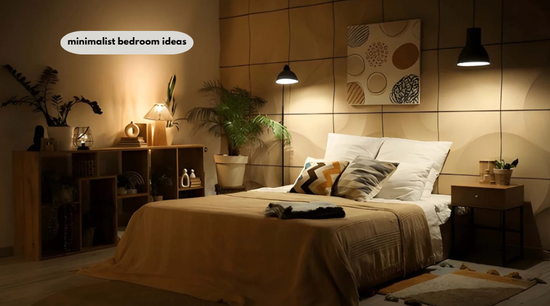
Darkness matters more than any decor choice. According to the National Sleep Foundation’s 2025 Sleep in America Survey, six out of 10 Americans. Adults were not getting enough sleep, so judge the bedroom at night as well as in daylight.
How much does light during sleep matter?
A Northwestern Medicine study published in PNAS in 2022 compared one night of sleep at 100 lux with one night at 3 lux. The brighter the night, the higher heart rate during sleep and insulin resistance the next morning. Even a single lit night had a measurable effect, so small light sources are worth removing.
What to switch off or cover
- Turn off the overhead light and the television before sleep.
- Cover or unplug standby lights on chargers, speakers, and screens.
- Hang curtains that block street lamps.
- Charge the phone away from the bed.
Cool the Room and Fix the Bulb
A cool room is the second sleep setting to get right. The Sleep Foundation puts the best room temperature for sleep at about 65°F, or 18.3°C, with 65 to 68°F suiting most people.
What if the room runs warm?
Try the free options before buying equipment:
- Switch to lighter bedding.
- Open a window in the evening.
- Close curtains during the day to keep the sun out.
Two low-cost lighting changes
These two upgrading tips cost little, and both are ways to make your bedroom feel more comfortable:
- Swap the bedside bulb for a warm, dimmable LED. The U.S. The switch also lowers the power cost since, according to the Department of Energy, home LEDs consume at least 75% less energy than incandescent bulbs and can live up to 25 times longer.
- Use a low lamp in the evening and leave the ceiling light off.
Add Comfort Back With a Short List
A minimalist bedroom still needs warmth, and it comes from texture and a few chosen objects, not from quantity.
Limits that keep the room calm
The most useful decoration tips are limits, not additions:
- One piece of art on the wall you face
- One plant, or none
- Bedding in two or three related tones
- One warm material, such as wood, wool, or linen
Which color should you choose?
In December 2025, Pantone named a white cloud dancer as its Color of the Year for 2026, the first white since the program began in 1999. Pale, quiet rooms are in fashion, but that says nothing about your room. A bedroom with little direct sun can look grey in pure white, and a warm off-white, sand, or soft green reads as calm too.
What to do if you repaint
The U.S. Environmental Protection Agency reports that levels of several organic chemicals average two to five times higher indoors than outdoors and spike far higher during and just after jobs such as paint stripping. That makes ventilation part of the job:
- Choose a low-VOC paint.
- Keep the windows open while you work and afterward.
- Sleep elsewhere until the smell has gone.
Free swaps from other rooms
Most Simple bedroom decor ideas without spending much involve moving things, not buying them. Try a lamp from the living room, a throw from the sofa, or a framed print from the hallway. Buy only what you still miss once you have lived with the cleared room.
Four Mistakes That Undo Minimalist Bedroom Ideas, and How to Fix Them
Most failed attempts come from buying first and removing second. These four errors cause the most trouble.
- Buying storage before clearing out. New boxes get filled with things you did not need. Fix: finish all four passes, then measure what is left.
- Treating white and empty as the goal. The room ends up cold and you stop liking it. Fix: add one warm material.
- Keeping screens and standby lights. They keep the room lit while you sleep. Fix: cover or unplug them, and charge devices outside the room.
- Hiding instead of removing. Stuffed drawers and a full under-bed space bring the clutter back. Fix: if an item has no daily or seasonal use, it leaves the room.
When the standard plan does not fit
Most bedroom guides, whether on decoratoradvice or elsewhere, assume a healthy adult, and two groups need a different plan.
- Older adults. A study reported by Hebrew SeniorLife in 2023 found older adults slept best with the room between 68 and 77°F, warmer than the guidance above. One figure is a broad recommendation for adults, and the other is a measurement in older people, so use the one that matches the sleeper.
- People who find discarding distressing. A fast clear-out can do harm here, and a doctor or therapist is the right first step.
Questions People Ask About Minimalist Bedrooms
What should you not keep in a minimalist bedroom?
Anything without a nightly or daily use should leave a minimalist bedroom. The usual offenders are exercise gear, paperwork, spare furniture, unworn clothes on chairs and electronics with glowing lights. Sentimental items are fine in small numbers; put two or three where you can see them and store the remainder in another room.
How do you make a minimalist bedroom feel cozy instead of cold?
A minimalist bedroom feels cozy when it has soft textures, warm light, and at least one natural material. Layer a wool or cotton throw over plain bedding, use a low lamp instead of the ceiling light in the evening, and bring in wood through a stool, frame, or tray. Bare does not have to mean hard.
Can a small bedroom be minimalist?
Yes, a small bedroom is often the easiest room to make minimalist because there is less to clear. Take out one piece of furniture, mount lights or shelves on the wall to free the floor, and keep the space under the bed either empty or limited to one category, such as spare bedding.
What color is best for a minimalist bedroom?
The best color for a minimalist bedroom is a muted one you find restful, and common choices are off-white, beige, soft grey, pale green, or pale blue. Test a sample on the wall you face from bed, then look at it in morning and evening light before committing to a full tin.
Your Calmer Bedroom Starts With What You Take Out
The minimalist bedroom ideas that make the biggest difference are subtraction, darkness, and a cool room, with decor added last and in small amounts. Fit the plan to your situation, clear the room in four passes, then set the light and temperature for sleep. Comfort comes from a few textures and objects you chose, not from filling the space again.
- Tonight, clear the nightstand and the floor beside the bed, and cover or unplug every light that stays on after dark.
- This week, lie on the bed and list what catches your eye, then give each item a door, a basket, or a new room.
- Before buying anything, check a room thermometer at bedtime and compare it with the range for the person sleeping there.