How to Decorate a Rental Apartment Without Damage Using Removable Decor
You finally found the apartment. Good light, decent layout, rent that doesn’t make you cry—and then you walk in and stare at those bare white walls and wonder: can I actually make this place feel like mine?
The answer is yes. A thousand times yes. And you don’t have to risk your security deposit to do it.
Decorating a rental comes with real constraints—no nails, no painting, no drilling—but those limits actually push people to get creative. There is an entire market of removable, renter-friendly solutions available, and once you know how to use them, mastering how to decorate a rental apartment without damage allows your space to feel just as warm, personal, and intentional as any owned home.
Here’s how to do it the right way.
Start With the Walls—They’re Not Off-Limits
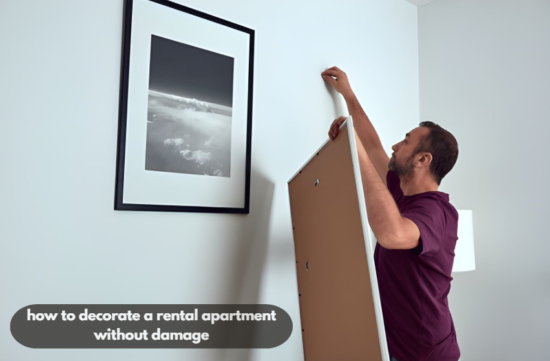
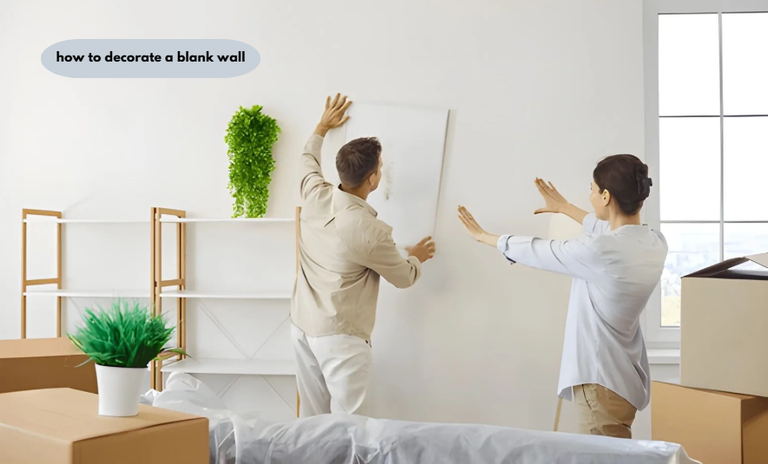
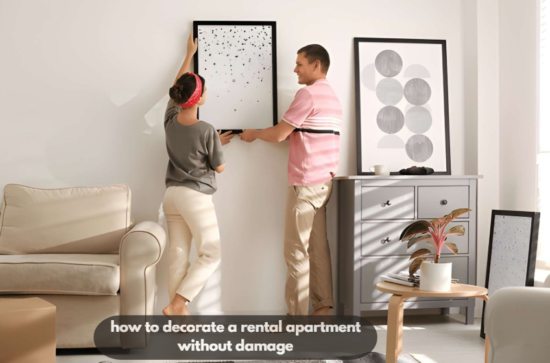
Walls are the first thing people assume they can’t touch. That’s the myth we’re killing right now. A key tip for how to decorate a rental apartment without damage is to create a stylish gallery wall using removable hooks rather than drilling holes.
Peel-and-stick wallpaper has actually altered the rental market. Today’s options come in everything from linen textures to bold botanical prints to moody dark florals—and they go up in an afternoon and come down without residue.
Note: It requires smooth, primed paint. If your landlord used cheap, matte builder’s paint or the walls are heavily textured, it may peel the paint or fail to stick. Brands like Chasing Paper, Tempaper, and Spoonflower offer hundreds of designs, and most are sold by the roll or even by the yard, so you’re not committing to an entire room.
Using it strategically is crucial. You don’t need to paper four walls. Pick one accent wall—behind your bed, behind the sofa, or in a small bathroom—and let it do the talking. A single well-placed pattern can anchor an entire room.
Command strips and adhesive hooks are your best friends for hanging art, mirrors, and shelves. The 3M Command line has evolved significantly; there are now strips rated for heavier frames, hooks for items up to 7–10 pounds (stay at 75% capacity to safely account for humidity), and even picture-hanging strips that let you hang gallery walls without a single hole. Just follow the instructions exactly—especially the “wait an hour before hanging” part—and removal is genuinely clean.
For a gallery wall, layout your frames on the floor first, photograph the arrangement, and then transfer it to the wall. This trick saves you the frustration of constantly adjusting, and you can find more step-by-step layout guides on decoratoradvice com to help plan your placement perfectly.
Furniture Is Your Secret Weapon
When you can’t change the bones of a space, furniture and layout do the heavy lifting. Most rental rooms are basic rectangles or squares, but you can fix that default “boring” look with a few strategic design choices.
- Float your furniture: Pull your sofa a foot or two away from the wall. It sounds counterintuitive in a smaller space, but floating furniture creates an intimate conversation zone. Anchor it with a large area rug to add instant warmth and define the room.
- Layer your lighting: Landlord fixtures are notoriously ugly. Work around them by swapping harsh overhead bulbs for floor and table lamps to create warm, layered light. If an overhead fixture is truly hideous, carefully unscrew the shade, store it safely for move-out day, and hang a lightweight, plug-in swag pendant light from a ceiling hook instead.
- Hang high curtains: Most rentals offer generic blinds or nothing at all. Add curtains—even right over existing blinds—to soften the room. Mount the rod close to the ceiling using tension rods or adhesive brackets, and let the fabric pool slightly on the floor to fake the illusion of taller ceilings.
The Floor Is Fair Game
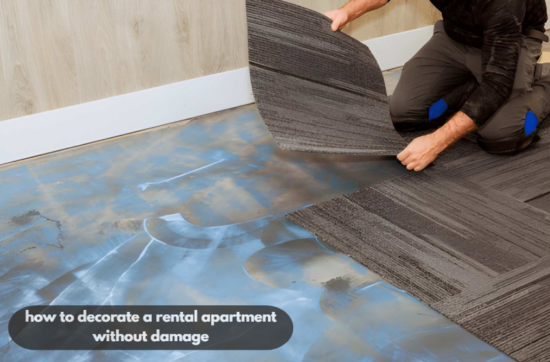
Hardwood or tile floors in a rental are great until you realize the color doesn’t work with anything you own, or they’re just cold and echoey. Area rugs fix this instantly.
Layering rugs is a trend that’s both stylish and practical—a large neutral jute rug on the bottom, a smaller patterned rug on top. It adds dimension and protects the floors underneath, which your landlord will actually appreciate.
For kitchens and bathrooms where rugs aren’t always practical, consider peel-and-stick floor tiles. They come in realistic wood, stone, and hex tile patterns, and they’re designed to lift cleanly when you move out. They’re perfect for covering ugly vinyl or dated linoleum.
Plants: The Living Decor That Changes Everything
No tool required. No landlord approval needed. Just a trip to your local nursery.
Plants do something no furniture or art can fully replicate—they bring life into a space, literally. A cluster of pothos on a floating shelf, a fiddle leaf fig in the corner, trailing ivy in a bathroom window—it all adds color, texture, and warmth in a way that photographs just don’t capture until you’re standing in the room.
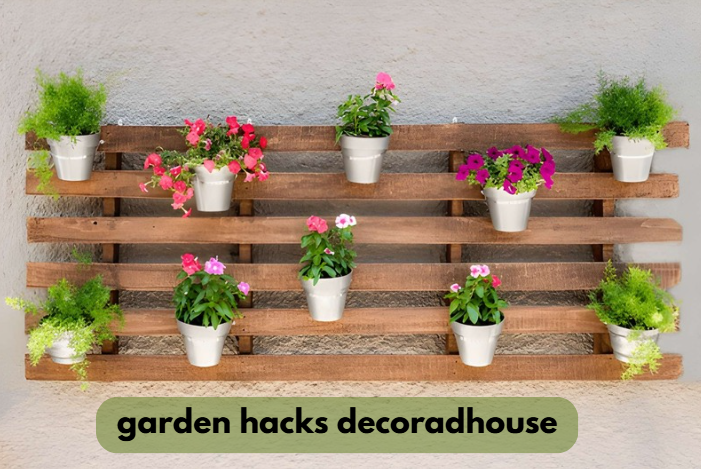
For renters in the U.S. who might not have the best natural light, low-maintenance options like ZZ plants, snake plants, pothos, and heartleaf philodendrons thrive in indirect light. Hang trailing plants in macramé hangers from adhesive ceiling hooks to bring the eye upward, and combine them with smart upgrading tips decoradhouse to add vertical dimension and style without drilling a single hole.
Removable Decor for Every Room
Kitchen: You’d be surprised what peel-and-stick backsplash tile can do. It covers dated tile without touching it, comes in subway tile, mosaic, and marble patterns, and removes without residue. Just ensure gel-based tiles are kept 3 inches away from direct heat sources to prevent melting. Add open shelving with floating shelf brackets designed for no-drill installation, and you have a kitchen that actually feels like yours.
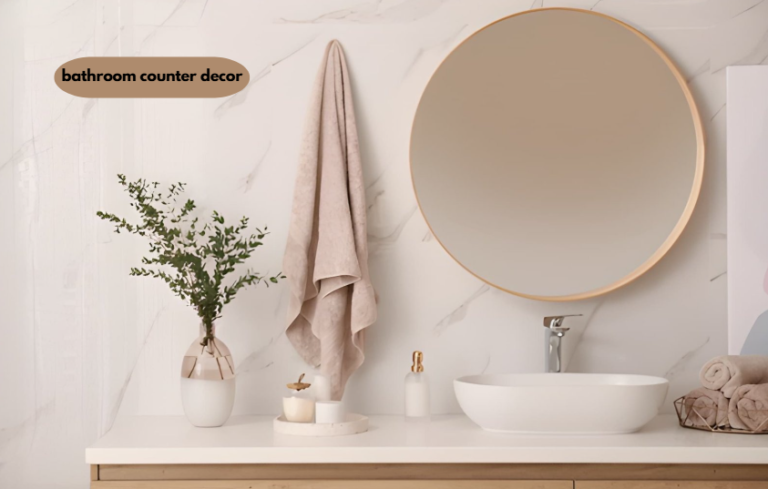
Bathroom: This is where most renters give up and just live with whatever the landlord installed. Don’t. Peel-and-stick wallpaper works beautifully in small bathrooms, provided your exhaust fan works well. Wipe the walls with rubbing alcohol first to clear humidity-blocking soap scum.
Add a frame around the builder-grade mirror using peel-and-stick molding strips (yes, that’s a thing). Swap the toilet seat if you own a screwdriver—it’s one of the easiest, cheapest upgrades in any rental, and you swap it back when you move out.
Bedroom: This is your sanctuary—treat it like one. A removable wallpaper headboard accent wall behind the bed creates a focal point without furniture. Add bedside sconces on Command hooks in place of table lamps to free up nightstand space. Layer textures—linen, cotton, and knit—through bedding and throw pillows. The goal is to feel enveloped rather than just sleeping in a room.
Shop Smart: Where to Find Great Renter-Friendly Decor
You don’t need to spend a fortune on any of this. Some of the best renter-friendly finds come from:
IKEA remains the gold standard for affordable, flexible furniture. The KALLAX shelf unit, the BILLY bookcase, and the LACK side table—these are designed to be adaptable, and they don’t look cheap when styled well.
Target’s threshold and Studio McGee lines offer genuinely good aesthetic quality at accessible price points. Their seasonal drops regularly include textiles, ceramic accents, and wall art that photograph beautifully and hold up well.
Amazon for the functional stuff—adhesive shelf brackets, tension rods, command strips, and peel-and-stick wallpaper. Read the reviews carefully, especially for load-bearing products.
Facebook Marketplace and thrift stores for character pieces—a vintage lamp, a wooden side table, a woven basket. These pieces add the authenticity that makes a space feel collected rather than assembled from a single shopping trip.
Before You Move Out: The Exit Strategy
Here is the part nobody talks about when pinning apartment inspo: the move-out. Rushing the removal process is exactly how you lose a security deposit, but a few smart habits will keep your cash safe.
- Remove with care: Pull peel-and-stick wallpaper slowly from a corner at a low angle. If it resists, hit it with a hair dryer on medium heat for 10 seconds to soften the adhesive so it glides off seamlessly. For Command strips, pull the tab straight down against the wall—never outward.
- Document everything: Before moving a single box in, photograph every wall, floor, and surface. Email them to yourself for a digital timestamp, and repeat the process when you leave. This is your insurance policy against pre-existing damage claims.
- Fix minor mishaps: If you do scuff a wall, a Magic Eraser will buff out most marks on white paint. For tiny nicks, use a touch-up paint pen matched to the landlord’s wall color to make them disappear instantly.
The Quick-Reference Table
Add this right before your conclusion. It’s highly visual, short, and breaks up the text beautifully.
| Project | Risk Level | Time | Est. Cost |
| Wallpaper | Medium (Paint risk) | 3–5 hrs | $50–$150 |
| Command Gallery | Low (If pulled right) | 1–2 hrs | $15–$30 |
| Tension Curtains | Zero | 20 mins | $20–$50 |
| Stick Backsplash | Low | 1–2 hrs | $30–$60 |
The Bottom Line
Renting doesn’t mean living in a waiting room until you buy; your apartment is your home right now. The market has evolved to offer incredible, temporary solutions, proving that learning how to decorate a rental apartment without damage is easier than ever. From grasscloth-textured peel-and-stick wallpaper to adhesive hooks that support real art and damage-free floor tiles, you have choices.
Don’t let a lease keep you from creating a personal, intentional space. Work with what you have, invest your budget strategically, and shift your focus from what you aren’t allowed to change to everything you can.