12 Easy Ways to Make Your Bedroom Feel More Comfortable on a Budget
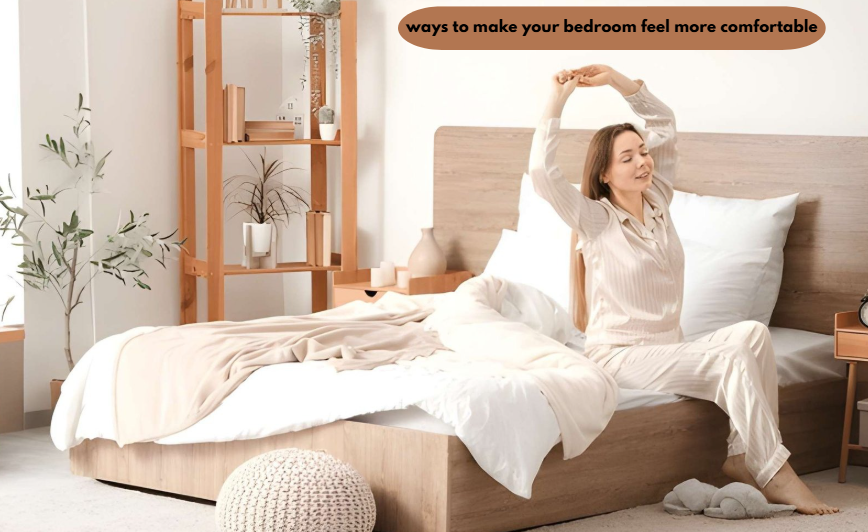
The easiest ways to make your bedroom feel more comfortable on a budget are layering soft textures, softening the lighting, decluttering surfaces, and adding warmth through scent, color, and small storage fixes. None require a full renovation, just a few intentional swaps.
What Makes a Bedroom Feel Comfortable?
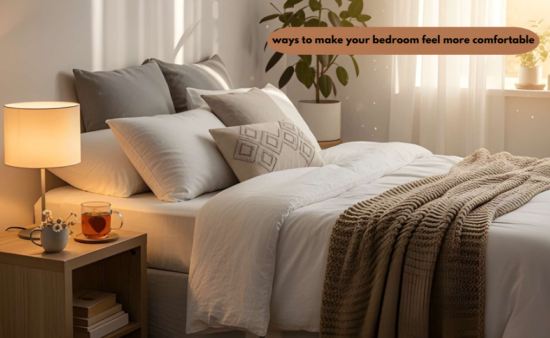
Comfort in a bedroom comes down to a mix of sensory details working together, not one big feature. A few things matter most.
- Warm, low lighting tends to calm a room down more than any single décor choice
- Soft textures on the bed and floor give a room something to physically interact with
- Keeping visual clutter to a minimum makes the whole space feel calmer at a glance
- A muted or earthy color palette reads as cozier than stark whites or bright tones
- A calming scent like lavender or sandalwood rounds out the sensory picture rather than a clinical or scentless room
A cozy room combines all of these, so missing even one, like harsh overhead lighting or a bare mattress, can leave it feeling colder than it should. This is where simple bedroom decor ideas without spending much really shine, since a $15 throw blanket or a warmer bulb can shift a room’s whole feel in one afternoon. A room can still feel uncomfortable even when it’s spotless, because cleanliness handles hygiene and order while comfort is a separate sensory layer built from texture, light, and temperature.
12 Easy Ways to Make Your Bedroom Feel More Comfortable on a Budget
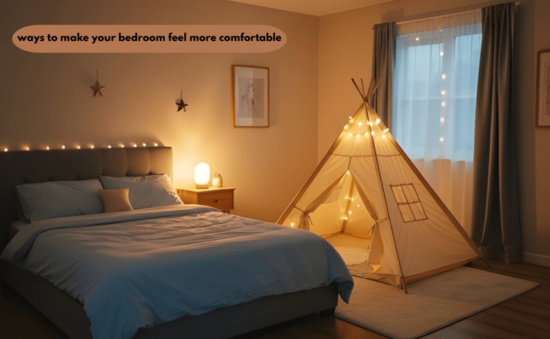
1.Swap Overhead Bulbs for Warm, Low-Level Lighting
Swapping bright overhead bulbs for a warmer color temperature, around 2700K to 3000K, instantly makes a room feel calmer. A cheap plug-in lamp or battery-powered puck lights near the headboard do more for ambiance than any overhead fixture, and most options run under $20.
2. Layer Mixed Textures with Blankets and Pillow Covers
A textured throw blanket, a knit pillow cover, or a small area rug adds tactile warmth for very little money. Mixing at least two textures, like a chunky knit against a smooth duvet, keeps the room from feeling flat, and secondhand shops are a good source if you’re watching every dollar.
3. Use Wall-Mounted Storage to Free Up Floor Space
Using wall-mounted storage instead of floor furniture, keeping the palette light and consistent, and placing a mirror across from the window are the fastest ways to open up a tight room. If you’re figuring out how to decorate a small bedroom with limited space, the general rule is to get things off the floor wherever possible, since a room that looks bigger almost always feels more comfortable too.
4. Introduce Calming Scents Like Lavender and Sandalwood
Lavender, sandalwood, and chamomile are among the scents most consistently linked to relaxation in sleep research, and a study cited by the National Library of Medicine found lavender exposure improved sleep quality and reduced anxiety in participants . A $10 reed diffuser or a few drops of essential oil on a cotton pad accomplishes the same goal without ongoing cost.
5. Clear Visual Noise from Nightstands and Flat Surfaces
Fewer visible items on surfaces reduces the visual noise your brain has to process, which makes a room feel calmer almost immediately. Clutter has been linked to elevated stress in home environments, according to research cited by the Princeton Neuroscience Institute, so clearing a nightstand is a genuine comfort upgrade that costs nothing.
6. Fold Existing Blankets at the Foot of the Bed
Adding a folded blanket at the foot of the bed and mixing two or three pillow sizes creates a layered, hotel-style look using what you already own. Rotating existing pieces rather than buying new ones is one of the more overlooked simple bedroom decor ideas without spending much.
7. Install Budget Floating Shelves Above Eye Level
Floating shelves add both storage and personality without taking up floor space, which makes them one of the better budget picks for a small room. Floating shelf decor works especially well above a headboard, keeping books or small plants within reach, and a basic shelf kit typically runs under $25.
Mounting a simple $20 floating shelf above the bed frame got books off my nightstand and instantly opened up physical space in a tight 10×12 bedroom.
8.Trap Heat with Heavy Curtains and Draft Stoppers
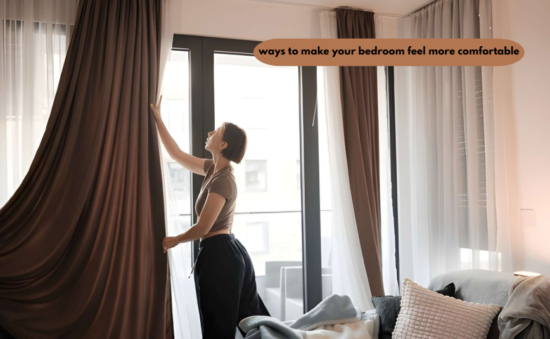
Layering a rug over hard flooring, hanging heavier curtains, and adding a draft stopper under the door are the fastest low-cost ways to trap warmth. Heavy curtains alone can meaningfully reduce heat loss through a window, according to the U.S. Department of Energy.
9. Hang Printable Art or Thrifted Gallery Frames
Printable art, a gallery wall of thrifted frames, or a single oversized tapestry all deliver visual warmth without the cost of custom pieces. Command strips let you hang almost anything without damaging walls, which matters if you’re renting.
10. Add Low-Maintenance Houseplants like Pothos
Houseplants add softness and color while improving indoor air quality, which supports a more restful sleeping environment. A low-maintenance pick like a pothos or snake plant costs very little and tolerates low light.
11. Shift Accents to Warm Neutrals like Terracotta or Sage
Swapping bright white bedding or accents for warmer neutrals like terracotta, sage, or soft taupe changes the emotional temperature of a room without touching the walls. A single accent pillow in a warmer tone can shift the whole palette for under $20.
12. Combine Blackout Curtains with a White Noise App
Blackout curtains and a door draft stopper handle most light and sound leakage for a small upfront cost. Pairing that with a $15 white noise machine or a free phone app covers the rest, and this combination makes the biggest difference for bedrooms facing a street.
Budget Bedroom Upgrades vs. Full Redecorating
Not every comfort problem needs a full redesign.
| Budget Fix | Estimated Cost | Comfort Impact | Time to Complete |
| Warm bulb swap | $10–$20 | High | Under 15 minutes |
| Throw blanket and pillow layering | $20–$40 | Medium | Under 30 minutes |
| Floating shelves | $20–$50 | Medium | 1–2 hours |
| Blackout curtains | $30–$60 | High | 30 minutes |
| Full room repaint | $150–$400 | High | 1–2 full days |
| New furniture set | $500+ | Medium | Several days |
Is it cheaper to redecorate or just add small accents?
Adding small accents is almost always cheaper and faster, and it usually delivers a comparable comfort improvement to a full redecorating project. Sites like decoratoradvice com break down similar cost comparisons regularly, and the consistent takeaway across resources like decoration tips decoradyard is that targeted small changes tend to outperform big spends in comfort gained per dollar.
Simple Fixes for Common Bedroom Comfort Problems
Why does my bedroom still feel cold or uninviting after decorating?
This usually happens when lighting stays too bright or blue-toned even after other changes are made. Swapping to a warmer bulb temperature is often the missing piece, since lighting affects a room’s emotional tone more than almost any other single element.
How do I fix a bedroom that feels cluttered no matter what I do?
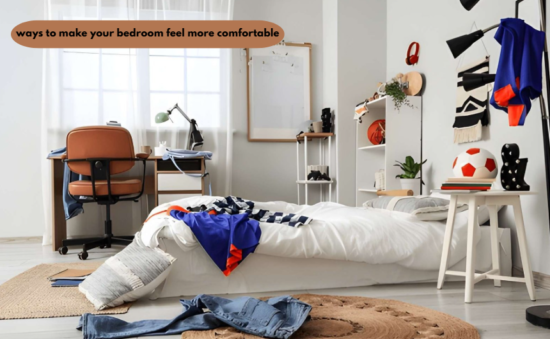
The fix is usually storage placement rather than storage amount, since items piled on visible surfaces read as clutter even in a well-stocked room. Moving frequently used items into drawers or onto wall shelves clears visual space without requiring you to get rid of anything, and the latest news decoratoradvice.com publishes tends to focus on exactly this kind of low-cost styling fix.
Frequently Asked Questions
How can I make my bedroom feel cozy without spending money?
Rearranging furniture, decluttering surfaces, and switching to lower, warmer lighting are all free or nearly free changes that noticeably increase comfort.
What colors make a bedroom feel more relaxing?
Muted, warm neutrals such as sage green, terracotta, and soft taupe are generally considered more relaxing than stark whites or cool grays.
How much does it cost to refresh a bedroom on a budget?
Most budget refreshes, including lighting, textiles, and small storage additions, can be done for under $150 total depending on what’s already in the room.
Does lighting really affect how comfortable a bedroom feels?
Yes, lighting is one of the strongest single factors in room comfort, since warmer, lower light mimics the ambient light the body associates with rest.
Taken together, these are some of the most reliable ways to make your bedroom feel more comfortable without needing a big budget or a long timeline.
Final Thoughts
None of these twelve changes require a contractor or a maxed-out credit card. Most bedrooms don’t feel uncomfortable because of major structural issues, but rather small details like harsh lighting, bare surfaces, or an unlayered bed.
Exploring simple ways to make your bedroom feel more comfortable proves that targeted, low-cost tweaks can completely transform your space. Try a quick win like swapping a light bulb or layering a throw blanket this weekend to see how much warmer and more inviting your room becomes.