
Why Do Clogged Drains Keep Coming Back and What Fixes Them?
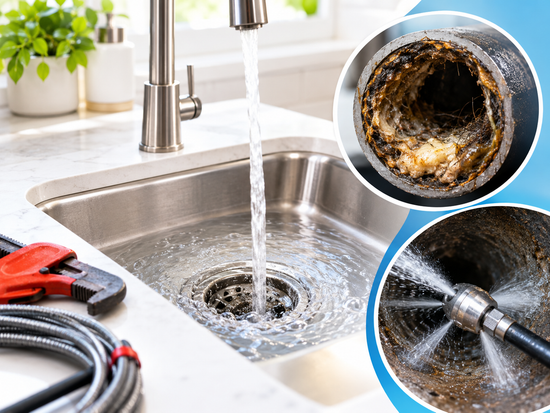
Clogged drains keep returning because a quick fix clears only a narrow channel through the blockage while the residue stuck to the pipe walls keeps growing back, and the most common clogged drain causes include sticky grease, hair, soap film, and aging pipes that lasting repairs must address directly.
In this guide, we explain why the problem repeats, how a slow-draining sink warns you before a full backup, and which professional and household fixes finally stop the cycle, so you can protect your pipes before the next blockage starts.
Why Does the Same Blockage Return Weeks After a Cleaning?
Most repeat blockages trace back to a few clogged drain causes that homeowners never fully remove, because a plunger or a store-bought chemical cleaner usually punches a small hole through the clog without scraping the sticky layer off the pipe walls. That leftover coating traps fresh debris within days, and the passage narrows again every time you rinse a dish or take a shower.
Kitchen lines suffer most from grease buildup, since warm cooking fat looks harmless going down the drain but hardens into a waxy coating as it cools, and every particle of food that follows sticks to it. Many pipes carry only a thin opening for exactly this reason, because the coating thickens quietly over many months.
Everyday Habits That Quietly Narrow Your Pipes
Bathroom drains collect hair clogs that bind with soap scum into dense mats, and several routine habits in your home speed that process along much faster than most people realize, so we recommend checking whether any of the following sound familiar.
- You pour leftover cooking oil or bacon fat down the kitchen sink after meals instead of throwing it away.
- You let hair wash down the shower drain without a catch screen to stop it.
- You flush wipes, cotton balls, or other products that claim to be flushable.
- You rinse coffee grounds and eggshells through the garbage disposal.
How Water Temperature and Pipe Age Affect Your Drains
Temperature changes how fat behaves inside your pipes, so grease buildup grows fastest in the cooler stretches of the drain line far from the sink, where the fat cools, solidifies, and attaches itself to the walls. Every meal you cook adds another thin layer, and the layers stack up faster than most people expect.
Hot water also matters more than most people think, since a weak heater delivers lukewarm water that fails to carry fats through the line, so scheduling water heater repair in Douglasville, GA can protect your plumbing as well as your comfort. Older pipes add to the problem because rough, corroded walls and invading tree roots give debris plenty of places to catch.
Which Professional Methods Actually Stop Repeat Blockages?
Professional crews rely on hydro jetting when a drain keeps clogging, because high-pressure water scours the entire pipe wall and flushes out grease, soap film, and loosened debris instead of merely poking a hole through the center. Learn more about our drain and sewer cleaning services in Douglasville for effective solutions to recurring clogs.
A proper clogged drain repair matches the method to the cause, so a basic snake may handle a small hair mass while a stubborn coating or a root intrusion calls for jetting or a pipe repair. Choosing the right approach on the first visit saves you money, because repeat calls for the same blockage add up quickly.
Simple Routines That Keep Your Drains Flowing
Consistent drain maintenance costs far less than emergency repairs, and the routine below takes only a few minutes each week once you build it into your household schedule.
- Install fine mesh strainers in every shower, tub, and kitchen sink, and empty them after each use.
- Wipe greasy pans with a paper towel and throw the residue in the trash rather than rinsing it away.
- Flush each drain with hot water once a week so loose residue moves through the line.
- Schedule a professional drain cleaning at least once a year, which matches what we recommend.
Warning Signs That Call for Immediate Professional Help
Some blockages cannot wait for a convenient appointment. When sewage backs up into your home, you should contact an emergency plumber in Douglasville, GA before the water damages your floors and belongings. Watch for these signs.
- A slow-draining sink that stays sluggish even after you use a plunger or a drain snake.
- Gurgling noises from toilets or tubs whenever another fixture in the house drains.
- Several fixtures backing up at the same time, which usually points to a main line problem.
- Foul sewer odors that linger around floor drains or in the basement.
Comparison of Temporary Fixes Vs Permanent Solutions
A temporary fix removes the visible symptom, whereas a permanent solution removes the material that caused the symptom. That difference explains why plungers, chemical cleaners, and short snakes bring relief for a week or two while the same drain slows down again soon afterward. Each of these tools works well for a fresh, soft blockage, but none of them restores the full width of the pipe once a hardened coating has formed.
Permanent results usually require three steps working together: you locate the exact source of the restriction with a camera when the pattern repeats, you clean the full pipe diameter rather than a single narrow channel, and you correct the habit or pipe defect behind the problem. Hence, the blockage has no reason to rebuild itself. Skipping any one of these steps explains most of the repeat visits that homeowners experience.
How Home Age and Plumbing Layout Influence Repeat Blockages
Home age shapes how often a drain fails because older cast iron and galvanized steel pipes develop rough interior surfaces over several decades, and those rough surfaces catch debris far more readily than the smooth walls of newer PVC lines. A house built many years ago may therefore need more frequent attention than a recent build, even when the household uses the same amount of water.
Plumbing layout matters just as much, since long horizontal runs, shallow slopes, and sharp bends slow the water that normally carries waste away, while clay sewer lines with loose joints invite tree roots that search for moisture. We advise owners of older properties to inspect their lines before small restrictions grow into major repairs that disrupt the entire household.
Clear Pipes Begin With Understanding What Clogs Them
Once you recognize the clogged drain causes that affect your own home, you can break the cycle by removing residue completely, protecting your pipes with simple habits, and calling a professional when a problem keeps coming back. Small daily choices combined with thorough cleaning keep water moving freely and spare you the stress of repeated backups.
A Plus Priority Plumbing serves Greater Atlanta, including Douglasville, with 24/7 availability, drain and sewer cleaning, and a one-year warranty on all jobs, so help stays close when a stubborn blockage returns.
Call us today to schedule your visit and get your drains flowing again.
FAQs:
Why does a chemical cleaner stop working after a few days?
Chemical cleaners often dissolve only the softest part of a blockage, so dense hair clogs and the coating on the pipe walls stay in place and catch new debris. These products can also damage older pipes, so mechanical cleaning is often a safer choice for repeat problems.
How does high-pressure water cleaning differ from snaking?
A snake pokes a hole through the center of a clog, while hydro jetting sends water around the full pipe circumference and removes the clinging residue. That complete scouring explains why jetting suits recurring blockages in kitchen lines and main sewer pipes.
How often should my drains get a professional cleaning?
We recommend professional cleaning at least once a year as part of regular drain maintenance, and homes with frequent blockages, large families, or older pipes may need more frequent visits to keep water moving freely.
Can a camera inspection really explain why one drain keeps clogging?
Yes, a video inspection reveals cracks, roots, and misaligned joints that no household tool can detect, which allows a technician to plan the right clogged drain repair instead of guessing at the cause and returning to the same blockage.
What should I keep out of my garbage disposal?
Avoid fibrous scraps like celery and corn husks, along with coffee grounds, eggshells, and fats, because these materials tangle or settle in the trap and create new blockages. Running water for several seconds after each use helps push everything through.